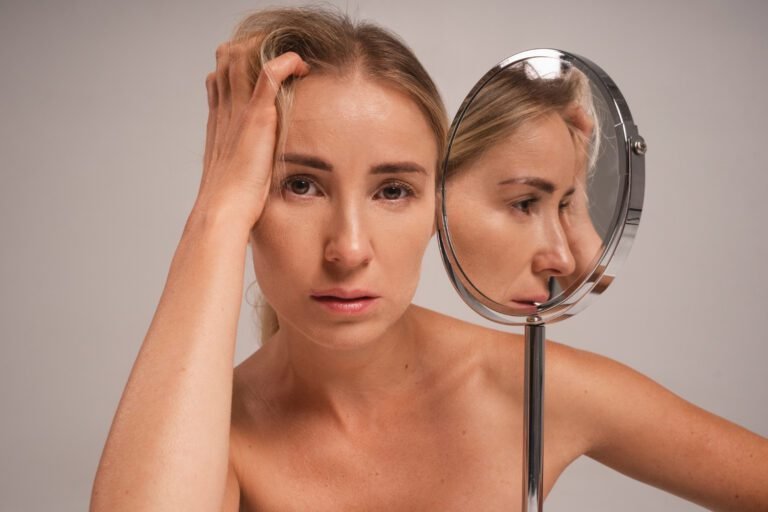

Extreme-environment skincare is no longer theoretical. With the rise of commercial space flight, high-altitude wellness, and Arctic expeditions, skin is being exposed to conditions it was never evolved to handle. In microgravity, high-radiation, and ultra-low humidity environments, traditional formulation assumptions break down. Therefore, chemists must rethink how emulsions spread, how barriers function, and how protection systems operate beyond Earth-like conditions.
This blog explores formulation design under extreme constraints. We treat space as a laboratory where every assumption is tested. As a result, the goal is not only to build products that survive these environments, but to extract insights that improve performance on Earth.
Zero-G Rheology: Designing a Moisturizer That Doesn’t Float Away in a Commercial Space Cabin
In microgravity, the behavior of fluids changes dramatically. Gravity no longer assists in spreading, settling, or phase stabilization. As a result, emulsions behave more like free-floating systems governed by surface tension rather than weight. This creates a new challenge: how do you design a moisturizer that stays where it is applied?
Case Scenario: The Floating Emulsion Problem
Scene Description
A standard cream is dispensed in a zero-gravity cabin. Instead of spreading across the skin, droplets separate and drift away. Application becomes inconsistent, and product loss increases.
The Physical Constraint
On Earth, gravity assists in spreading formulations across the skin surface. In zero-G, spreading relies entirely on interfacial forces, viscosity, and user-applied shear. Without sufficient structural cohesion, the formulation cannot maintain contact with the skin.
Formulation Insight
Rheology becomes the primary design parameter. High-yield stress systems are required to prevent flow under low-force conditions while still allowing controlled spreading under shear. Therefore, structuring agents must be optimized to create a balance between adhesion and spreadability.
Rheological Engineering for Microgravity
Yield Stress Design
Yield stress defines the minimum force required for a material to flow. In zero-G environments, increasing yield stress prevents unintended movement of the formulation. This ensures that the product remains localized during application.
Viscoelastic Behavior
Formulations must exhibit both elastic and viscous properties. Elasticity allows the product to maintain structure, while viscosity enables controlled spreading. Therefore, combining polymer networks with structured lipid phases provides optimal performance.
Thixotropy and Recovery
Thixotropic systems thin under shear and recover structure once the force is removed. This behavior is critical in zero-G applications. It allows the product to spread during application and then regain stability to prevent drifting.
Lipid Behavior in Zero Gravity
Loss of Gravitational Assistance
On Earth, lipids naturally settle and align due to density differences. In microgravity, this effect disappears. As a result, lipid distribution depends entirely on formulation design rather than physical forces.
Barrier Formation Without Gravity
The skin barrier relies on ordered lipid structures. In extreme environments, maintaining this structure becomes more challenging. Therefore, formulations must support lamellar organization through chemical interactions rather than physical settling.
Advanced Lipid Systems
Using structured lipids, ceramide complexes, and bio-mimetic lipid systems improves barrier formation. These systems self-assemble into stable structures regardless of gravitational conditions. Consequently, they provide consistent performance in both space and terrestrial environments.
Radiation Beyond SPF: The Cosmic Exposure Problem
Limitations of Traditional Sunscreens
SPF measures protection against UVB radiation. However, in space and high-altitude environments, exposure includes broader radiation spectra, including UVA, cosmic rays, and ionizing radiation. Therefore, traditional sunscreens are insufficient.
Oxidative Stress Amplification
High-energy radiation increases reactive oxygen species (ROS) production. This leads to protein damage, lipid peroxidation, and DNA instability. As a result, oxidative stress becomes a primary concern in extreme environments.
Formulation Strategy: Multi-Layer Protection
Protection requires more than UV filters. Antioxidant systems, DNA repair enzymes, and mitochondrial stabilizers must be integrated. For example, combining polyphenols, enzymatic antioxidants, and protective peptides enhances cellular resilience.
Ultra-Low Humidity and Skin Dehydration
The Extreme Dryness Factor
Space cabins and high-altitude environments often have extremely low humidity levels. This accelerates transepidermal water loss (TEWL) and disrupts barrier function.
Water Retention Without Environmental Support
On Earth, ambient humidity contributes to skin hydration. In extreme environments, this support disappears. Therefore, formulations must provide internal hydration systems that do not rely on external moisture.
Advanced Hydration Systems
Humectants, occlusives, and film-forming polymers must be combined strategically. High-performance systems include multi-weight hyaluronic acid, polysaccharide films, and lipid barriers that reduce water loss and maintain hydration under extreme conditions.
Formulation Challenges in Extreme Environments
Stability Without Gravity
Phase separation behaves differently in microgravity. Without sedimentation, instability may not be immediately visible. Therefore, traditional stability tests must be adapted.
Packaging Constraints
Packaging must prevent leakage, contamination, and uncontrolled dispensing. Airless systems and controlled-dosage packaging become essential.
User Interaction
Application methods change in extreme environments. Products must be easy to apply without relying on gravity or large movements. Therefore, texture and rheology must be optimized for controlled use.
Earth Applications: Why This Matters
Extreme-environment formulation is not limited to space. The insights gained apply directly to terrestrial conditions, including dry climates, high-altitude regions, and compromised skin states. As a result, these advanced systems improve performance across multiple markets.
Conclusion: The Future of Skincare Is Beyond Earth
Extreme-environment chemistry represents the next frontier in cosmetic science. By designing formulations for zero gravity, high radiation, and ultra-low humidity, chemists can push the limits of performance. Ultimately, these innovations will redefine skincare both in space and on Earth.