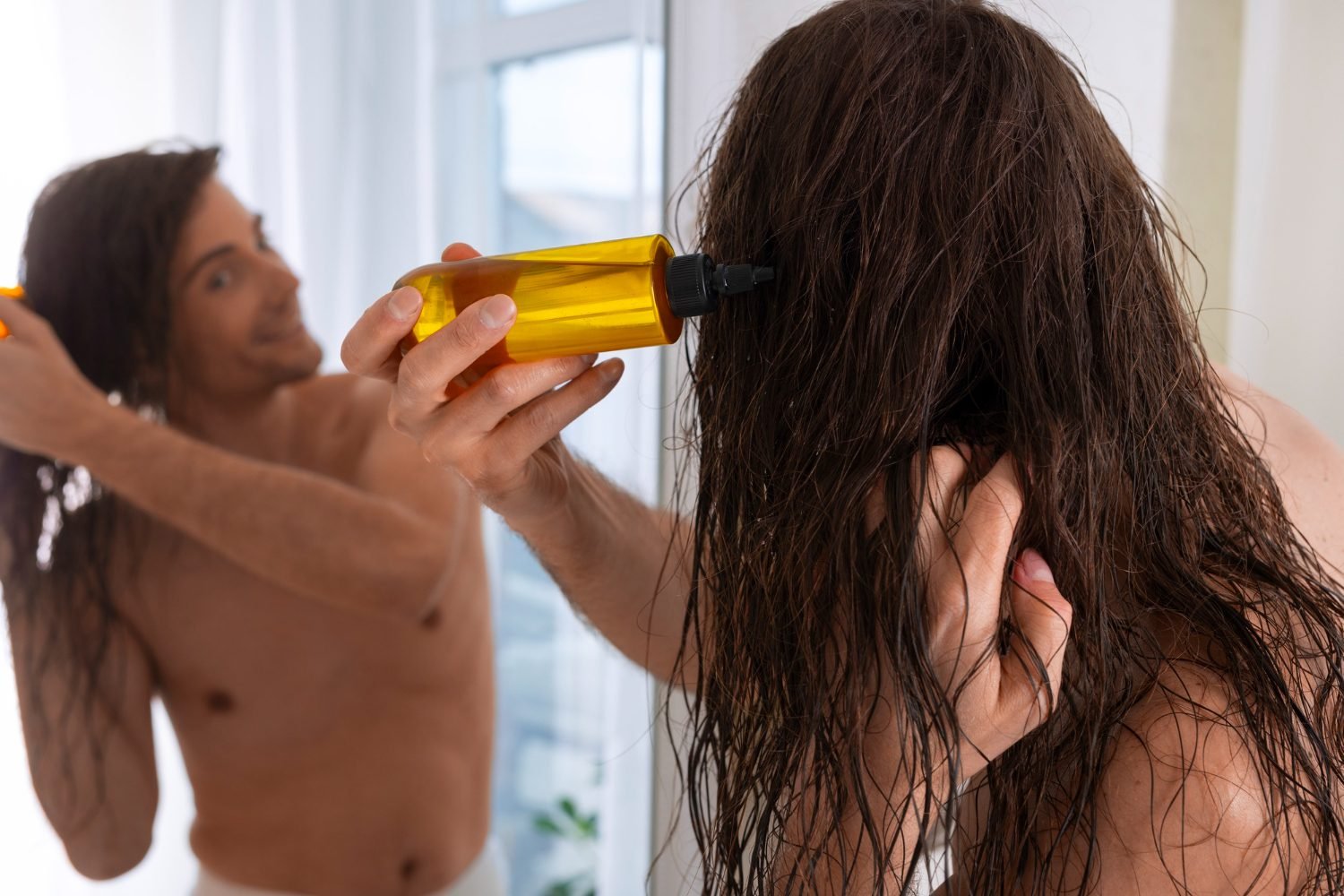
Healthy hair begins beneath the surface, where the scalp functions as a living ecosystem. Every follicle depends on circulation, oxygen, and biochemical communication to grow strong strands. When stress, styling, or pollution interfere, this balance collapses and the scalp loses vitality. Consequently, scientists have turned to peptide-based scalp renewal systems that reactivate cellular energy, improve microcirculation, and restore the biological dialogue responsible for resilient, dense hair.
The scalp: a dynamic biological environment
Unlike ordinary skin, the scalp is metabolically active tissue that constantly renews itself. Each hair follicle cycles through growth (anagen), rest (telogen), and regeneration (catagen). Throughout these stages, keratinocytes, fibroblasts, and dermal papilla cells exchange molecular messages. Moreover, these signals depend on sufficient ATP and peptides to coordinate cell behavior. Therefore, maintaining energy flow and communication is essential for long-term follicle strength.
How peptides transform follicular communication
Peptides are short amino acid sequences that act as precision messengers between cells. They bind to receptors and trigger responses such as growth factor release, collagen synthesis, or inflammation control. In the scalp, peptides stimulate vascular flow, energize dermal papilla cells, and extend the anagen phase. As a result, follicles remain active for longer periods, and hair becomes thicker and more uniform.
Biological mechanisms of peptide scalp renewal
- Microcirculation activation: Peptides enhance nitric-oxide pathways, improving oxygen and nutrient delivery to follicles.
- Energy optimization: Amino acids such as arginine and lysine participate in ATP generation, fueling cellular repair.
- Inflammation modulation: Specific peptide complexes downregulate TNF-α and IL-1β, reducing irritation and sensitivity.
- Keratin reinforcement: Structural peptides strengthen keratinocyte cohesion and increase strand resilience.
- Barrier stabilization: Postbiotic–peptide hybrids restore lipid layers and microbiome balance for a calmer scalp environment.
Because these effects act synergistically, peptide scalp systems deliver both immediate comfort and progressive regeneration.
Clinical evidence for peptide effectiveness
Clinical data confirm that peptide technology delivers measurable results. In a twelve-week study, volunteers using a peptide scalp serum achieved a 22 % increase in hair density and a 38 % reduction in shedding. Furthermore, hydration improved by 28 %, showing stronger barrier function. Another trial demonstrated heightened mitochondrial activity in follicular cells exposed to tripeptide complexes. Together, these findings prove that peptides reactivate energy metabolism and visibly restore vitality.
Energy cofactors amplifying follicle performance
Peptides perform best when paired with biological energy sources. Molecules such as ribose, niacinamide, and coenzyme Q10 supply the cofactors required for ATP synthesis. Moreover, they recycle oxidized enzymes and keep mitochondrial respiration efficient. When these ingredients combine, follicle metabolism accelerates, leading to faster renewal and enhanced nutrient utilization. Consequently, scalp fatigue diminishes and overall density improves.
Managing neurogenic stress in the scalp
Stress releases neuropeptides like substance P that trigger itching, redness, and vasoconstriction. Over time, this reaction restricts oxygen supply and slows growth. Neuro-soothing peptides counteract these signals by calming nerve endings and promoting microvascular relaxation. As a result, circulation normalizes, discomfort subsides, and hair shedding caused by emotional stress decreases. This approach demonstrates how neurocosmetics merge mental balance and visible beauty.
Formulation strategies for peptide scalp systems
Designing a stable peptide formula requires both precision and compatibility. Because peptides are sensitive to pH and heat, formulators maintain conditions between 4.8 and 5.4 pH and process ingredients below 45 °C. Furthermore, light gel-serum or microemulsion textures enhance penetration without heaviness. Postbiotic ferments can serve simultaneously as stabilizers and microbiome balancers. Therefore, peptide systems achieve efficacy while preserving the scalp’s natural ecology.
- Recommended peptide load: 1 – 3 % in leave-on serums, 0.5 – 1 % in rinse-off formats.
- Synergistic partners: Ribose, niacinamide, caffeine, and panthenol for combined stimulation and comfort.
- Processing advice: Avoid sulfated surfactants that may denature delicate peptide chains.
When properly engineered, these formulas deliver pharmaceutical-grade performance within cosmetic safety limits.
Microbiome harmony and long-term resilience
The scalp’s microbial community strongly influences oil balance and immune tolerance. Harsh cleansing or stress can disrupt this ecosystem, leading to dandruff or inflammation. Fortunately, peptide–postbiotic complexes encourage beneficial bacteria and limit opportunistic species such as Malassezia. In addition, they strengthen lipid organization and hydration. Consequently, the scalp remains balanced, comfortable, and better equipped to support continuous growth.
AI and digital peptide optimization
Modern peptide innovation increasingly relies on artificial intelligence. Machine-learning algorithms examine thousands of amino acid sequences to predict binding affinity, solubility, and bioactivity. Moreover, AI models identify combinations that maximize follicle energy or anti-inflammatory response. As a result, chemists can design next-generation peptides with predictable stability and targeted biological outcomes, significantly shortening development cycles.
Biotechnology and sustainability
Contemporary peptides are produced through enzymatic synthesis and fermentation rather than chemical derivatization. These renewable biotechnologies minimize solvent waste and ensure molecular precision. In addition, plant-based nutrient sources provide sustainable nitrogen for fermentation media. Consequently, scalp-renewal formulations combine advanced efficacy with an environmentally responsible footprint.
Applications across product types
- Serums: Concentrated leave-on boosters energizing follicles and promoting density.
- Tonic sprays: Lightweight daily formulas enhancing circulation and freshness.
- Shampoos: Gentle cleansing bases fortified with peptides to protect the barrier.
- Masks: Intensive weekly treatments restoring hydration and comfort after stress exposure.
Because each format maintains biological compatibility, peptide scalp renewal can integrate seamlessly into professional or consumer routines.
Explore peptide renewal actives at Grand Ingredients
Discover bio-engineered peptides, energy cofactors, and postbiotic ferments in the Active Ingredients collection. Each active merges biotechnology precision with scalp biology expertise to restore energy, equilibrium, and visible density.
Conclusion: regeneration through communication
Peptide-based scalp renewal transforms traditional hair care into a form of biological dialogue. By enhancing cellular energy, improving circulation, and calming neurogenic stress, these systems reactivate the scalp’s inherent intelligence. Consequently, hair becomes stronger, healthier, and more resilient—proof that true beauty starts with a living, energized foundation.