Consumers increasingly demand clean, preservative-free skincare products. As they move away from synthetic chemicals, formulators must explore alternatives that maintain product safety and stability. This blog compares natural and synthetic preservation systems, examining their effectiveness, skin safety, and environmental impact. The goal is to help formulators choose the right system for their products while meeting consumer demand for safer, sustainable options.
Understanding Natural vs. Synthetic Preservatives
Preservatives are essential in cosmetics to prevent microbial growth, spoilage, and ingredient degradation. Traditionally, synthetic preservatives such as parabens, phenoxyethanol, and formaldehyde-releasing agents have been popular due to their strong effectiveness. However, concerns about their potential health risks have driven consumers to seek natural alternatives.
Natural preservatives, derived from plants, bioactive compounds, and fermentation processes, offer safer solutions for both the skin and the environment. They are often seen as more sustainable, especially as consumers prioritize eco-friendly and clean beauty products. In contrast, synthetic preservatives remain highly effective, but they are increasingly viewed as undesirable by consumers seeking cleaner formulations.
Key Differences: Natural vs. Synthetic Preservatives
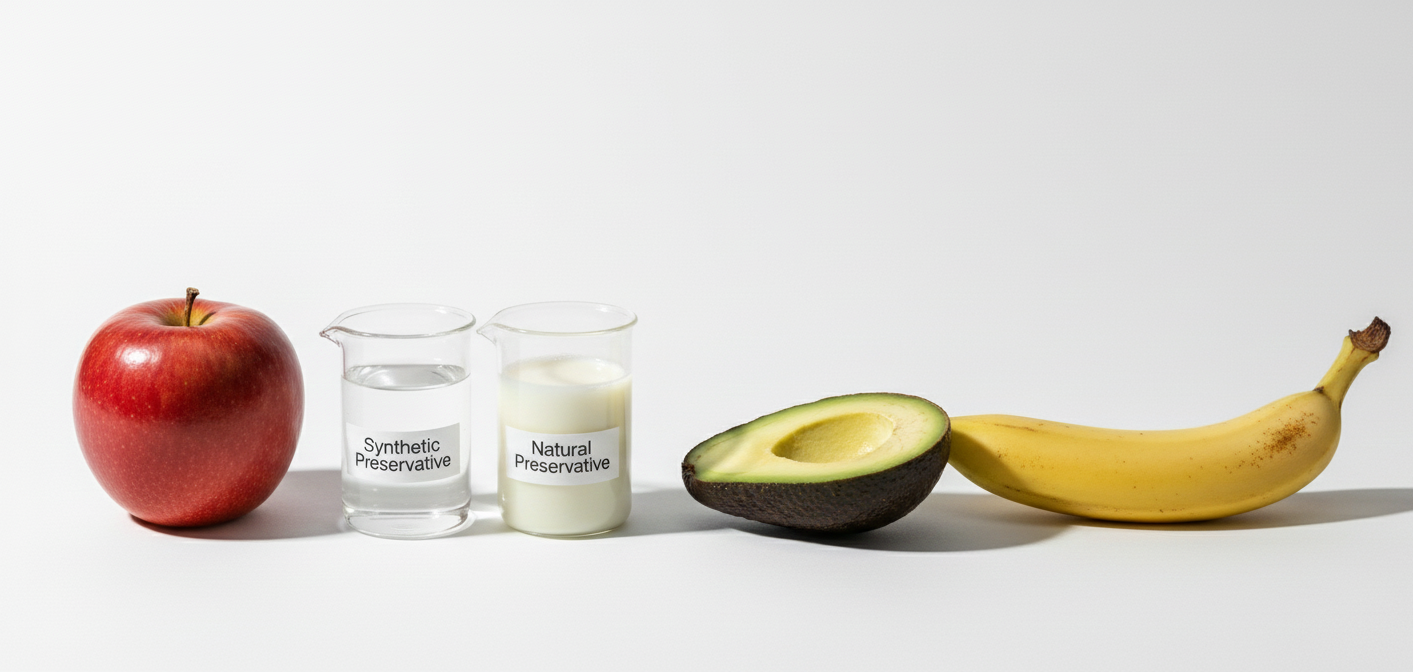
While both natural and synthetic preservatives serve the same purpose, their sources, effectiveness, and consumer perception differ greatly. The table below highlights the key differences between these two types of preservatives:
| Aspect | Natural Preservatives | Synthetic Preservatives |
|---|---|---|
| Source | Plant-based, bioactive, and organic compounds (e.g., essential oils, plant extracts, organic acids) | Chemically synthesized (e.g., parabens, phenoxyethanol, formaldehyde-releasing agents) |
| Effectiveness | Less broad-spectrum but effective in certain formulations | Highly effective against a wide range of microbes, especially in water-based products |
| Skin Sensitivity | Less likely to irritate sensitive skin, suitable for clean beauty products | May cause irritation or allergic reactions in some individuals |
| Environmental Impact | Eco-friendly, biodegradable, and renewable, making them more sustainable | Higher environmental footprint, often derived from petrochemicals |
| Consumer Perception | Preferred for being safe, non-toxic, and environmentally friendly | Often seen as less safe or desirable, especially in clean beauty circles |
| Cost | Can be more expensive due to sourcing and processing | Generally cheaper to produce and readily available |
| Stability | May require additional formulation techniques to maintain stability | Highly stable in a variety of formulations, especially in high-water content products |
Natural Preservatives: Benefits and Challenges
Natural preservatives are growing in popularity, particularly as consumers demand safer, more eco-friendly products. These preservatives come from plant-based sources, fermentation, or bioactive compounds, which offer multiple benefits. They can also contribute to the product’s overall skin care benefits, such as anti-inflammatory or antioxidant properties.
Benefits:
- Gentler on Skin: Natural preservatives are often better suited for sensitive skin, as they are less likely to cause irritation compared to synthetic chemicals.
- Eco-Friendly: Derived from renewable, biodegradable resources, natural preservatives reduce environmental impact and contribute to a cleaner planet.
- Multi-Functional: Many natural preservatives also provide additional skin care benefits, such as moisturizing, anti-inflammatory effects, or enhancing the skin barrier.
Challenges:
- Effectiveness: Natural preservatives may not provide broad-spectrum protection and often require higher concentrations or combinations of ingredients to match synthetic preservative efficacy.
- Formulation Complexity: Natural preservatives can be sensitive to changes in pH or temperature, making formulation techniques more complex to ensure consistent preservation.
- Stability: Some natural preservatives perform less well in high-water formulations, which may require additional stabilizers or preservatives to maintain product safety.
Synthetic Preservatives: Benefits and Challenges
Synthetic preservatives, such as phenoxyethanol, parabens, and formaldehyde-releasing agents, have long been trusted for their ability to effectively prevent microbial growth. They offer broad-spectrum protection, making them ideal for formulations with higher water content, but their use has been questioned as consumers demand more natural alternatives.
Benefits:
- High Effectiveness: Synthetic preservatives are reliable in offering strong, broad-spectrum antimicrobial protection against bacteria, mold, and yeast.
- Stability: These preservatives maintain stability in a wide range of formulations, including those with high water content, which makes them highly versatile.
- Cost-Effective: Synthetic preservatives are often cheaper and easier to source, making them the go-to option for many manufacturers.
Challenges:
- Skin Sensitivity: Some synthetic preservatives, particularly parabens, have been linked to skin irritation and allergic reactions, especially in sensitive individuals.
- Consumer Perception: Consumers seeking clean beauty products often view synthetic preservatives negatively, associating them with health risks and environmental harm.
- Environmental Impact: Many synthetic preservatives are derived from petrochemicals and may not be biodegradable, posing long-term environmental concerns.
Conclusion
Both natural and synthetic preservatives have their place in cosmetic formulations. Natural preservatives offer a safer, eco-friendly alternative but may require careful formulation to ensure product stability and effectiveness. Synthetic preservatives, on the other hand, are more stable and effective, especially in high-water content products, but come with environmental and consumer perception concerns.
As the clean beauty movement grows, we will continue to see innovation in preservation systems that balance safety, efficacy, and environmental impact. The key will be finding the right balance that meets consumer demands for clean, safe, and sustainable skincare.