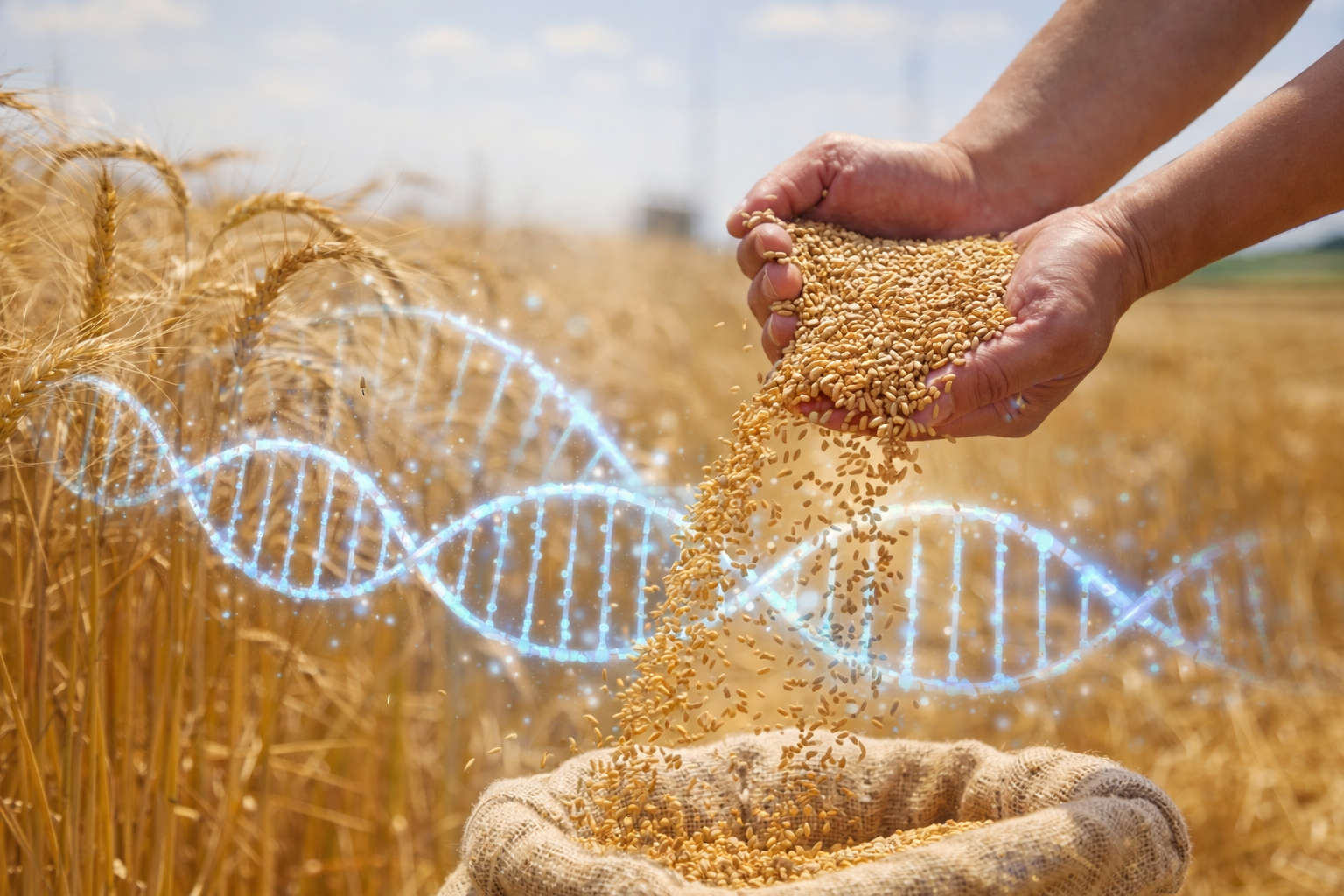

BioFerment food technology represents a structural evolution in functional ingredient development. Unlike traditional fermentation, which primarily aimed to preserve raw materials or develop flavor complexity, modern BioFerment food systems focus on controlled molecular transformation. In other words, fermentation now acts as an engineering tool. As a result, manufacturers can enhance bioaccessibility, modify phytochemical structure, and improve ingredient stability within complex food matrices.
Consequently, BioFerment food ingredients now serve as functional amplifiers rather than simple fermented powders. They modify the biochemical profile of botanical materials before those materials enter the digestive system. Therefore, instead of relying solely on extraction or concentration, developers use microbial metabolism to unlock latent activity.
Controlled Biotransformation: The Core Mechanism
At the center of BioFerment food technology lies enzymatic biotransformation. During fermentation, selected microorganisms secrete enzymes such as β-glucosidase, α-rhamnosidase, esterase, and protease. These enzymes cleave glycosidic bonds and hydrolyze complex plant structures. As a result, bound polyphenols convert into aglycone forms, which typically display higher biological activity.
For example, many flavonoids exist naturally in glycosylated states. In this configuration, sugar moieties attach to the flavonoid backbone, limiting absorption. However, microbial β-glucosidase removes these sugar components. Consequently, the compound becomes more lipophilic and potentially more bioaccessible. Because this transformation occurs before consumption, BioFerment food systems effectively pre-digest plant chemistry.
Furthermore, fermentation can generate secondary metabolites not present in the original raw material. Organic acids, short-chain phenolic derivatives, and smaller peptide fragments may emerge through microbial metabolism. Therefore, fermentation not only liberates existing compounds but also creates new functional profiles.
Matrix Liberation and Structural Deconstruction
Plant materials contain rigid cell wall matrices composed of cellulose, hemicellulose, and lignin. These structures protect phytonutrients but also restrict digestive release. As a result, conventional plant powders often pass through the gastrointestinal tract without full compound liberation.
BioFerment food systems address this limitation directly. Microbial cellulases and hemicellulases degrade structural polysaccharides. Consequently, embedded phenolics and micronutrients become accessible. This process, often referred to as matrix liberation, increases the fraction of bioactive compounds released during digestion.
Because matrix liberation enhances the availability of compounds before ingestion, manufacturers can achieve functional improvements without increasing dosage. Therefore, fermentation supports efficiency rather than simple concentration.
Bioaccessibility as a Performance Metric
When evaluating functional food systems, bioaccessibility offers a more realistic metric than raw concentration. Bioaccessibility describes the proportion of a compound released from the food matrix and available for intestinal absorption. Bioavailability, in contrast, describes the portion that ultimately reaches systemic circulation.
BioFerment food ingredients primarily enhance bioaccessibility. By modifying molecular size and polarity, fermentation increases solubility and digestive release. Consequently, more active compounds enter the absorption phase. While systemic bioavailability depends on additional physiological variables, improved bioaccessibility creates the foundation for downstream efficacy.
Reduction of Anti-Nutritional Compounds
Many plant-based materials contain phytates, tannins, lectins, and enzyme inhibitors. These compounds can reduce mineral absorption or impair protein digestibility. However, fermentation activates endogenous and microbial phytases. These enzymes hydrolyze phytic acid, thereby releasing bound minerals such as iron, zinc, and calcium.
In addition, fermentation can reduce certain protease inhibitors. Consequently, protein digestibility improves in plant-based formulations. This mechanism becomes particularly relevant in vegan and plant-forward nutrition systems where mineral density and amino acid availability matter.
Solubility Engineering in Beverage Systems
Beverage formulation often presents unique challenges. Many botanical extracts exhibit poor water solubility, leading to sedimentation or instability. However, fermentation can alter compound polarity and reduce molecular size. Therefore, BioFerment food ingredients may demonstrate improved aqueous dispersion.
Because improved solubility reduces the need for emulsifiers or encapsulation systems, developers can maintain cleaner labels. Furthermore, enhanced dispersion improves sensory consistency. As a result, fermentation supports both functional and aesthetic formulation objectives.
Thermal and Oxidative Stability
Food processing frequently exposes ingredients to heat, shear forces, and oxygen. Conventional botanical extracts may degrade under these conditions. However, fermentation sometimes generates more stable derivative compounds. For instance, microbial conversion can reduce reactive polyphenol forms that readily oxidize.
Additionally, organic acids produced during fermentation can contribute to intrinsic preservation effects. Consequently, BioFerment food ingredients may display improved compatibility with pasteurization, extrusion, or baking processes.
Hybridization: Food-Supplement Convergence
The boundary between food and supplement continues to narrow. Consumers increasingly expect beverages, snacks, and dairy alternatives to deliver targeted health benefits. Therefore, BioFerment food systems enable traditional food formats to compete with capsule-based supplementation.
Because fermentation enhances compound accessibility, developers can formulate lower-dose, high-impact products. As a result, the functional density of food formats increases without dramatically altering taste or texture.
Microbial Strain Selection and Precision Fermentation
Not all fermentation processes produce identical outcomes. Microbial strain selection determines enzyme expression profiles and metabolite production pathways. Therefore, precision fermentation becomes critical for reproducibility.
By selecting specific lactic acid bacteria or yeast strains, manufacturers can target defined transformation objectives. For example, certain strains exhibit high β-glucosidase activity, whereas others prioritize organic acid production. Consequently, fermentation can be directed toward desired biochemical endpoints.
Clean Label Alignment
Consumers associate fermentation with traditional food preparation and natural processing. Consequently, BioFerment food ingredients align with clean-label positioning strategies. Unlike chemically modified ingredients, fermented extracts rely on biological transformation rather than synthetic alteration.
Because of this natural narrative, fermentation strengthens both regulatory alignment and consumer trust. However, manufacturers must ensure all claims remain within food regulatory frameworks and avoid therapeutic positioning.
Future Outlook: Programmable Functional Food Systems
Looking forward, integration between metabolomics and fermentation science may enable programmable transformation pathways. By mapping metabolite shifts before and after fermentation, developers can predict functional outcomes more accurately.
Furthermore, advances in precision microbial selection may allow manufacturers to design fermentation protocols targeting specific phytochemical families. Therefore, BioFerment food technology may evolve into a highly controlled ingredient engineering platform.
Conclusion
BioFerment food technology moves beyond traditional fermentation and enters the realm of controlled biotransformation. Through enzymatic conversion, matrix liberation, anti-nutrient reduction, and solubility modification, fermentation enhances the functional expression of botanical ingredients.
As functional nutrition continues to evolve, manufacturers who adopt BioFerment food systems will gain both technological and strategic advantages. Ultimately, fermentation now functions not merely as preservation, but as precision food engineering.