
Modern skin rejuvenation requires more than a single active ingredient addressing an isolated sign of aging. Pigmentation irregularities, wrinkles, reduced elasticity, dehydration, and oxidative stress develop through interconnected biological processes. Effective cosmetic development increasingly focuses on combining complementary mechanisms that address these concerns within a coordinated formulation system.
SCH Blend® Well-Age is a multifunctional cosmetic active system that combines Potassium Azeloyl Diglycinate, Tetrahydropiperine, Glabridin, and Nonapeptide-1. These ingredients contribute distinct activities related to pigmentation regulation, hydration, antioxidant protection, inflammatory signaling, and active ingredient delivery. By integrating these mechanisms, the blend provides cosmetic chemists with a concentrated approach to developing advanced brightening and anti-aging formulations.
A dermatologically controlled evaluation of a cosmetic formulation containing the blend demonstrated measurable changes across several skin parameters. After 56 days, the study recorded a statistically significant 40.4% reduction in measured forehead wrinkle parameters and a 25.2% reduction in full-face wrinkle measurements. Short-term testing also demonstrated a statistically significant 31.2% improvement in elasticity after four hours, supporting the blend’s potential for formulations targeting both immediate and longer-term improvements in skin appearance.
A Multifunctional Approach to Skin Aging
Addressing Multiple Biological Pathways
Skin aging involves changes in extracellular matrix organization, epidermal renewal, pigmentation regulation, and the skin’s response to environmental stress. These processes influence visible characteristics such as skin firmness, surface texture, luminosity, and tone uniformity. Because they operate through different biological pathways, targeting only one mechanism may limit the overall cosmetic performance of a formulation.
SCH Blend® Well-Age combines active ingredients with complementary functions to address several of these concerns simultaneously. Potassium Azeloyl Diglycinate contributes clarifying, hydrating, and seboregulatory activity, while Glabridin and Nonapeptide-1 provide additional mechanisms related to melanogenesis. Tetrahydropiperine contributes penetration-enhancing functionality, supporting the blend’s delivery-oriented formulation strategy.
This combination creates a multi-pathway ingredient system rather than a conventional single-function active. Its activities provide a foundation for developing products intended to improve the appearance of uneven pigmentation, wrinkles, reduced firmness, and overall skin radiance.
The Role of Active Ingredient Delivery
The biological properties of a cosmetic active represent only part of its potential performance. Formulation compatibility, solubility, distribution, and interactions with the stratum corneum also influence the amount of an ingredient available at its intended site of action.
For this reason, the blend incorporates Tetrahydropiperine as a delivery-supporting component alongside the ingredients selected for their direct cosmetic activities. Its inclusion reflects an approach in which active ingredient functionality and delivery considerations form part of the same formulation strategy.
Four Complementary Active Ingredients
Potassium Azeloyl Diglycinate: Clarifying, Hydration and Seboregulation
Potassium Azeloyl Diglycinate (PAD) is a water-compatible derivative associated with azelaic acid and glycine. Its cosmetic relevance extends across pigmentation management, hydration, and sebum regulation, making it particularly interesting for formulations targeting uneven tone and skin clarity.
The technical rationale for PAD includes an inhibitory effect on tyrosinase-related melanogenic processes. Tyrosinase participates in melanin synthesis, and modulation of this pathway provides a mechanism for investigating improvements in the appearance of hyperpigmentation. PAD also contributes to moisturizing functionality through its glycine-associated structure, supporting a formulation approach that combines clarifying activity with skin conditioning.
In addition, the ingredient is associated with anti-inflammatory and seboregulatory properties. These characteristics broaden its relevance to formulations intended to improve skin appearance without emphasizing pigmentation alone.
Tetrahydropiperine: Enhancing Active Ingredient Delivery
Tetrahydropiperine (THP) is a derivative of piperine, an alkaloid associated with black pepper. Within the blend, its principal function is to support active ingredient penetration through interactions involving the stratum corneum.
The outermost layer of the skin presents a substantial barrier to the movement of many cosmetic ingredients. Its organized intercellular lipid structures restrict diffusion, making delivery an important consideration when developing formulations that contain biologically active compounds.
THP is incorporated to influence these transport processes and support the availability of complementary actives. The technical dossier describes interactions involving intercellular lipid organization and the diffusion behavior of active molecules.
Its contribution is therefore distinct from the brightening or antioxidant mechanisms of the other ingredients. THP provides a delivery-oriented function within the broader cosmetic active system. The extent of any penetration enhancement depends on the specific active, formulation vehicle, and experimental conditions.
Glabridin: Pigmentation and Antioxidant Mechanisms
Glabridin is an isoflavonoid obtained from licorice root and is recognized for its involvement in pigmentation-related and antioxidant biological pathways. Its molecular characteristics have made it a subject of cosmetic research focused on uneven skin tone and oxidative stress.
The ingredient is associated with inhibition of tyrosinase-related activity and modulation of signaling involved in melanogenesis. These mechanisms provide a rationale for its use in formulations designed to improve the appearance of dark spots and uneven pigmentation.
Glabridin has also demonstrated activity in experimental systems involving reactive oxygen species and inflammation-associated pathways. Research has investigated its influence on superoxide formation, NF-κB signaling, and cyclooxygenase-related processes, which are relevant to cellular responses associated with environmental stress.
By combining pigment-regulating and antioxidant-oriented mechanisms, Glabridin broadens the formulation objectives of SCH Blend® Well-Age beyond simple brightening.
Nonapeptide-1: Targeting Melanogenesis Through Receptor Signaling
Nonapeptide-1 is a biomimetic peptide developed for cosmetic applications involving pigmentation regulation. Its proposed mechanism involves interactions with melanocortin-1 receptor (MC1R) signaling, a pathway associated with melanocyte activity and melanin production.
The melanocortin signaling system contributes to the regulation of pigmentation through downstream processes involving tyrosinase and related proteins. Nonapeptide-1 is designed to influence this signaling environment, offering a different approach from ingredients that primarily target enzymatic activity.
This distinction makes the peptide particularly relevant within a formulation already containing PAD and Glabridin. While these ingredients contribute additional pigmentation-related mechanisms, Nonapeptide-1 introduces a receptor-oriented strategy.
Together, the three ingredients support a multi-target approach to the cosmetic management of uneven tone. Their combined clinical performance must be evaluated through finished-formulation studies rather than inferred solely from their individual mechanisms.
Clinical Evaluation: Measurable Changes in Skin Performance
Dermatologically Controlled Study
A cosmetic formulation containing SCH Blend® Well-Age underwent a dermatologically controlled evaluation involving 22 volunteers with pigmented skin. The study followed multiple skin parameters over a 56-day application period, using biometric and instrumental methods to examine pigmentation, elasticity, firmness, hydration, luminosity, tone uniformity, and wrinkle appearance.
The evaluation included short-term measurements taken between 20 minutes and four hours after application, alongside longer-term assessments at 28 and 56 days. This approach allowed researchers to examine immediate changes in mechanical skin properties and the progression of visible cosmetic outcomes during continued product use.
The results demonstrate the performance of the tested cosmetic formulation under the stated experimental conditions. They should not be interpreted as equivalent results for every formulation containing the ingredient.
Clinical Efficacy Results
| Skin parameter | Measured change | Evaluation time | Statistical significance |
|---|---|---|---|
| Skin elasticity | +31.2% | 4 hours | Significant |
| Skin firmness | 15.2% improvement | 4 hours | Not significant |
| Forehead wrinkles | 40.4% reduction | 56 days | Significant |
| Full-face wrinkles | 25.2% reduction | 56 days | Significant |
| Skin luminosity | +14% | 56 days | Not significant |
| Tone uniformity | 17% improvement | 56 days | Not significant |
| Spot pigmentation measurement | 6.9% reduction | 56 days | Not significant |
| Skin hydration | +5.6% | 56 days | Not significant |
The findings identify skin elasticity and wrinkle appearance as particularly notable outcomes under the tested conditions. The statistically significant changes provide stronger evidence for those endpoints, while the other measurements indicate favorable numerical trends that require appropriate qualification.
Immediate Skin Elasticity and Firmness
A 31.2% Increase in Measured Elasticity After Four Hours
Skin elasticity describes the ability of the skin to deform and recover in response to mechanical forces. Its appearance and behavior are influenced by dermal structural components, hydration, and the mechanical characteristics of the skin.
In the dermatological evaluation, elasticity increased by an average of 11.8% after 20 minutes and 14.2% after two hours. After four hours, the measured increase reached 31.2% compared with baseline, achieving statistical significance.
These findings demonstrate a measurable short-term improvement in the mechanical properties of skin treated with the evaluated cosmetic formulation. They support the ingredient system’s relevance to products targeting a more supple and elastic skin appearance.
Firmness Improvements During Short-Term Application
The same study assessed skin firmness at several time points following application. Results showed numerical improvements of 8.9% after 20 minutes, 13.9% after two hours, and 15.2% after four hours.
Although these results did not reach statistical significance, the observed direction of change supports further investigation of the blend in firming-oriented cosmetic formulations. The distinction between elasticity and firmness is important because these parameters describe related but different mechanical properties.
For formulation development, both measurements provide useful insight into short-term skin performance.
Wrinkle Reduction After 56 Days
Statistically Significant Changes in Forehead Wrinkles
Forehead wrinkles are influenced by facial movement, changes in the skin’s mechanical behavior, and age-associated structural processes. Their appearance presents a demanding target for cosmetic formulations because measurable improvement depends on multiple physiological and surface-related factors.
The dermatological study reported a 37.2% reduction in the measured forehead wrinkle parameter after 28 days. After 56 days of continuous application, the reduction reached 40.4%, with the final result achieving statistical significance.
This was one of the strongest outcomes recorded in the evaluation and provides a clear basis for positioning the tested ingredient system in advanced anti-wrinkle formulation development.
Full-Face Wrinkle Performance
The evaluation also included instrumental measurements of wrinkles across the full face. After 28 days, the study recorded a 23.8% reduction compared with baseline, followed by a statistically significant 25.2% reduction after 56 days.
The results demonstrate that improvements were not limited to the forehead measurement alone. Changes in full-face wrinkle parameters further support investigation of the blend in cosmetic products designed to address visible signs of skin aging across multiple facial areas.
Brightening and Tone Uniformity
Changes in Skin Luminosity
Skin luminosity is influenced by pigmentation distribution, surface characteristics, and the interaction of light with the skin. Formulations targeting radiance often combine pigment-regulating ingredients with hydration and skin-conditioning components.
In the 56-day evaluation, the tested formulation produced a 5% average increase in measured luminosity after 28 days and a 14% increase after 56 days. Although neither change achieved statistical significance, the progression suggests a favorable trend during continued application.
The presence of PAD, Glabridin, and Nonapeptide-1 provides a mechanistic rationale for investigating the blend in brightening-oriented formulations.
Improved Tone Uniformity and Pigmentation Measurements
The study evaluated tone uniformity and pigmentation-related parameters through instrumental analysis. The reported tone-uniformity parameter changed by 8.8% after 28 days and 17% after 56 days, corresponding to a favorable numerical improvement.
Separately, the pigmentation measurement showed a 5.2% reduction after 28 days and a 6.9% reduction after 56 days. These changes did not reach statistical significance, and the study’s separate spot-scale assessment showed no sustained improvement at the final time point.
Together, the results support further investigation of the formulation’s brightening potential while emphasizing that the strongest clinical evidence remains associated with elasticity and wrinkle measurements.
Visual Documentation: Changes in Pigmented Skin
Before-and-After Assessment at 28 and 56 Days
The dermatological dossier includes photographic documentation of the evaluated skin at baseline (T0), after 28 days (T28), and after 56 days (T56). These images provide a visual complement to the instrumental measurements and illustrate the appearance of pigmented areas during the study.
[INSERT BEFORE-AND-AFTER IMAGE 1 HERE]

Dermatological photographic assessment at baseline (T0), day 28 (T28), and day 56 (T56) during the evaluation of a cosmetic formulation containing SCH Blend® Well-Age.
Visual Evolution of Pigmentation
A second photographic sequence documents changes in the appearance of facial pigmentation over the same evaluation period. The images provide qualitative context for the measured changes in pigmentation-related parameters.
[INSERT BEFORE-AND-AFTER IMAGE 2 HERE]
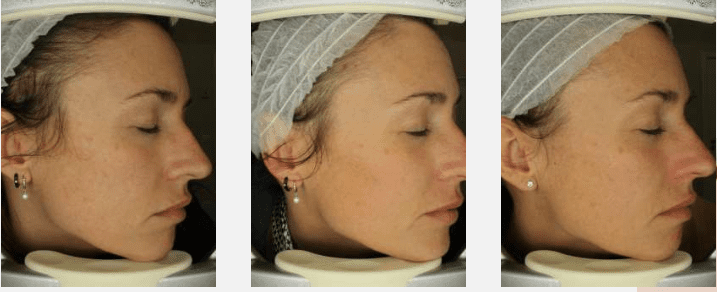
Visual comparison of facial pigmentation at baseline, after 28 days, and after 56 days of cosmetic product use. Photographic observations should be considered alongside the instrumental study results.
Hydration and Skin Comfort
Moisturizing Performance
Hydration is an important contributor to skin appearance and the behavior of the skin’s superficial layers. The balance of water within the stratum corneum influences surface smoothness, flexibility, and the visibility of fine lines.
The dermatological evaluation recorded an average hydration increase of 10.9% after two hours and 12.4% after 24 hours. Following 56 days of continued application, hydration remained 5.6% above baseline.
These changes were not statistically significant, but they provide additional information about the moisturizing performance of the tested formulation.
Dermatological Tolerance
Tolerance assessment forms an important part of qualifying multifunctional cosmetic ingredients, particularly when formulations incorporate penetration enhancers and actives associated with pigmentation pathways.
During the 56-day evaluation, the dermatologist recorded dryness in three volunteers and comedogenicity in one volunteer. These findings should remain part of the overall interpretation of the study rather than being omitted from efficacy-focused summaries.
For cosmetic chemists, appropriate finished-formulation compatibility and tolerance testing remain essential when incorporating the blend into products intended for different skin types.
Formulation Technology and Practical Applications
Water-Soluble Active System
SCH Blend® Well-Age is supplied as a water-soluble, translucent, colorless solution. Its formulation combines the active components with a solvent and solubilizing system containing water, propanediol, Polyglyceryl-6 Caprylate, and Polyglyceryl-4 Caprate.
This format supports incorporation into water-containing cosmetic formulations and offers a practical approach to managing ingredients with differing physicochemical characteristics within a single commercial blend.
The formulation’s pH specification is 7–8, while its dry-weight specification is 40–50%. These characteristics provide useful information for developing compatible cosmetic systems and planning stability evaluations.
Recommended Incorporation Level
The recommended use level for SCH Blend® Well-Age is 2–5%, depending on the formulation objective and intended application. Its water-soluble characteristics make it relevant to serums, emulsions, creams, and targeted skincare treatments.
The technical dossier includes an example white cream containing 3% of the blend. In that formulation, the base emulsion is prepared at 60–65°C before cooling to approximately 30°C for incorporation of the active-containing final phase.
This processing approach provides a useful reference for formulators seeking to reduce prolonged heat exposure during active ingredient addition. Finished-product stability, compatibility, and preservation testing remain necessary.
Technical Specifications
| Parameter | Specification |
|---|---|
| Physical appearance | Translucent solution |
| Color | Colorless |
| Odor | Characteristic |
| Solubility | Water-soluble |
| pH | 7–8 |
| Density | 1.0–1.2 g/mL |
| Dry weight | 40–50% |
| Recommended use level | 2–5% |
| Expiration | 24 months |
The ingredient’s supplied form and specifications support development across several cosmetic formats. Formulators should select concentrations and processing conditions according to their finished-product requirements and verify performance through appropriate stability and efficacy testing.
Applications in Advanced Skincare
Anti-Aging Serums and Firming Treatments
The documented changes in elasticity and wrinkle parameters make SCH Blend® Well-Age particularly relevant to formulations targeting visible signs of skin aging. Its multifunctional activity profile allows formulators to address skin appearance through complementary pigmentation, antioxidant, hydration, and delivery-related mechanisms.
Lightweight serums and treatment emulsions provide opportunities to incorporate the blend into products intended for regular use. Formulation design should prioritize compatibility, sensory performance, and the intended concentration of the active system.
Brightening and Tone-Correction Formulations
The combination of PAD, Glabridin, and Nonapeptide-1 makes the ingredient suitable for investigation in brightening-oriented cosmetic formulations. These actives contribute complementary mechanisms associated with melanogenesis and pigmentation regulation.
Potential applications include facial creams, brightening serums, and targeted treatments intended to improve the appearance of uneven skin tone. The study’s pigmentation results indicate favorable trends, although they should not be presented as statistically confirmed depigmenting outcomes.
Comprehensive Skin Rejuvenation
The strongest differentiating characteristic of SCH Blend® Well-Age is the integration of several cosmetic functions within one active system. Rather than requiring separate ingredient solutions for every visible skin concern, the blend combines multiple components with a shared formulation objective.
This creates opportunities for multifunctional skincare concepts targeting wrinkles, elasticity, firmness, luminosity, and skin tone within a coordinated development strategy.
Translating Ingredient Science into Measurable Skin Performance
SCH Blend® Well-Age demonstrates how complementary active ingredients can contribute to a multifunctional cosmetic formulation strategy. Potassium Azeloyl Diglycinate, Tetrahydropiperine, Glabridin, and Nonapeptide-1 provide a combination of pigment-related, antioxidant, moisturizing, and delivery-oriented mechanisms relevant to advanced skincare development.
The dermatological evaluation provides measurable evidence for the tested formulation, particularly the statistically significant improvements in elasticity after four hours and wrinkle parameters after 56 days. Additional numerical trends in hydration, luminosity, firmness, and tone uniformity broaden the clinical picture while requiring appropriate interpretation.
For cosmetic chemists, the blend offers a technically characterized approach to developing products that address multiple visible signs of skin aging. Its documented composition, water-soluble format, and recommended use level provide a foundation for formulation development, while the available dermatological data help guide realistic performance objectives.