
The skincare industry constantly searches for delivery systems that improve ingredient penetration while maintaining skin safety. Traditionally, sponge-derived spicules dominated this category because they provide microscopic needle-like structures capable of stimulating the skin surface and enhancing active absorption.
However, increasing demand for vegan formulations and gentler delivery systems has accelerated the development of alternative technologies.
Consequently, a new generation of vegan spicules structures has emerged. These systems rely on mineral-based microstructures rather than marine sponge derivatives. As a result, formulators can now achieve micro-stimulation and enhanced ingredient delivery without relying on animal-derived materials.
More importantly, this technology introduces a controlled epidermal stimulation mechanism designed to interact primarily with the stratum corneum. Therefore, it reduces the risk of deeper dermal irritation that sometimes occurs with conventional microneedling approaches.
Because consumers increasingly seek vegan, ethical, and microbiome-friendly skincare solutions, these new spicule technologies represent a major shift in cosmetic ingredient engineering.
Understanding Spicules Technology in Skincare
Spicules are microscopic needle-like structures capable of interacting mechanically with the skin surface. When incorporated into topical formulations, these structures create mild micro-channels that temporarily increase permeability in the outermost layer of the skin. Consequently, cosmetic actives such as peptides, antioxidants, and botanical extracts penetrate more efficiently. Historically, cosmetic spicules originated from marine sponge skeletons composed primarily of silica, where rigid needle-like formations function as structural support elements within the organism.
Limitations of Traditional Sponge Spicules
However, despite their effectiveness, sponge-derived spicules introduce several limitations. First, they are not vegan and rely on marine sponge sources. Second, natural sponge spicules vary in size and geometry because they originate from biological structures, which can create inconsistent sensory effects in cosmetic formulations. Third, sponge spicules may penetrate deeper skin layers than desired, increasing irritation potential in sensitive skin. Therefore, cosmetic scientists began exploring mineral-engineered alternatives capable of delivering the same micro-stimulation effect while improving safety and formulation control.
Vegan Spicules vs Sponge Spicules
This comparison reflects the structural differences between traditional sponge spicules and mineral-engineered vegan spicules described in the technical documentation.
Why Vegan Spicules Are Emerging
Several macro-trends drive the rapid growth of vegan spicule technology. First, global cosmetic regulations increasingly encourage ethical ingredient sourcing, and brands pursuing vegan certifications must avoid ingredients derived from animals or marine organisms. Second, consumer awareness of sustainability and cruelty-free cosmetics continues to grow, which pushes brands to adopt ingredient systems compatible with vegan labeling. Third, modern cosmetic formulations prioritize skin barrier protection, and aggressive stimulation technologies may disrupt barrier integrity. Therefore, formulators increasingly select systems that interact primarily with the outer epidermal layers rather than deeper dermal structures. Vegan spicule technologies address all three requirements simultaneously.
Mineral Micro-Rod Engineering
Instead of marine sponge skeletons, vegan spicule systems rely on mineral microstructures composed of calcium aluminum borosilicate, a material already used in cosmetic formulations such as optical powders and reflective pigments. When engineered through controlled manufacturing processes, these mineral particles form elongated micro-rod structures that mimic the mechanical interaction of natural spicules on the skin.
Compared with biological sponge structures, mineral-engineered spicules offer several advantages:
• controlled particle geometry
• consistent size distribution
• improved purity
• compatibility with vegan formulations
These characteristics allow formulators to design delivery systems with more predictable sensory performance and improved formulation stability.
Epidermal Targeting Instead of Dermal Penetration
Traditional microneedling devices intentionally penetrate the dermis to stimulate collagen production, but cosmetic formulations must remain non-invasive. Therefore, vegan spicule technologies focus on epidermal stimulation rather than dermal penetration. These micro-structures interact primarily with the stratum corneum, the outermost skin layer responsible for barrier protection. When applied topically, the structures create microscopic openings in the superficial skin layers, allowing active ingredients to penetrate more efficiently without damaging deeper tissue.
Ingredient Delivery Enhancement
One of the most valuable aspects of spicule technology is its ability to enhance ingredient delivery. The stratum corneum forms a dense lipid barrier, so many cosmetic actives struggle to penetrate the skin effectively. Spicules provide a complementary strategy because their micro-structures create localized mechanical stimulation that temporarily increases permeability in the outer skin layers. As a result, surrounding formulation ingredients penetrate more efficiently.
This mechanism benefits actives such as:
• peptides
• antioxidants
• botanical extracts
• growth factors
• microbiome ingredients
Therefore, spicule systems function as physical delivery enhancers rather than chemical penetration agents.
Hollow Microstructures and Active Loading
Recent innovations in vegan spicule engineering introduce hollow micro-rod structures capable of carrying active ingredients. These hollow structures act as microscopic reservoirs that load cosmetic actives during manufacturing. When applied to the skin, the spicule creates a micro-pathway while gradually releasing the encapsulated compounds. As a result, the system combines mechanical stimulation with controlled ingredient delivery.
Reduced Irritation Potential
Natural sponge spicules often display irregular geometries and unpredictable penetration depths, which can lead to tingling sensations or visible redness in some formulations. Modern vegan spicule systems solve this limitation through controlled particle engineering. Scientists design consistent micro-structures with optimized dimensions to regulate penetration depth more precisely. As a result, formulations deliver micro-stimulation while reducing irritation potential.
Applications in Advanced Skincare
Vegan spicule technologies enable multiple formulation strategies across cosmetic categories. Serums are the most common format because their lightweight textures allow efficient dispersion of spicule particles.
| Formulation Formats | Typical Applications |
|---|---|
| Serums – lightweight textures allow efficient dispersion of spicules. | Anti-aging treatments |
| Creams – thicker emulsions allow gradual interaction with the skin surface. | Skin renewal products |
| Masks – useful for concentrated treatment formats. | Brightening formulations |
| Targeted treatments – designed for localized delivery of actives. | Barrier repair serums |
| Targeted treatments – designed for localized delivery of actives. | Microbiome skincare |
Because spicule technology enhances ingredient penetration without invasive procedures, it supports the growing trend toward professional-level skincare treatments designed for home use.
The Future of Micro-Delivery Systems
The next generation of cosmetic ingredient engineering focuses on combining multiple delivery technologies. Spicule systems already provide physical micro-stimulation, but future formulations may integrate these structures with advanced encapsulation systems such as:
• liposomes
• exosomes
• nano-emulsions
• peptide delivery carriers
Consequently, cosmetic scientists can design multi-layer delivery platforms that improve ingredient stability, targeting, and absorption. Because vegan spicule systems rely on mineral engineering rather than biological sourcing, they also support scalable manufacturing and improved regulatory compatibility.
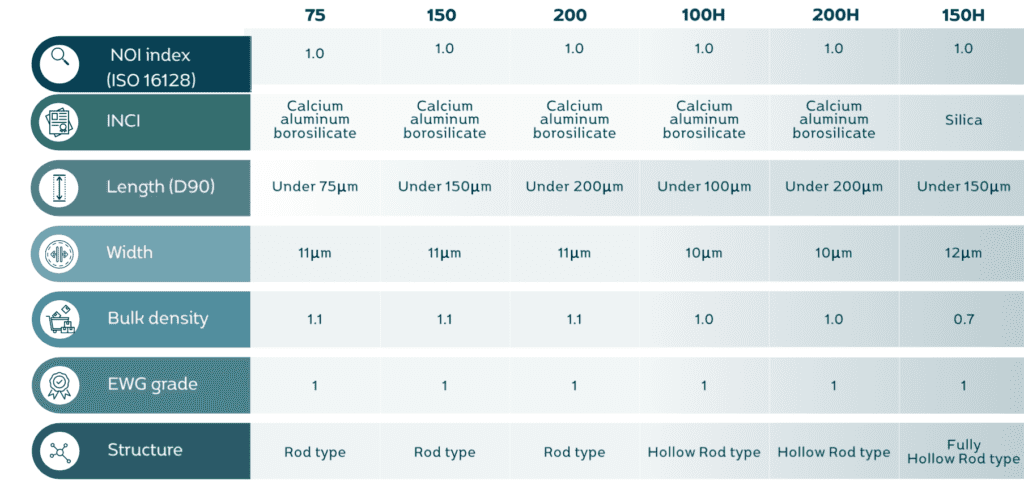
Available Spicules Grades for Formulation
The spicule delivery system is available in multiple particle sizes and structures. Each grade allows formulators to control penetration intensity, stimulation level, and active ingredient delivery performance depending on the final cosmetic application.
The series includes both solid micro-rod structures and hollow micro-rod structures capable of carrying active ingredients.
Explore Spicule Ingredients for Skincare
Interested in using spicule technology in your formulations? Explore our range of spicule ingredients designed to enhance active ingredient delivery and support advanced skincare formulations.
Conclusion
Spicules technology has evolved significantly in modern cosmetic science. Early formulations relied on marine sponge structures, but mineral-engineered alternatives now provide comparable functionality with improved control and reduced irritation potential. Vegan spicule systems offer key advantages including ethical sourcing, controlled particle engineering, and improved formulation flexibility. Most importantly, these technologies allow formulators to enhance ingredient delivery while maintaining cosmetic safety standards. As the skincare industry continues to move toward science-driven performance and ethical ingredient sourcing, vegan spicule systems will likely become an important platform in next-generation dermocosmetic formulations.