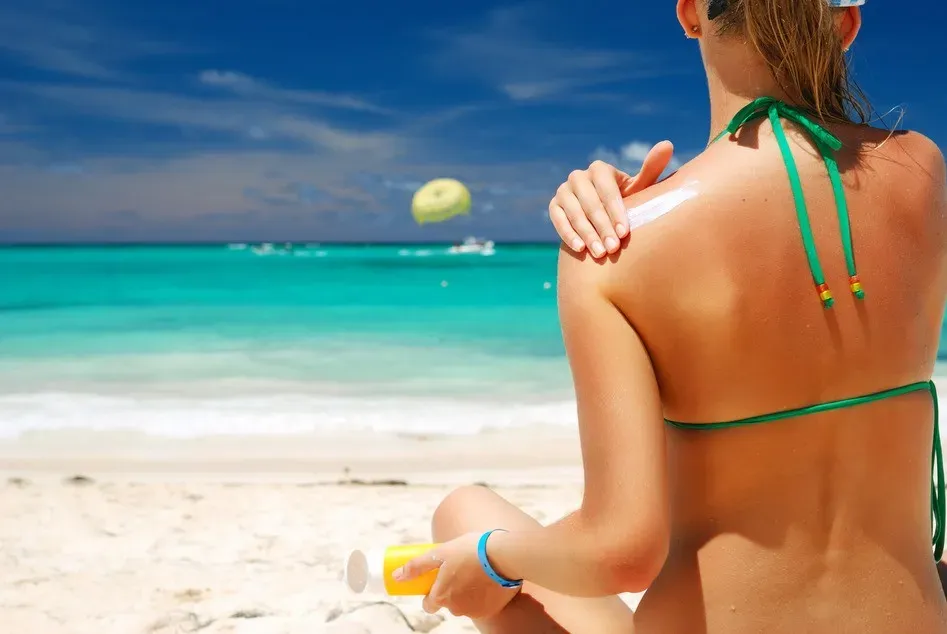
Self tanning formulas are often evaluated under controlled, ideal conditions. However, real life is never controlled. People train at the gym, walk in humid streets, sleep in dry air-conditioned rooms, sweat under clothing, and produce sebum all day. As a result, the self tanning film is constantly exposed to water, oil, friction and temperature shifts. These environmental factors do not just affect comfort. They also influence how DHA reacts, how the film breaks down, and how long color stays stable on the skin.
From a formulation perspective, sweat, sebum and climate form a set of stressors that interact directly with the applied film. They change local polarity, dilute or redistribute actives, open weak points in the polymer network and accelerate mechanical wear. In practice, this means that a tan which looks uniform after eight hours may evolve differently after two days of workouts, showers, heat exposure and abrasion from clothing. Understanding these interactions allows chemists to engineer systems that perform more reliably in the real world, not only in the lab.
How Self Tanning Films Behave on the Skin
To understand environmental interference, it helps to start with the structure of the self tanning film. After application, the emulsion lays down a thin, heterogeneous layer containing water, humectants, emulsifiers, film formers, lipids and DHA or other actives. As water evaporates, polymers coalesce, lipids reorganize, and actives diffuse toward the upper stratum corneum. During this setting phase, the film is particularly vulnerable because the network has not fully consolidated.
Once the film has formed, the tan begins developing through the Maillard reaction between DHA and amino acids in the corneocytes. At this stage, the apparent color depends on how evenly the film was deposited and how much active remains in contact with the skin. Environmental factors that introduce water, oil, salt or friction can disturb both the film and the underlying reaction environment, especially during the first twelve to twenty four hours.
Sweat: Dilution, Migration and Patch Formation
Sweat is one of the most common disruptors of self tanning results. It is not simply water. It contains electrolytes, lactic acid, urea and small organic molecules that change surface tension, ionic strength and local pH. When sweat forms under a developing self tan film, it can create microchannels that allow dissolved DHA to migrate along gravity lines, clothing edges or skin folds.
Fresh sweat dilutes hydrophilic regions of the film. As it spreads, it carries soluble components such as DHA, humectants and low molecular weight actives. Because sweat often emerges more intensely in certain regions, like the lower back, chest or hairline, this migration produces localized overdevelopment or underdevelopment. Streaks, drip marks and darker patches in crease areas frequently originate from this mechanism.
Sweat also raises the effective hydration level of the stratum corneum. Higher hydration can increase penetration of DHA, but it may also delay full film formation. When the film remains soft for longer, friction from clothing and bedding has more opportunity to deform it. In addition, salt content in sweat can interact with polymers and surfactants, altering their behavior and further weakening the network.
Sebum: Oil Phase Interaction and Film Softening
Sebum introduces a different set of challenges. Because self tanning films often contain oil phases, emollients, esters and emulsifiers, they interact with skin lipids after application. Over time, sebum diffuses into the film, changes its polarity balance and can plasticize or soften polymer regions. These changes may not be visible immediately. However, they gradually decrease film cohesion and resistance to rubbing.
In high sebum areas such as the forehead, nose, chest and upper back, this effect is more pronounced. Excess oil can dilute DHA near the surface or partially solubilize film components, allowing the color to break up faster under mechanical stress. This is why tans often fade sooner on the face compared to the legs, even when the same formula is used.
Sebum rich environments also change oxygen availability at the surface. Lipid oxidation and DHA degradation can occur in parallel, altering both odor and tone over several days. Formulas that do not account for this interplay may show yellowing, uneven fade or faster loss of intensity where sebum production is highest.
Climate: Humidity, Temperature and Air Movement
Climate conditions add another layer of complexity. Humidity strongly influences water evaporation and, therefore, both film formation and hydration state of the stratum corneum. In low humidity environments, water evaporates rapidly. The film sets faster, yet the skin dries out more intensely. This can increase microcracking and emphasize rough texture, which leads to more visible unevenness as color develops.
In high humidity environments, the opposite occurs. Water lingers in the film, slowing complete polymer coalescence and extending the vulnerable window. During this time, minor contact with clothing, furniture or bedding can imprint subtle disturbances that later show up as mottling or texture differences in the developed tan. High humidity can also support slower, but more extensive, diffusion of DHA, changing the depth and distribution of color.
Temperature works alongside humidity. Heat reduces viscosity of the film, accelerates diffusion and increases sweat production. As the skin warms, both water and oil mobility rise, which encourages migration of actives and plasticization of the film. Cooler environments slow all these processes, but may increase the risk of incomplete evaporation if air movement is minimal. Wind adds still another factor, because it accelerates evaporation, cools the skin and can promote uneven drying patterns.
Friction and Mechanical Wear in Daily Life
Even when sweat and sebum are well managed, friction remains a major source of environmental interference. Tight clothing, sports bras, waistbands, shoe straps, pillowcases and towels all exert mechanical stress on the developing or established film. During the first hours, this friction can physically displace semi-set material, leaving lighter patches where the film has been thinned or wiped away.
After the tan has developed, ongoing friction gradually removes pigmented corneocytes at a faster rate in specific regions. Shoulder straps, bra bands and elastic waistbands accelerate exfoliation along defined lines. As a result, fade-out patterns often reflect clothing architecture. Long wear systems therefore must combine chemical durability with mechanical resilience if they aim to withstand real world use.
Exercise and Lifestyle Scenarios
Real consumer routines amplify all of these stressors. High intensity exercise produces rapid sweat flow, raised temperature and increased friction from clothing. Outdoor activities combine sweat with ultraviolet exposure, wind and humidity changes. Office work may happen in dry, air conditioned environments that dehydrate the stratum corneum and increase micro-shedding.
Even sleep can be a critical phase. During the night, prolonged contact between semi-set film and sheets creates extensive friction. Body heat and occlusion under blankets raise humidity around the skin, which delays full film consolidation. If the product is applied shortly before bed, this combination can lead to patchy development, transfer to bedding and uneven intensity the next day.
Formulation Strategies to Resist Environmental Interference
To improve performance under these conditions, formulators can design self tanning systems that are more robust against water, oil and friction. One key strategy involves selecting film forming polymers with strong cohesion but controlled flexibility. Acrylic and polyurethane dispersions can create films that tolerate sweat and sebum infiltration without fragmenting too quickly. When combined with appropriate plasticizers, these polymers maintain integrity while still moving with the skin.
Another strategy uses structured emulsions that resist rapid destabilization in the presence of sweat and sebum. Choosing emulsifiers with good electrolyte tolerance, along with stabilizing waxes and co-emulsifiers, helps prevent micro phase separation under stress. In addition, incorporating microcrystalline cellulose or rheology modifiers can maintain uniform distribution of DHA during the vulnerable drying phase.
Humectants and hydration modulators also contribute. By keeping the stratum corneum at a more stable hydration level, they reduce the extremes caused by dry air or heavy sweating. This improves evenness of development and makes the Maillard reaction less sensitive to local fluctuations. Carefully chosen humectants and polyols can balance water retention without leaving an overly tacky or occlusive feel.
Claim Support Testing for Environmental Resistance
To substantiate claims around environmental resistance, laboratory testing must simulate real world conditions as closely as possible. Static in vitro testing on artificial substrates or unchallenged skin provides useful baseline data, but it does not capture the dynamic stresses of sweat, sebum, friction and climate. Therefore, advanced evaluation protocols introduce controlled water exposure, sebum analogues, mechanical abrasion and climatic chamber conditions.
For example, water immersion cycles can approximate showering or swimming, while controlled rub-off tests measure how easily film and color transfer to textiles under standard pressure. Sebum resistance can be assessed using artificial sebum blends applied repeatedly to treated skin. Climate chambers allow the combination of high or low humidity and temperature to observe how differently a formula behaves across environments.
By integrating these more realistic tests into development workflows, formulators can identify weaknesses early and adjust polymers, emulsifiers or humectant systems before launch. This approach produces products that match label promises more closely, even when users expose them to intense daily stress.
Designing Self Tanning Systems for Real Life
The ultimate goal is to build self tanning systems that do not collapse when consumers move from the controlled conditions of marketing claims into the messy reality of daily life. Achieving this requires viewing sweat, sebum and climate not as afterthoughts but as central design parameters. When the formula is engineered to maintain film integrity, controlled diffusion and stable reaction conditions in the presence of these factors, performance becomes significantly more predictable.
As the category evolves, environmental robustness will increasingly differentiate advanced self tanning formulations. Products that deliver stable, even color despite exercise, climate variation and friction will stand out. For chemists, this shift demands deeper integration between polymer science, skin biophysics and practical wear testing. In return, it opens the door to more credible long wear claims and better user satisfaction across diverse lifestyles.