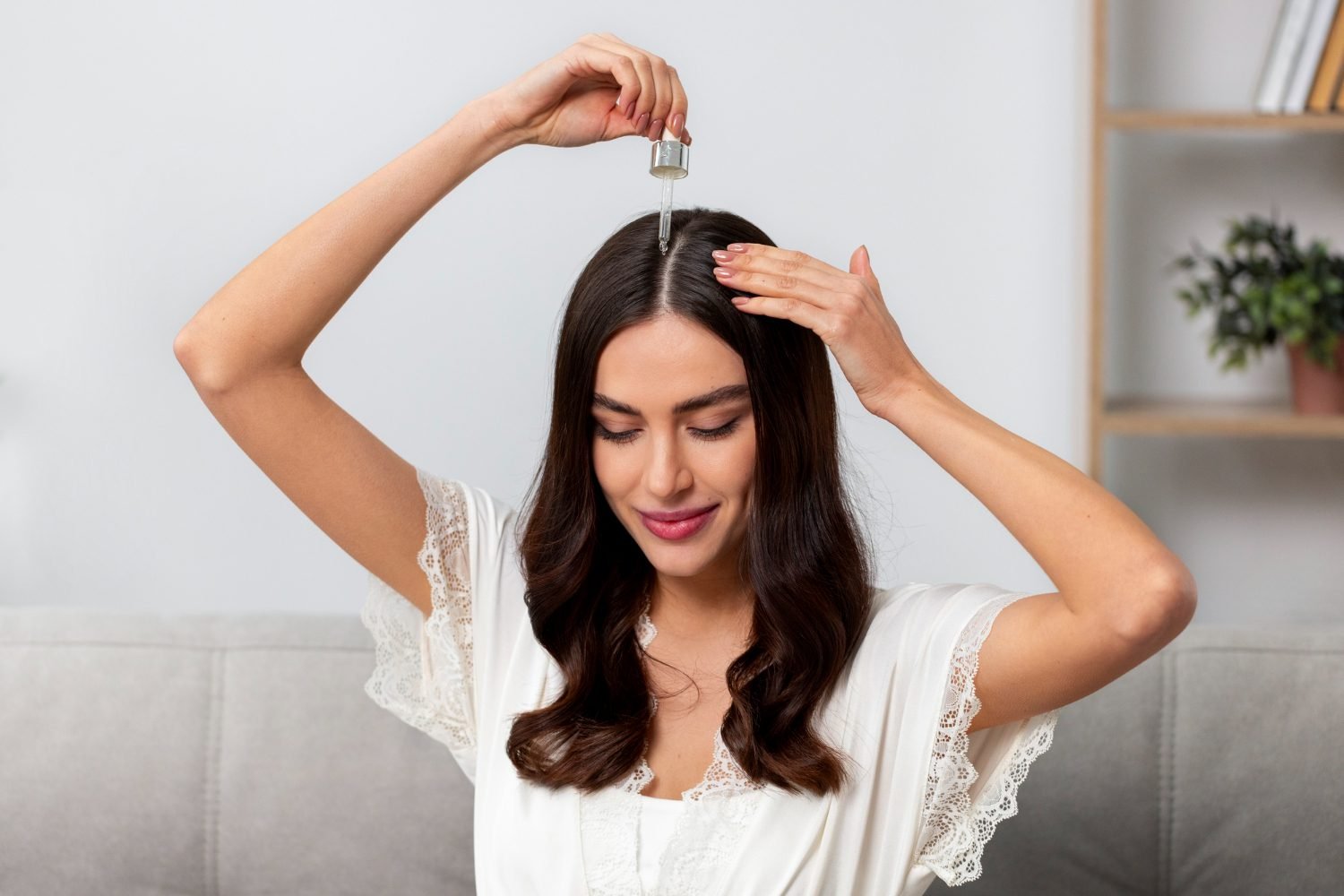
Hair and scalp oil performance is frequently misinterpreted through a skin-care lens. However, scalp biology and hair fiber behavior follow different rules. Sebum plays a central role in both environments, yet its function on the scalp differs fundamentally from its behavior on facial skin.
By 2026, scalp-focused formulation has shifted from “nourishing oils” toward sebum-aware design. This change reflects growing evidence that oil choice affects follicular health, microbial balance, buildup, irritation risk, and long-term hair quality. Therefore, oil selection for scalp and hair must align with sebum dynamics rather than cosmetic tradition.
This article explains how scalp sebum behaves, why many botanical oils perform poorly on scalp and hair, how sebum-driven oil selection improves outcomes, and how formulators can design systems that respect both follicular biology and hair fiber physics.
How Scalp Sebum Differs from Skin Sebum
Sebum composition on the scalp is similar to facial sebum in origin but differs in functional context. On the scalp, sebum must lubricate hair fibers, protect follicles, regulate microbial balance, and tolerate mechanical stress from grooming and styling.
Importantly, scalp sebum spreads along hair shafts. Therefore, oil behavior on hair is as important as oil behavior on skin. Oils that feel acceptable on facial skin may create buildup, heaviness, or irritation when interacting with hair fibers and follicles.
The Follicular Environment Is the Primary Risk Zone
Hair follicles concentrate lipids, microbes, and inflammatory signals in a confined space. Consequently, oil choice strongly influences follicular health.
When oils accumulate in follicles, they can:
- Alter sebum flow dynamics
- Increase microbial activity
- Trigger irritation or itching
- Amplify dandruff-prone conditions
Therefore, scalp oils must avoid excessive persistence and unpredictable breakdown.
Why Many Botanical Oils Perform Poorly on Scalp
Most botanical oils are triglyceride-dominant. On the scalp, microbial lipases rapidly hydrolyze triglycerides into free fatty acids. While some fatty acids support barrier function, others increase irritation and inflammation in follicular environments.
Additionally, triglyceride-heavy oils tend to accumulate at the follicle opening. Over time, this buildup can disturb normal desquamation and sebum flow, contributing to flaking, itch, or greasy residue.
As a result, oils that feel “nourishing” initially may worsen scalp comfort with repeated use.
Hair Fiber Interaction Changes Oil Performance
Hair fibers are hydrophobic structures with cuticle layers that trap oils. Oils that bind strongly to hair fibers resist removal and accumulate over time.
This accumulation:
- Increases heaviness and limpness
- Reduces volume
- Amplifies dullness
- Requires harsher cleansing to remove
Consequently, oil persistence that benefits skin can harm hair aesthetics.
Oxidation and Scalp Sensitivity
The scalp is frequently exposed to heat, UV, and oxygen. Polyunsaturated oils oxidize under these conditions, generating byproducts that irritate follicles and scalp skin.
Oxidized oils can:
- Increase itch and sensitivity
- Exacerbate dandruff-like symptoms
- Trigger inflammatory responses
Therefore, oxidation stability is critical in scalp formulations.
Sebum-Driven Oil Design Principles
Sebum-aware oil selection focuses on compatibility with natural scalp lipid flow rather than maximum nourishment.
Effective systems aim for:
- Low follicular accumulation
- Controlled surface persistence
- Easy removal during washing
- Minimal microbial disruption
Oil Selection Outcomes in Sebum-Dominant Scalp Environments
| Performance Parameter | Sebum-Driven Oil Selection | Traditional Botanical Oil Selection |
|---|---|---|
| Follicular behavior | Minimizes buildup and congestion | Prone to accumulation |
| Microbial interaction | Lower unpredictable lipid breakdown | High triglyceride hydrolysis |
| Hair fiber impact | Light coating, easier removal | Persistent binding and heaviness |
| Oxidation risk | Lower, more controlled | Higher with unsaturated oils |
| Long-term comfort | Improved scalp tolerance | Increased itch and residue risk |
Why “Oil-Free” Is Not the Answer
Eliminating oils entirely can disrupt scalp comfort and hair lubrication. Sebum-driven design does not mean oil avoidance; it means choosing oils that cooperate with natural sebum rather than competing with it.
Properly selected oils can support scalp balance without creating buildup or irritation.
Formulation Strategies for Scalp and Hair
- Limit triglyceride-heavy oils in leave-on scalp products
- Prioritize oxidation-stable lipid systems
- Design for wash-off compatibility
- Segment scalp products from hair-length products
Testing Considerations
Scalp oil systems require testing beyond cosmetic feel. Validation should include:
- Repeated-use tolerance studies
- Scalp comfort and itch monitoring
- Residue accumulation assessment
- Wash-off efficiency testing
Key Takeaways
- Scalp oil performance depends on sebum dynamics
- Many botanical oils accumulate and irritate follicles
- Sebum-driven selection improves long-term comfort
- Hair fiber interaction must guide oil choice
- Oxidation stability is critical for scalp tolerance