PDRN is becoming one of the most closely watched ingredients in advanced skin care. Originally investigated in regenerative medicine, this DNA-derived active is gaining attention for its relationship with cellular activity, extracellular matrix maintenance, and skin revitalization. Its growing presence in cosmetic formulations reflects a wider interest in skin longevity and the biological processes associated with visible aging.
But there is an important distinction between an ingredient’s biological potential and its performance in a topical product. High purity alone does not guarantee that an active will reach its intended environment or produce measurable cosmetic benefits. Molecular characteristics, stability, and delivery technology all influence the formulation. This is where BIOMICELL® PDRN introduces a different approach to the development of DNA-derived skin care actives.
The Science Behind PDRN and Its Delivery Challenge
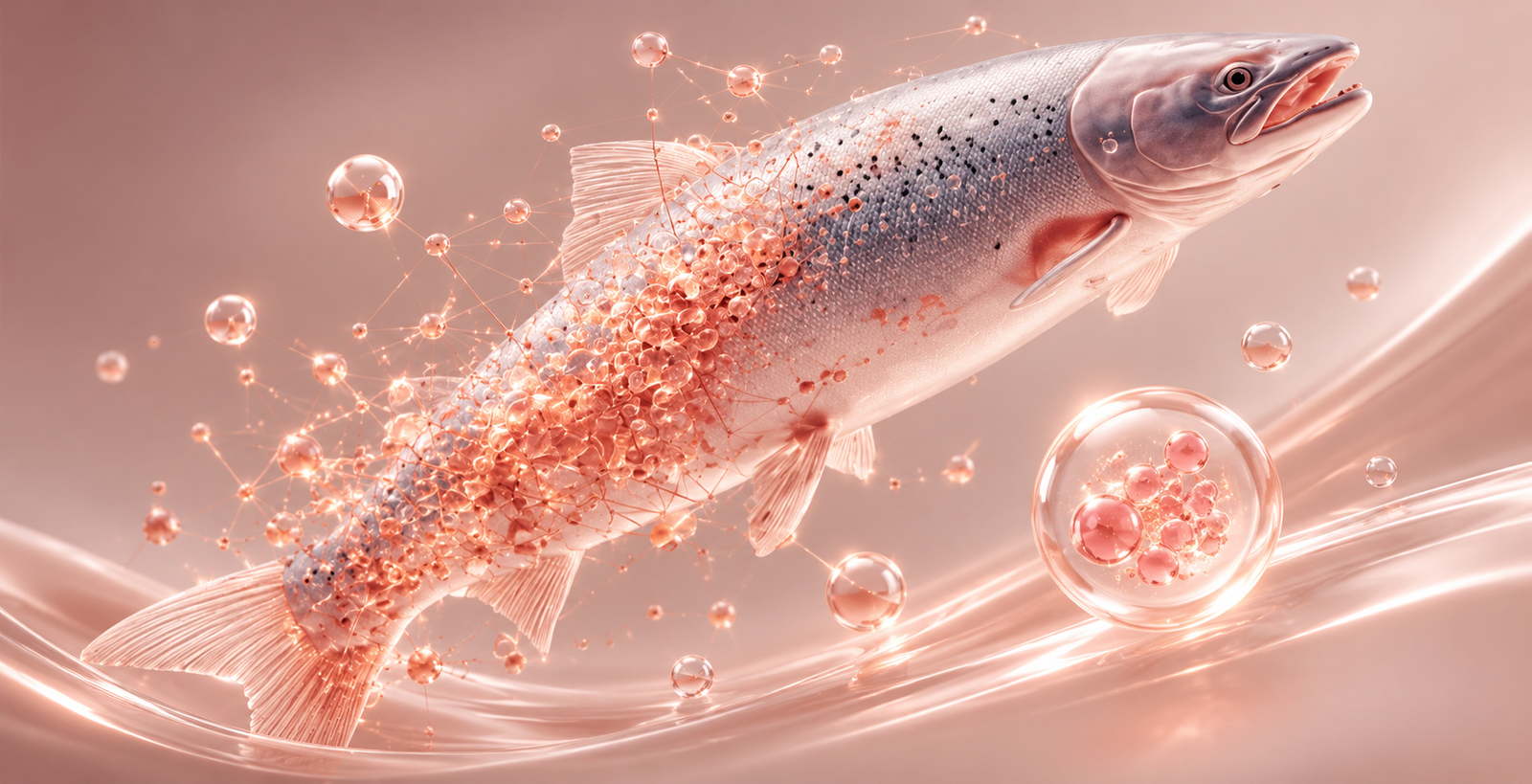
Polydeoxyribonucleotide (PDRN) consists of purified DNA fragments, commonly obtained from salmonid sources. Its biological activity has been investigated through adenosine A2A receptor-associated signaling and the nucleotide salvage pathway. These processes are involved in cellular responses related to inflammation, tissue maintenance, and extracellular matrix remodeling. The salvage pathway allows cells to recycle nucleosides and nucleotide components for nucleic acid synthesis.
These mechanisms help explain PDRN’s scientific relevance, but findings from injectable applications and laboratory studies cannot automatically establish equivalent effects in topical cosmetics. Its DNA-derived structure, relatively high molecular weight, and negative charge can limit movement across the skin’s outer barrier. Increasing ingredient concentration does not necessarily resolve these limitations. For formulators, this makes the stability and behavior of the surrounding delivery system an important part of development.
BIOMICELL® PDRN combines salmon-derived PDRN, with a reported active purity greater than 99%, and a bio-inspired micellar delivery platform. Molecular self-organization creates an organized microenvironment designed to support active protection, stability, and interaction with the skin. The manufacturer reports a micellar particle-size specification of 1–100 nm, together with PEG-free and preservative-free positioning. These describe the supplied ingredient and its carrier; particle size alone does not establish deeper skin penetration, and active purity should not be confused with PDRN concentration in the liquid ingredient.
Conventional PDRN vs. BIOMICELL® PDRN
Comparing PDRN preparations requires attention to both the active and its delivery architecture. Purity, molecular characteristics, processing conditions, and available testing each answer a different formulation question. The comparison below summarizes the supplied technology and its reported evaluation, rather than assuming that all conventional PDRN grades behave alike.
| Feature | Conventional PDRN | BIOMICELL® PDRN | Formulating Advantage |
|---|---|---|---|
| Active quality | Source, purity, and molecular characteristics depend on grade. | Salmon-derived PDRN with reported active purity greater than 99%. | A stated active-quality parameter for raw-material evaluation. |
| Delivery architecture | Depends on the supplied preparation and carrier. | Bio-inspired micellar delivery system. | Designed to support active protection and stability. |
| Particle characteristics | Molecular and carrier specifications vary by grade. | Reported micellar particle size of 1–100 nm. | A defined carrier specification to consider during development. |
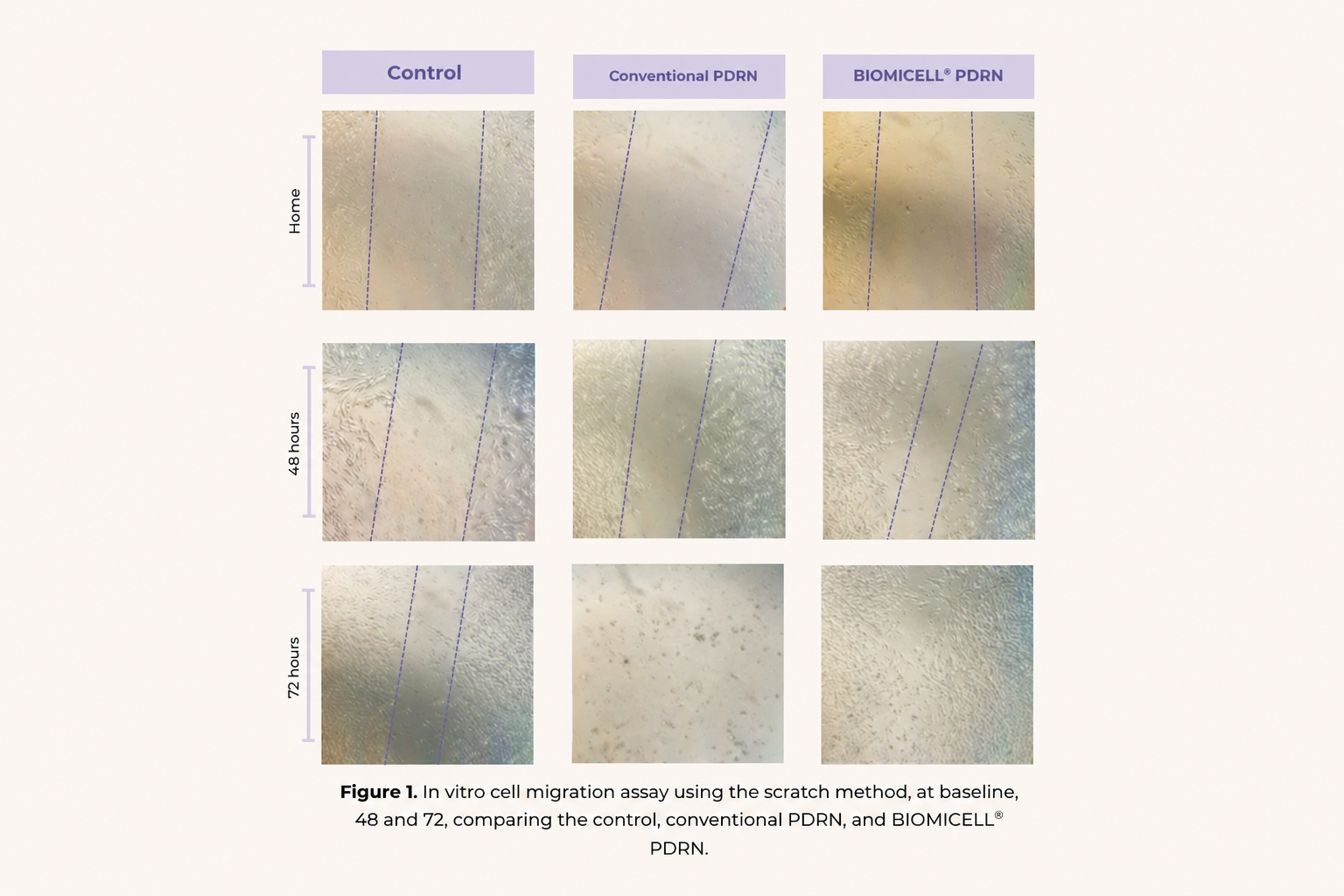
| Laboratory comparison | Conventional PDRN served as a comparator in the reported scratch assay. | Manufacturer-reported difference in scratch closure after 48 hours. | Product-specific comparative evidence within the tested cell model. |
| Topical-use evidence | Depends on available formulation studies. | 30-day human-use evaluation of a serum containing 5% of the supplied ingredient. | Preliminary photographic observations from a finished topical formulation. |
| Formulation parameters | Use level and processing depend on grade. | Reported use range of 0.5–5%; incorporate below 40°C. | Practical starting parameters for formulation development. |
Specifications and study findings are manufacturer-reported. Differences in carrier design do not establish superior clinical performance across all finished formulations.
From Cellular Signaling to Measurable Laboratory Results
The biological activity of BIOMICELL® PDRN has been investigated through complementary laboratory studies. In human dermal fibroblasts, the manufacturer reported increases in TGF-β1 and VEGF gene expression compared with control after 72 hours of exposure. These markers are associated with extracellular matrix regulation and vascular-related signaling, respectively. The results below describe gene-expression changes under the tested conditions.
In vitro · Human dermal fibroblasts · Compared with control after 72 hours · Manufacturer-reported data.
A separate scratch assay using 3T3 fibroblasts compared BIOMICELL® PDRN with conventional PDRN and a control. The images below illustrate the progression of scratch closure, with the manufacturer’s reported results highlighting differences in cellular migration and proliferation. Together, these studies provide product-specific laboratory evidence, although they do not directly establish increased collagen production, skin penetration, or visible benefits in human skin.
Human-Use Evaluation: What Happened After 15 Days?
Beyond laboratory testing, BIOMICELL® PDRN was evaluated in a 30-day human-use study involving adult male and female volunteers aged 20–55. Participants applied a facial serum containing 5% BIOMICELL® PDRN twice daily, in the morning and evening. Photographs were collected at baseline and on days 3, 7, 15, and 30 to document changes in the appearance of facial expression lines. The 5% figure refers to the supplied ingredient in the serum, rather than 5% pure PDRN.
The manufacturer reports visible softening of expression lines in the periocular region after 15 days of use. The photographs below compare baseline with Day 15 during the evaluation. These observations illustrate the appearance of the skin during topical use, complementing the laboratory findings discussed above.
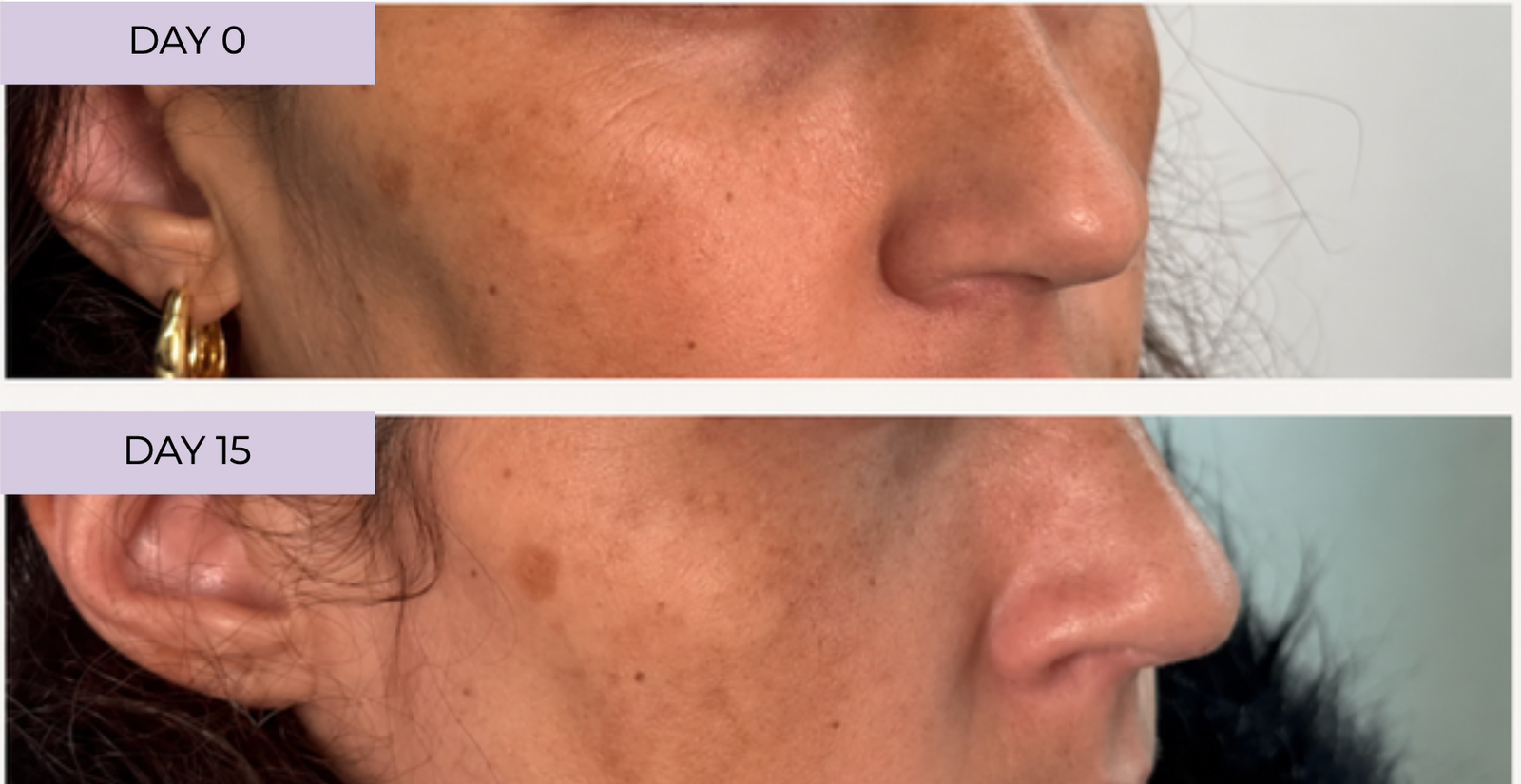
The available study summary does not disclose the total number of volunteers, a control group, or instrumentally quantified wrinkle-reduction measurements. These photographs therefore provide preliminary cosmetic observations rather than a quantified clinical efficacy claim. They offer a starting point for further controlled evaluation of the finished formulation.
Translating the Technology Into Cosmetic Formulations
BIOMICELL® PDRN is supplied as a liquid ingredient, with a reported recommended use range of 0.5–5% and incorporation below 40°C. It is relevant to the development of facial serums, ampoules, moisturizing creams, and masks focused on the appearance of skin renewal, firmness, and revitalization. These parameters provide a development starting point; the human-use observations discussed above relate specifically to the serum evaluated at 5%.
Micellar architecture also introduces considerations beyond PDRN concentration. Compatibility with emulsifiers, polymers, surfactants, and other functional ingredients can influence the behavior of the delivery system within the finished product. Evaluating viscosity, appearance, physical stability, and active retention is therefore important when translating the supplied ingredient into a commercial formula. Preservative-free positioning of the raw material does not remove the need to establish adequate preservation of the finished product.
For chemists comparing PDRN technologies, controlled evaluation using equivalent active PDRN content provides a more informative basis than comparing the same percentage of two supplied ingredients. Differences in active loading can otherwise obscure the contribution of the carrier. Testing within the intended formulation helps determine whether delivery design translates into a meaningful performance advantage.
Formulator Takeaway: Beyond the Molecule
The interest surrounding PDRN reflects a broader change in cosmetic ingredient development: the active molecule and its delivery environment increasingly need to be considered together. BIOMICELL® PDRN combines high-purity salmon-derived DNA fragments with bio-inspired micellar technology, supported by manufacturer-reported cellular studies and preliminary human-use observations. This provides a basis for exploring skin revitalization formulations while keeping stability, carrier behavior, and finished-product performance at the center of development. The next advancement may depend less on increasing active concentration and more on understanding how the complete formulation performs.