Inflamm-aging describes a chronic, low-grade inflammatory state that gradually develops with age and persists even in the absence of visible irritation. In skin biology, this phenomenon fundamentally alters how tissues respond to stress, recovery signals, and topical intervention. As a result, many anti-inflammatory cosmetic actives that perform reliably on younger skin lose effectiveness as aging progresses.
In cosmetic formulation, anti-inflammatory actives often function as stabilizers for sensitive skin, post-procedure recovery, and anti-aging positioning. However, in aging populations, these actives frequently deliver diminishing returns. Therefore, understanding why anti-inflammatory strategies stop working requires a deeper examination of immune fatigue, barrier-driven inflammation, and metabolic constraints unique to aging skin.
Rather than indicating poor ingredient quality, this decline reflects biological limits. Consequently, formulators must rethink how, when, and why anti-inflammatory actives are used in products targeting aging skin.
What inflamm-aging means in skin biology
Inflamm-aging refers to a sustained inflammatory background driven by cumulative oxidative stress, cellular senescence, immune dysregulation, and lifelong environmental exposure. In skin, this state manifests as elevated cytokine signaling, impaired resolution pathways, and reduced anti-inflammatory feedback.
Over time, keratinocytes, fibroblasts, endothelial cells, and resident immune cells shift toward a pro-inflammatory baseline. Consequently, even without acute triggers, skin remains immunologically active. This baseline activation changes how skin interprets anti-inflammatory signals.
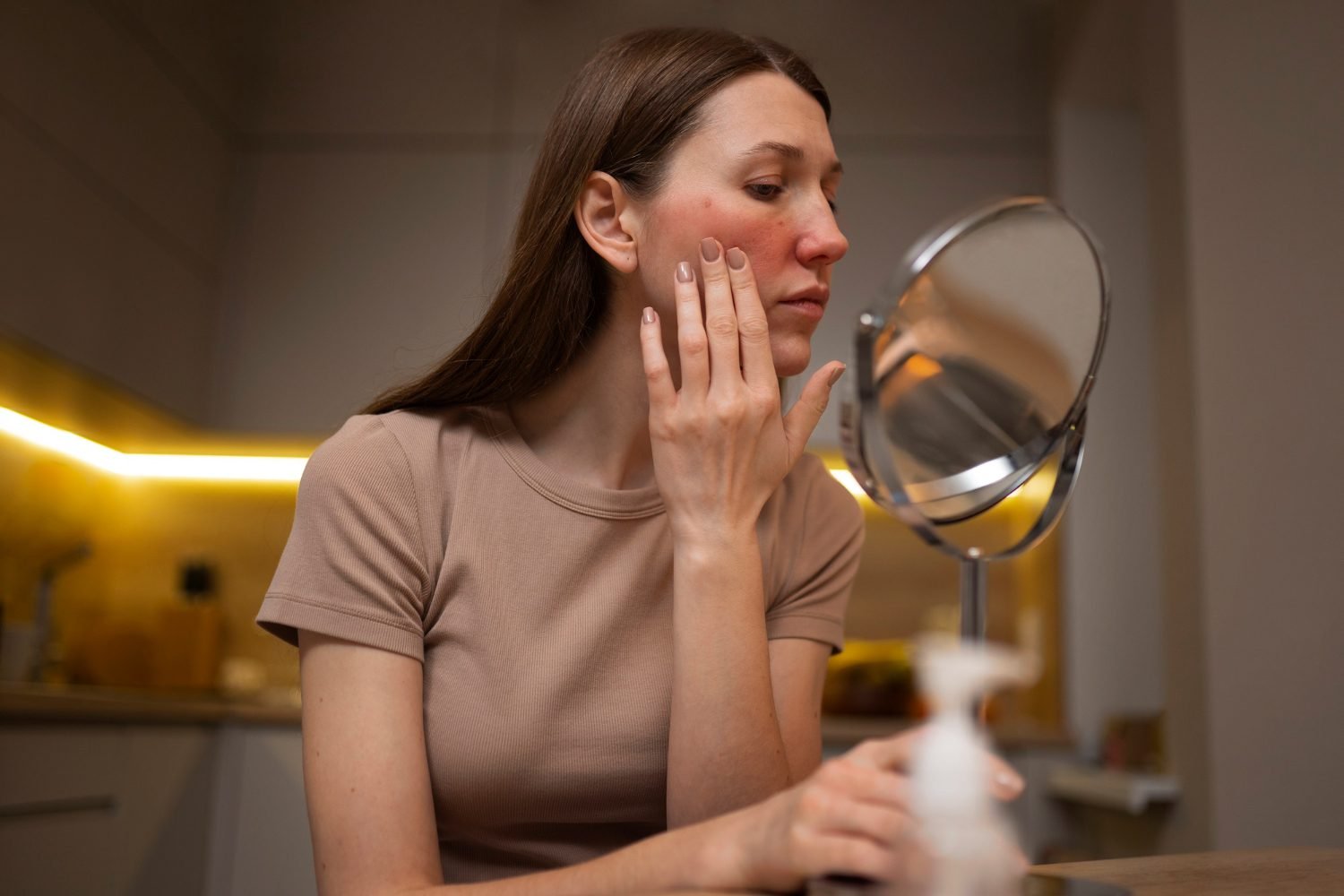
Importantly, inflamm-aging does not present solely as redness. Instead, it appears as subtle fragility, delayed recovery, heightened sensitivity, impaired barrier repair, and reduced tolerance to otherwise mild actives.
The role of cellular senescence and SASP
One of the primary drivers of inflamm-aging is cellular senescence. Senescent cells no longer divide, yet they remain metabolically active and secrete pro-inflammatory mediators collectively known as the senescence-associated secretory phenotype (SASP).
In aging skin, senescent fibroblasts and keratinocytes release cytokines, chemokines, and matrix-degrading enzymes. As a result, inflammatory signaling persists independently of external stressors. Therefore, topical anti-inflammatory actives must compete against endogenous inflammatory output.
Because SASP operates continuously, transient suppression from topical actives rarely shifts the overall inflammatory balance. Consequently, perceived efficacy declines over time.
Why anti-inflammatory actives initially work
On younger or acutely irritated skin, anti-inflammatory actives effectively suppress excessive cytokine release, reduce erythema, and support recovery. In these cases, immune signaling remains flexible and responsive.
- Rapid reduction of visible redness
- Improved tolerance to exfoliants or retinoids
- Faster post-procedure recovery
- Temporary stabilization of reactive skin
However, these effects depend on intact resolution mechanisms. As inflamm-aging progresses, those mechanisms weaken, and responsiveness declines.
Signal fatigue and immune desensitization
Chronic inflammation forces immune and skin cells into constant signaling. Over time, receptors involved in inflammatory regulation downregulate or become less responsive. Consequently, anti-inflammatory signals lose potency.
When topical actives attempt to suppress pathways that already operate at a sustained baseline, the skin responds weakly. Therefore, repeated exposure produces diminishing effects rather than cumulative improvement.
This signal fatigue mirrors tolerance development in other biological systems. In aging skin, desensitization often occurs before visible inflammation resolves.
Barrier decline amplifies inflammatory input
Aging skin experiences progressive barrier weakening due to reduced lipid synthesis, altered ceramide ratios, and slower recovery kinetics. As a result, environmental stressors penetrate more easily and continuously stimulate inflammatory pathways.
Even when anti-inflammatory actives suppress certain mediators, barrier leakage reintroduces new inflammatory signals. Consequently, inflammation persists despite active intervention.
Therefore, without restoring barrier integrity, anti-inflammatory actives operate within a loop they cannot fully interrupt.
Neuro-inflammatory crosstalk in aging skin
Aging skin shows increased interaction between immune signaling and peripheral nerve endings. Neurogenic inflammation contributes to sensitivity, itching, and dysesthesia. As a result, inflammation becomes both immune- and nerve-driven.
Most cosmetic anti-inflammatory actives target immune mediators but do not address neurogenic components. Consequently, symptom relief becomes incomplete and inconsistent.
This mismatch further explains why anti-inflammatory claims lose credibility in older skin types.
Metabolic and energetic constraints
Skin must metabolize, deactivate, or recycle anti-inflammatory compounds after penetration. However, mitochondrial efficiency and enzymatic capacity decline with age. As a result, actives degrade faster or fail to sustain signaling.
Meanwhile, chronic inflammation consumes metabolic resources such as NADPH and glutathione. Consequently, skin prioritizes survival and repair over modulation.
Therefore, even well-designed actives struggle to maintain long-term effectiveness under metabolic stress.
Formulation-level limitations
Formulators often respond to declining efficacy by increasing concentration or stacking anti-inflammatory actives. However, this approach rarely restores performance.
- Higher concentrations increase irritation risk
- Multiple actives compete for limited signaling bandwidth
- Penetration enhancers exacerbate barrier stress
- Chronic exposure accelerates desensitization
As a result, formulation escalation frequently worsens outcomes rather than improving them.
Evidence quality and long-term outcomes
In vitro
Cell-based models show strong anti-inflammatory effects under acute stimulation. However, these systems lack chronic immune activation and barrier decline. Therefore, they overestimate durability.
Ex vivo
Ex vivo aging skin models reveal reduced responsiveness and rapid plateauing of effects. Repeated exposure rarely enhances outcomes.
In vivo / clinical
Clinical studies in older populations often report short-term improvements that fade with continued use. Sustained benefits typically correlate with barrier-supportive strategies rather than inflammation suppression alone.
Common failure patterns in inflamm-aging products
- Initial improvement followed by stagnation
- Reduced tolerance over time
- Escalation without additional benefit
- Persistent sensitivity despite claims
- User perception of loss of efficacy
Why anti-inflammatory actives alone are insufficient
Anti-inflammatory actives modulate signaling but do not reverse structural or energetic decline. Therefore, they cannot correct the root drivers of inflamm-aging.
Without addressing barrier repair, cellular energy balance, senescence burden, and resolution pathways, inflammation reasserts itself. Consequently, anti-inflammatory actives lose relevance as primary interventions.
Comparison: acute inflammation vs inflamm-aging
| Aspect | Acute Inflammation | Inflamm-Aging |
|---|---|---|
| Duration | Transient | Chronic |
| Immune responsiveness | High | Reduced |
| Barrier role | Secondary | Primary driver |
| Anti-inflammatory efficacy | Strong | Limited |
Key takeaways
- Inflamm-aging creates persistent inflammatory pressure
- Signal fatigue reduces responsiveness to actives
- Barrier decline sustains inflammation
- Neuro-inflammatory pathways complicate control
- Metabolic stress limits long-term efficacy
- Escalation strategies often backfire
- Barrier-focused approaches outperform suppression alone
- Claims must reflect chronic biology