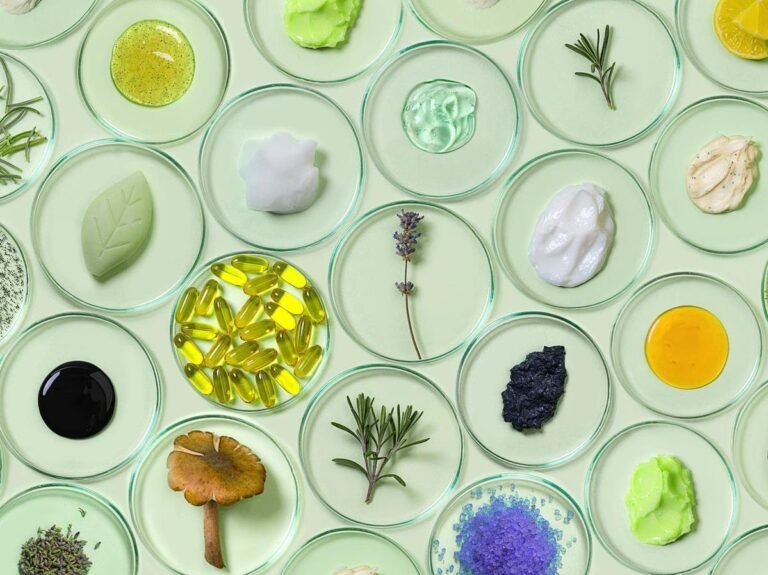

Hormesis in skincare is emerging as a central concept in longevity-driven cosmetic science, where controlled exposure to mild stressors activates protective, repair, and adaptive pathways within the skin. Traditionally, skincare has focused on reducing stress through antioxidants and soothing agents. However, this approach does not train the skin to respond effectively to future challenges. Therefore, modern formulations are shifting toward strategies that improve resilience, enhance cellular defense systems, and maintain long-term skin function under continuous environmental and metabolic stress.
In this context, hormesis represents a paradigm shift. Instead of eliminating stress entirely, formulators design controlled micro-stress signals that trigger beneficial biological responses. As a result, skin becomes more resistant to oxidative damage, maintains protein integrity more effectively, and preserves structural performance over time. This transition aligns with broader longevity science, where adaptive capacity is considered a key determinant of biological aging.
Understanding Hormesis in Skin Biology
The Biphasic Response Curve
Hormesis follows a biphasic dose-response relationship. Low levels of stress stimulate beneficial cellular responses, while high levels induce damage and dysfunction. In skin, this means that carefully controlled exposure to stressors can activate protective mechanisms without compromising tissue integrity. Therefore, the formulation challenge lies in identifying the optimal dose window that maximizes benefit while avoiding irritation or cytotoxicity.
From Damage Prevention to Adaptive Capacity
Conventional skincare aims to neutralize reactive oxygen species and reduce inflammation. However, this approach can limit the activation of endogenous defense systems. In contrast, hormetic strategies stimulate the skin’s intrinsic protective pathways, including antioxidant enzyme production, protein repair systems, and mitochondrial adaptation. As a result, the skin develops a stronger and more sustainable defense network.
Key Molecular Pathways Activated by Hormesis
Several critical pathways are activated through hormetic stimulation. These include NRF2 signaling, which regulates antioxidant defense; heat shock proteins (HSPs), which maintain protein stability; and mitochondrial biogenesis pathways, which improve energy production. Additionally, hormesis influences autophagy and proteasome activity, enhancing the removal of damaged cellular components. Consequently, hormetic skincare operates at multiple biological levels simultaneously.
Adaptogenic Stressors: Leveraging Extremophile Biology
Why Extremophiles Matter
Extremophiles are organisms that thrive under harsh environmental conditions, including high salinity, extreme temperatures, and intense UV exposure. These organisms produce specialized molecules that protect cellular structures and maintain functionality under stress. When applied to human skin, these compounds act as hormetic triggers, activating similar protective pathways.
Desert Plants and Xerophytic Adaptation
Desert plants have evolved mechanisms to survive dehydration, high UV radiation, and temperature fluctuations. Their extracts contain osmoprotectants, antioxidants, and stress-response modulators that enhance skin resilience. For example, these compounds can stabilize proteins, reduce oxidative damage, and improve barrier function under environmental stress.
Marine and Halophilic Microorganisms
Marine-derived actives, particularly from salt-tolerant microorganisms, provide another source of hormetic compounds. These ingredients often contain unique polysaccharides, peptides, and secondary metabolites that activate cellular defense pathways. As a result, they improve hydration, enhance stress tolerance, and support long-term skin function.
Formulation Considerations for Adaptogens
Integrating adaptogenic ingredients requires attention to stability, solubility, and compatibility. Many of these compounds are sensitive to pH and oxidation. Therefore, encapsulation technologies and antioxidant systems are often necessary to preserve activity. Additionally, concentration must be carefully controlled to achieve hormetic effects without overstimulation.
Thermal Mimicry: Simulating Environmental Stress Signals
Heat-Induced Responses
Heat exposure activates heat shock proteins, which play a critical role in protein folding and repair. These proteins prevent aggregation and maintain structural integrity under stress. In skincare, thermal mimetic ingredients can induce similar responses, enhancing proteostasis without requiring actual heat exposure.
Cold Exposure and Mitochondrial Activation
Cold exposure influences mitochondrial activity and increases metabolic efficiency. It also affects circulation and cellular signaling pathways. Cosmetic actives that mimic cold stress can stimulate mitochondrial function, improving energy availability for repair and maintenance processes.
Advantages of Thermal Mimetic Systems
Thermal mimicry allows formulators to harness the benefits of environmental stress without the associated risks. By activating specific pathways, these systems improve skin resilience, enhance repair mechanisms, and support long-term performance. Consequently, they represent a safe and effective approach to hormetic skincare design.
Hormesis and Proteostasis: Maintaining Protein Integrity
Protein Folding and Stability
Proteostasis is essential for maintaining functional proteins in skin. Hormetic stimulation enhances the activity of molecular chaperones and heat shock proteins, improving protein folding and preventing aggregation. As a result, structural proteins such as collagen and elastin maintain their functional integrity.
Degradation of Damaged Proteins
Hormesis also improves the efficiency of proteasome and autophagy pathways. These systems remove damaged or misfolded proteins, preventing their accumulation. Consequently, the extracellular matrix remains more organized, and cellular stress is reduced.
Long-Term Impact on Skin Structure
By maintaining protein quality, hormesis supports long-term skin structure and function. This leads to improved elasticity, reduced degradation, and enhanced resilience. Therefore, proteostasis becomes a key outcome of hormetic skincare strategies.
Hormesis and Mitochondrial Function
Energy as a Limiting Factor
Cellular repair processes require energy. Mitochondria supply ATP needed for protein folding, DNA repair, and degradation pathways. Hormetic stimulation enhances mitochondrial efficiency and promotes biogenesis, increasing energy availability.
Reducing Oxidative Damage
Improved mitochondrial function reduces the production of reactive oxygen species. At the same time, hormesis activates antioxidant pathways that neutralize oxidative stress. As a result, cellular damage is minimized, and repair systems operate more effectively.
Mitochondrial Skincare Strategies
Formulators can target mitochondrial pathways using specific actives such as co-factors, peptides, and botanical extracts. Combining these with hormetic triggers enhances overall efficacy and supports long-term skin performance.
Formulation Strategy: Designing Controlled Stress Systems
Dose Optimization
The success of hormetic formulations depends on precise dosing. Low concentrations stimulate beneficial responses, while excessive levels can lead to irritation or damage. Therefore, identifying the optimal concentration range is critical.
Delivery Systems
Advanced delivery systems, including liposomes, micelles, and encapsulation technologies, improve the stability and penetration of hormetic actives. These systems also allow for controlled release, ensuring sustained activation of target pathways.
Synergistic Combinations
Combining multiple hormetic pathways enhances performance. For example, NRF2 activators can be paired with mitochondrial boosters and proteostasis-enhancing compounds. This multi-target approach improves resilience and long-term outcomes.
Compatibility with Other Actives
Hormetic ingredients must be compatible with other formulation components, including antioxidants, peptides, and delivery systems. Balancing these interactions is essential to maintain stability and efficacy.
Clinical Validation and Measurement
Biomarker-Based Evaluation
Traditional evaluation methods focus on visible improvements such as wrinkle reduction. However, hormetic skincare requires deeper analysis. Biomarkers such as HSP expression, NRF2 activation, and mitochondrial function provide more accurate indicators of efficacy.
Long-Term Performance Metrics
Hormetic strategies aim to improve long-term skin function rather than immediate cosmetic results. Therefore, clinical studies should measure resilience, recovery capacity, and biological aging markers over extended periods.
Integration with Longevity Science
Emerging tools such as epigenetic clocks enable the measurement of biological age. These technologies provide valuable insights into the effectiveness of hormetic formulations and their impact on skin longevity.
Conclusion: The Future of Resilient Skin
Hormesis in skincare represents a fundamental shift in formulation philosophy. By leveraging controlled stress to activate protective pathways, formulators can enhance resilience, improve repair mechanisms, and maintain long-term skin function. This approach aligns with broader longevity science, where adaptive capacity defines biological performance. As a result, hormetic strategies are set to become a cornerstone of next-generation skincare development.
Additionally, combining hormetic strategies with exosome skincare technology, PDRN in skincare, and micellar delivery systems enhances delivery efficiency, cellular communication, and repair signaling.