High potency active protection is becoming essential in modern skincare because today’s consumers expect fast, visible results from powerful ingredients without irritation. Strong actives such as retinoids, acids, antioxidants, and brightening agents can easily overwhelm the skin barrier when delivered in their free form. However, when these ingredients are paired with advanced encapsulation technologies, it becomes possible to maintain clinical-level strength while improving comfort, stability, and overall tolerability. As a result, high potency active protection is reshaping how dermocosmetic and prestige formulations are designed.
Traditionally, formulators softened high-strength products by lowering percentages or adding buffers, yet that approach often sacrificed efficacy. Encapsulation offers a different pathway. Instead of weakening the active, it changes how and when the active reaches the skin. Therefore, high potency active protection focuses on delivery strategy rather than dilution, enabling products that feel gentle while behaving like intensive treatment formulas.
Why High-Potency Actives Need Protection
High-potency actives are attractive because they can deliver measurable changes in texture, tone, firmness, and clarity. Nevertheless, the very intensity that makes them effective also increases the risk of stinging, redness, dryness, or barrier damage. When potent actives interact too aggressively with the stratum corneum, skin can react with inflammation, sensitivity, or long-term barrier disruption. Consequently, protection strategies are not optional; they are a necessary counterpart to potency.
Several factors contribute to the risk profile of high-strength formulations. First, many actives diffuse rapidly into the skin, creating local concentration spikes that trigger irritation. Second, some molecules are chemically unstable, degrading into reactive byproducts when exposed to light, oxygen, or heat. Third, high doses can interfere with other components in the formula, destabilizing emulsions or altering pH. Because of this, high potency active protection must address both skin biology and formulation chemistry at the same time.
Key High-Potency Actives That Benefit from Encapsulation
While most cosmetic actives can benefit from better delivery, several categories are especially suited to encapsulation-based high potency active protection. These ingredients are widely used, scientifically validated, and often dose-dependent for best results, yet they also have a narrow margin between efficacy and irritation.
- Retinoids: Retinol, retinal and related vitamin A derivatives support renewal and collagen synthesis, yet they commonly cause dryness, flaking, and redness when used at high strength.
- Hydroxy Acids: Glycolic, lactic, mandelic and salicylic acids promote exfoliation and texture refinement but can compromise barrier integrity at elevated concentrations.
- Brightening Actives: Alpha arbutin, azelaic acid, kojic acid and tranexamic acid often work best at higher levels, but may trigger tingling or localized sensitivity.
- Antioxidants: Potent antioxidants such as vitamin C, ferulic acid, and polyphenols can become unstable, generating irritation if they oxidize or degrade poorly.
- Peptides and Signal Molecules: Bioactive peptides and growth factor–inspired actives benefit from precise delivery to deeper layers, as superficial overload offers little benefit and may cause congestion.
Because these categories are central to anti-aging, brightening, and resurfacing routines, high potency active protection through encapsulation is critical for formulas that need to perform without over-stressing skin.
How Encapsulation Enables High Potency Active Protection
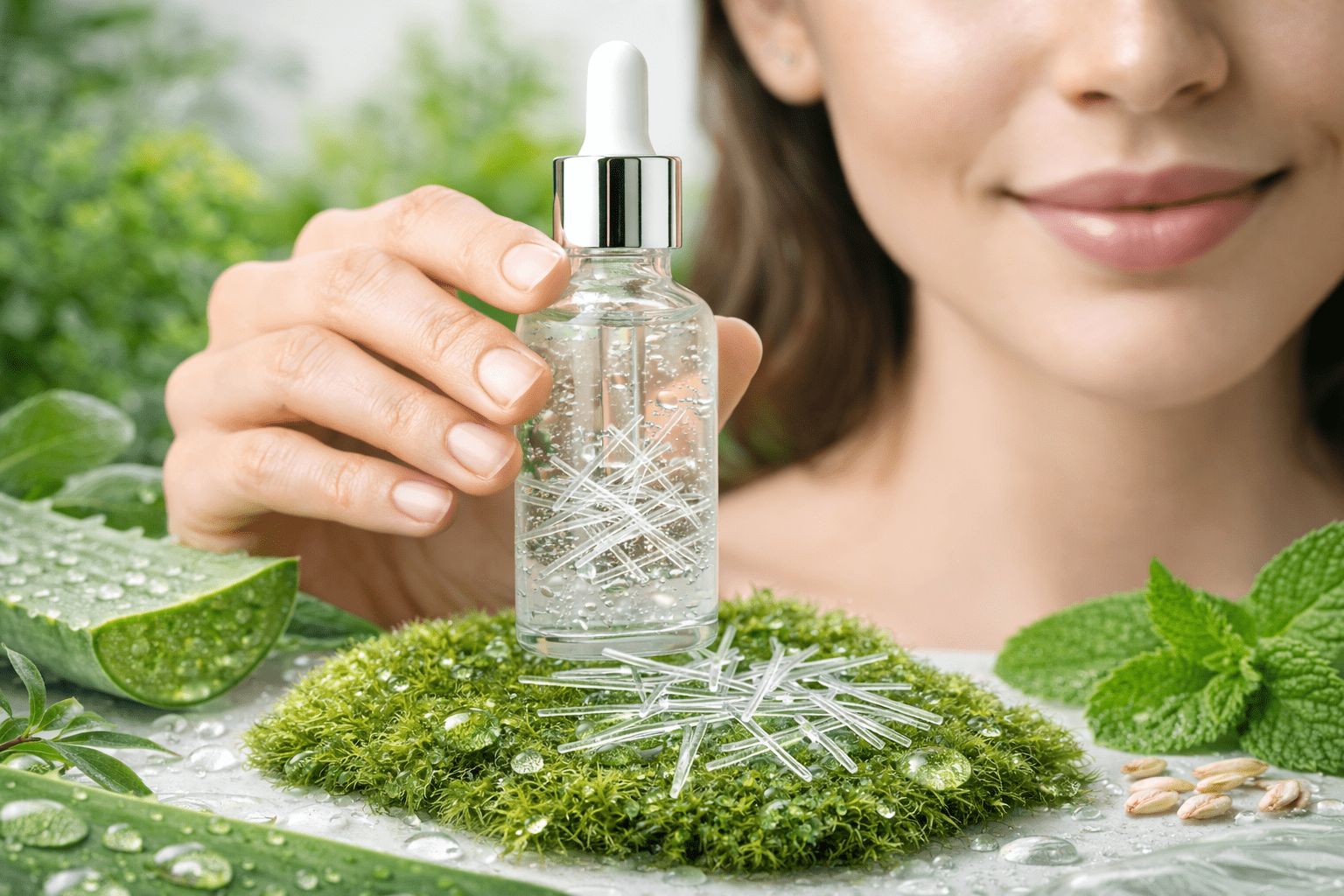
Encapsulation supports high potency active protection by creating a controlled interface between powerful actives and the skin. Instead of exposing the skin directly to a free, concentrated molecule, encapsulation surrounds the active with a carrier system that modulates how it diffuses, reacts, and penetrates. In practice, this approach addresses three main challenges: dose control, stability, and localization.
- Dose Control: Encapsulated actives release gradually over time, reducing concentration spikes that lead to burning or redness.
- Chemical Stability: Encapsulation shields actives from oxygen, light, and incompatible ingredients, minimizing degradation and reactive byproducts.
- Targeted Localization: Some carriers are designed to interact with specific layers of the skin, limiting unnecessary surface overload.
Because these mechanisms act simultaneously, the result is a more predictable, comfortable, and efficient delivery of high-strength actives, supporting both short-term comfort and long-term barrier health.
Encapsulation Technologies Used for High-Potency Active Protection
Multiple encapsulation platforms can be used to support high potency active protection. Each system offers distinct benefits in terms of release profile, compatibility, and sensorial finish. Formulators typically select or combine technologies based on the active profile and product format.
Lipid Nanocarriers and Microparticles
Solid lipid nanoparticles (SLN), nanostructured lipid carriers (NLC), and lipid microspheres can encapsulate lipophilic retinoids, antioxidants, and brightening agents. These carriers often mimic skin lipids, which improves comfort and supports deeper distribution over time. Moreover, they form a soft, flexible film that helps maintain skin hydration while modulating active release.
Polymeric Microcapsules
Biocompatible polymers can create microcapsules that surround high-potency actives with a robust shell. This structure protects the ingredient from external stress and allows the formulator to adjust wall thickness and permeability. As a result, polymeric systems are useful when precise release timing or strong protection is required.
Biopolymer and Hydrogel Matrices
Natural-origin polymers, including cellulose derivatives, alginates, or chitosan, can form hydrogels and matrices that immobilize actives. These systems are especially helpful for water-based products where mild, gradual diffusion is preferred. Additionally, they are compatible with positions that favor more naturally derived materials.
Lamellar and Vesicular Systems
Liposomes, niosomes, and lamellar gels can carry high-potency actives within bilayer structures resembling the skin barrier. Because these systems are structurally similar to stratum corneum lipids, they support targeted penetration while minimizing surface disruption. This helps align high potency active protection with barrier repair strategies.
Benefits for Formulators and Brands
High potency active protection offers significant technical advantages during product development. Encapsulated actives often integrate more easily into complex formulas, tolerate processing conditions better, and show greater batch-to-batch consistency. In addition, they open room for innovative textures and hybrid formats.
- Expanded Formulation Space: Encapsulation allows strong actives to be used in lighter textures, such as serums, gels, mists, or emulsions with elegant sensorial profiles.
- Reduced Risk of Instability: Encapsulated actives are less likely to destabilize emulsions, alter viscosity, or interact negatively with emulsifiers and surfactants.
- Improved Shelf Life: Protecting actives from premature degradation reduces the risk of color shifts, odor development, or potency loss during storage.
- Consistent Performance: Controlled release helps formulas behave more predictably across climates, skin types, and usage patterns.
These advantages strengthen brand credibility because visible results and comfortable application are easier to maintain across the full product lifecycle.
Benefits for Skin Tolerance and Consumer Experience
From the end user perspective, high potency active protection through encapsulation can be the difference between a product that is quickly abandoned and one that becomes a long-term favorite. When strong actives are delivered too aggressively, users experience burning, redness, and flaking. However, when encapsulation is used strategically, the same actives can feel surprisingly gentle.
- Reduced Irritation: Gradual diffusion lowers the risk of visible inflammation, making high-potency actives accessible to more skin types.
- Smoother Onboarding: Users can introduce powerful ingredients into their routine with fewer “purging” or sensitization concerns.
- Better Barrier Support: High potency active protection helps preserve barrier function, which is essential for long-term skin health.
- Improved Compliance: Products that feel comfortable are more likely to be used consistently, which in turn supports better real-world results.
Because tolerance and performance are linked, encapsulation not only refines the science of delivery but also improves how consumers experience strong, results-driven skincare.
Comparison: High Potency Active Protection vs. Conventional Delivery
| Parameter | Conventional High-Strength Delivery | High Potency Active Protection (Encapsulated) |
|---|---|---|
| Initial Skin Impact | Rapid, intense exposure; higher irritation risk | Gradual exposure; softer onset and better comfort |
| Barrier Health | Barrier stress common with frequent use | Barrier disruption significantly reduced |
| Active Stability | More prone to oxidation and breakdown | Better protected from environmental stress |
| Formulation Flexibility | Requires more compromises in texture and pH | Broader choice of textures and formats |
| User Adherence | Often discontinued due to discomfort | More likely to be used consistently |
Template Comparison Section: Potency Strategy Options
When developing high-performance skincare, formulators can choose different strategies to manage potency. High potency active protection via encapsulation is one option, yet it often works best in combination with other design choices. The comparison below highlights common approaches and where encapsulation adds unique value.
| Approach | Advantage | Limitation | Role of Encapsulation |
|---|---|---|---|
| Lowering Active Percentage | Immediate reduction in irritation risk | Potential loss of efficacy and slower results | Encapsulation maintains potency without lowering dose |
| Buffering with Emollients or Humectants | Improves comfort and barrier support | Does not prevent rapid diffusion or peak exposure | Encapsulation adds true release control beyond buffering |
| Pulse or Cycling Usage | Allows recovery time for the skin | Requires strict compliance and education | Encapsulation makes daily use more realistic at higher strengths |
| High Potency Active Protection (Encapsulated) | Preserves strength while improving tolerability | Requires more complex ingredient selection | Becomes the core delivery platform for strong actives |
Formulation Considerations for High Potency Active Protection
Designing encapsulated systems for high potency active protection requires careful alignment between ingredient selection, processing conditions, and final product positioning. Active solubility, target depth of delivery, compatibility with other actives, and desired sensory profile all influence which encapsulation platform will perform best.
Processing parameters such as temperature, shear, and order of addition must also be optimized to preserve capsule integrity. In parallel, stability testing should include stress conditions that mimic consumer use, including cyclic temperature, light exposure, and repeated application on skin-like substrates. When these factors are considered together, encapsulation becomes a precise tool rather than a generic add-on.