Functional nutrition is no longer competing solely on ingredient identity. Instead, it is increasingly defined by structure. For years, product differentiation focused on higher extract ratios, novel botanicals, and expanded probiotic strains. However, delivery architecture now shapes credibility as much as ingredient lists.
Consequently, formulation science is shifting toward structural bioavailability. Liposomes, nano-emulsions, and encapsulation technologies illustrate this transition. Yet these systems introduce complexity, labeling considerations, and regulatory scrutiny.
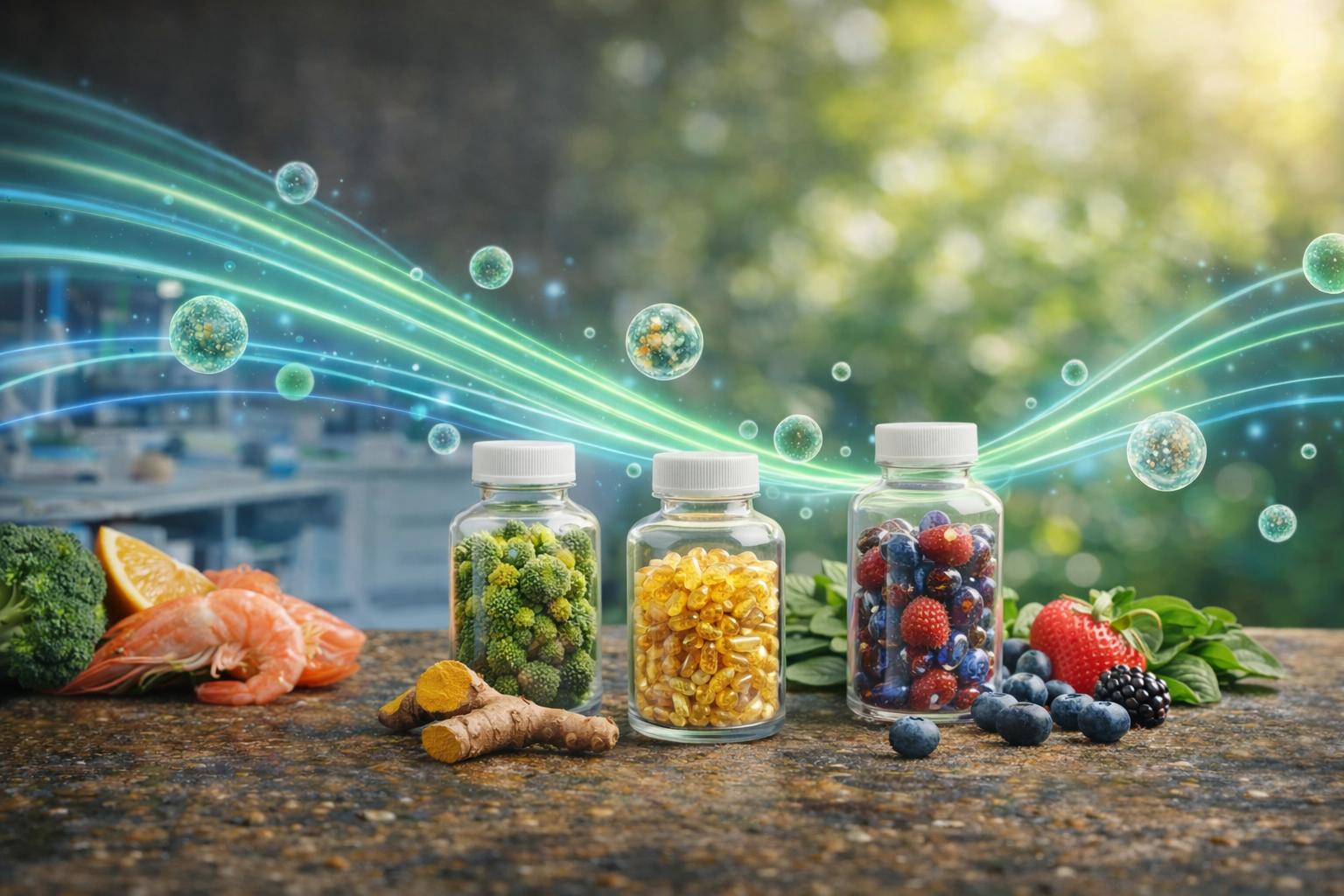
Within this context, food-derived extracellular vesicles are emerging as a structurally sophisticated but food-aligned alternative. These nano-scale membrane-bound particles naturally occur in edible fruits and vegetables. When carefully fractionated through conventional food-processing methods, they form vesicle-rich botanical concentrates that may redefine how supplements approach delivery.
Understanding Extracellular Vesicles in a Food Framework
Extracellular vesicles (EVs) are lipid bilayer particles secreted by cells. In plants, they participate in cellular signaling and stress response mechanisms. Importantly, these vesicles are inherent components of edible plant tissue.
Therefore, the supplement discussion is not about synthetic nanotechnology. It is about concentrating structures that already exist within commonly consumed foods. That distinction fundamentally alters the regulatory and scientific framing.
When vesicle-rich fractions are derived exclusively from edible fruits and vegetables and produced without chemical modification, the ingredient remains anchored to conventional food identity.
Regulatory Positioning and DSHEA Alignment
In the United States, dietary supplements operate under DSHEA. Unlike pharmaceuticals, supplements are not pre-approved by the FDA. Instead, manufacturers and distributors are responsible for ensuring safety and lawful marketing.
An independent regulatory opinion dated December 18, 2025 evaluated plant-derived extracellular vesicle concentrates obtained from edible fruits and vegetables. The review described manufacturing steps including mechanical juice extraction, centrifugation, filtration, and freeze-drying — all without solvents or chemical reagents.
The assessment concluded that these materials represent fractionation of conventional food and do not meet the definition of a New Dietary Ingredient when used within historical exposure ranges. This does not imply FDA approval. Rather, it clarifies that such materials may align with existing dietary ingredient frameworks when positioned appropriately.
Fractionation Versus Chemical Alteration
Regulatory interpretation hinges on whether a process chemically alters a substance. Concentration, filtration, dehydration, and mechanical separation do not inherently constitute chemical modification when molecular identity remains unchanged.
Therefore, vesicle-rich botanical fractions manufactured through conventional food-processing unit operations can be framed as concentrated food components, not synthetic nano-materials.
Manufacturing Precision and Structural Integrity
Structural ingredients demand process discipline. Extraction shear, centrifugation forces, membrane filtration thresholds, and freeze-drying stabilization conditions all influence vesicle integrity.
Stabilizing excipients such as trehalose may be incorporated during freeze-drying to preserve membrane structure without altering botanical identity. This reinforces that the platform is food-based rather than chemically engineered.
Consequently, vesicle-enriched ingredients should be treated as structurally sensitive materials requiring validated manufacturing controls, batch testing, and traceability documentation.
Why Structural Delivery Creates Strategic Advantage
The supplement market is saturated with liposomal claims and nano-curcumin variations. Food-derived vesicles offer a differentiated narrative grounded in plant biology.
Rather than emphasizing synthetic enhancement, brands can emphasize natural structural delivery present within edible foods. This positioning resonates particularly in longevity, clean-label, and premium formulation segments.
However, strategic advantage only materializes when communication remains disciplined. Overstated therapeutic claims would undermine the category’s credibility.
Responsible Communication and Claim Strategy
Appropriate language emphasizes food origin, non-chemical processing, and structural support. It avoids disease claims and avoids statements implying regulatory pre-approval.
- Derived from edible fruits and vegetables
- Manufactured using conventional food-processing techniques
- Produced without chemical alteration
- Positioned within dietary supplement regulatory frameworks
This disciplined framing protects long-term viability and strengthens procurement confidence.
Commercialization Considerations for US Brands
Introducing vesicle-rich botanical systems requires more than marketing. Brands must align regulatory review, labeling strategy, manufacturing traceability, and stability validation.
For companies seeking to explore this platform, early engagement with regulatory and formulation advisors significantly reduces commercialization risk.
The opportunity is real, but it favors technically prepared operators.
The Road Ahead for Vesicular Nutrition
Future research will clarify digestive stability, vesicle persistence in finished formats, and dose-response relationships in human use.
As functional nutrition evolves toward delivery architecture, food-derived extracellular vesicles represent a structurally grounded, regulation-aware innovation pathway. Those who define the category responsibly today will influence its trajectory tomorrow.
Research References
- Regulatory Compliance Opinion Letter (Dec 18, 2025) – Evaluation of plant-derived exosome-containing fruit and vegetable concentrates under DSHEA (Internal regulatory review document on file).
- Dietary Supplement Health and Education Act (DSHEA), 1994 – FDA Overview
- FDA Draft Guidance for Industry: New Dietary Ingredient Notifications and Related Issues
- Peer-Reviewed Literature on Plant-Derived Extracellular Vesicles (PubMed Search Portal)