The European Union has officially adopted Regulation (EU) 2024/996, which sets concentration limits for vitamin A derivatives in cosmetic products. Starting November 2025, leave-on products may contain a maximum of 0.3% retinol equivalent (RE), while body lotions are restricted to 0.05% RE. Consequently, chemists must reformulate their products to remain compliant without sacrificing efficacy. This guide explains how to stabilize retinal and retinol within these limits using encapsulation and antioxidant systems while preserving their performance in modern skincare.
Scientific Background
Why the EU Introduced Retinol Limits
Retinoids are among the most effective anti-aging ingredients in cosmetics. However, both retinol and its derivatives can convert to retinoic acid in the skin, which may cause irritation and systemic exposure when used in high concentrations. The Scientific Committee on Consumer Safety (SCCS/1634/21) reviewed safety data and recommended new thresholds to limit vitamin A accumulation, especially for sensitive consumers. As a result, the EU adopted specific maximum concentrations to ensure long-term safety while maintaining visible skin benefits.
Understanding the 0.3% Retinol Equivalent (RE)
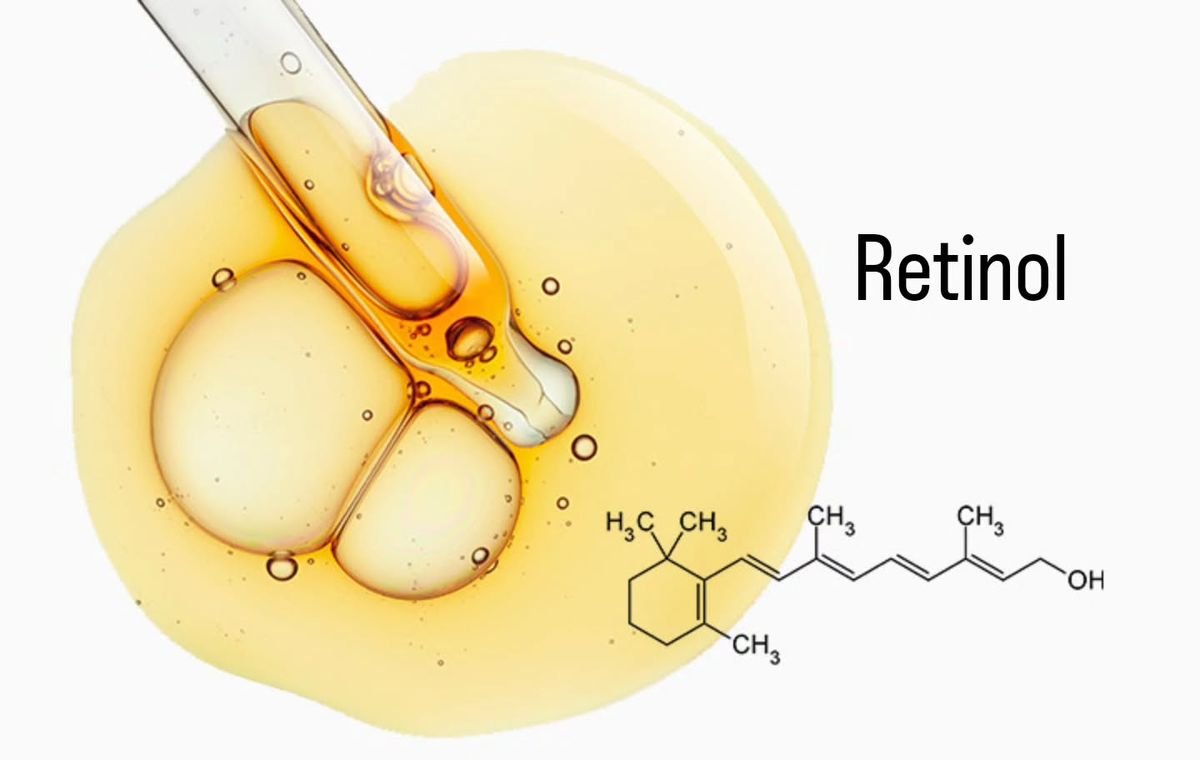
The regulation expresses limits in “retinol equivalent” (RE) because various derivatives—such as retinyl palmitate, retinyl acetate, and retinal—differ in molecular weight and activity. For example, 0.3% RE corresponds approximately to:
- 0.3% pure retinol
- 0.55% retinyl acetate
- 0.6% retinyl palmitate
- 0.05% retinaldehyde (due to higher potency)
Therefore, chemists must calculate RE values precisely based on ingredient potency and purity to ensure compliance across product categories.
Comparative Insights
Retinol vs. Retinal: Potency and Stability
Retinol and retinal share a similar biological pathway but differ significantly in activity and stability. Retinal acts one metabolic step closer to retinoic acid, delivering faster results at lower doses. However, it is also more reactive and prone to oxidation. Therefore, stability strategies—including microencapsulation and antioxidant support—are essential when working with retinal formulas. Conversely, retinol is slightly more stable but still degrades rapidly when exposed to light, heat, or oxygen.
Formulation Implications of the New Limits
Since 0.3% RE is now the upper boundary, formulators must extract maximum efficacy from smaller doses. Fortunately, encapsulation technologies can protect actives from degradation and allow controlled release for extended bioavailability. As a result, even lower concentrations can achieve similar clinical effects to previous high-dose formulations. Additionally, synergistic combinations with peptides and niacinamide further enhance results within the legal limit.
Formulation Guide
Encapsulation for Retinoid Stability
Encapsulation remains the most reliable method to stabilize retinoids. Techniques such as lipid carriers, polymeric microcapsules, and nanoemulsions reduce direct exposure to oxygen and light. For instance, Polycaprolactone Microspheres and Solid Lipid Nanoparticles (SLN) have shown excellent results in sustaining retinol activity while minimizing irritation. Similarly, Nanostructured Lipid Carriers (NLC) can incorporate both retinol and retinal, providing gradual release and enhanced penetration. Through such systems, chemists can maintain efficacy even below the 0.3% threshold.
Antioxidant Systems and Chelators
Because oxidation is the main cause of retinoid degradation, combining retinol with robust antioxidant systems is essential. Tocopherol (vitamin E), ferulic acid, and ascorbyl palmitate act synergistically to protect the molecule from free radicals. Moreover, chelating agents like GLDA and EDDS prevent metal-catalyzed oxidation, which often accelerates discoloration and loss of potency. Therefore, when designing a compliant formula, include both primary and secondary antioxidants for comprehensive stability protection.
Retinoid-Friendly Emulsifiers
Retinol performs best in low-pH, oil-continuous systems that reduce hydrolysis. Gentle emulsifiers such as polyglyceryl esters or lecithin derivatives stabilize emulsions without destabilizing the retinoid molecule. In contrast, strong anionic surfactants or alkaline buffers can trigger degradation. Consequently, always perform accelerated stability testing at 40 °C for at least eight weeks to confirm ingredient compatibility.
Formulation Example Structure
- Oil Phase: Caprylic/Capric Triglyceride, Dimethyl Isosorbide, Retinol (0.3%) or Retinal (0.05%), Tocopherol
- Aqueous Phase: Glycerin, Panthenol, Sodium Gluconate (chelating agent)
- Emulsifier: Polyglyceryl-6 Distearate / Cetearyl Alcohol
- Optional Additives: Niacinamide, Peptides, Ectoine
- Preservatives: Phenoxyethanol + Ethylhexylglycerin (clean-label compliant)
Compliance, Safety, and Claims
Labeling and Marketing Guidance
According to Regulation (EU) 2024/996, the product label must not imply pharmacological action or exceed approved limits. Therefore, compliant claims focus on appearance and surface renewal, such as:
- “Helps smooth fine lines and uneven texture.” ✅
- “Supports skin renewal and luminosity.” ✅
- “Reduces wrinkles by stimulating collagen production.” ❌ (Avoid medical implication)
For compliance, all safety data, stability tests, and concentration calculations should be documented in the MoCRA Safety Dossier and EU Product Information File (PIF).
In-Use and Photostability Testing
To validate performance, in-use studies should include controlled storage under ambient and UV-exposed conditions. Track potency loss by HPLC and visual discoloration weekly. If encapsulation or antioxidants are effective, retinol recovery should remain above 90 % after eight weeks. Moreover, photostability ensures claim substantiation for “stabilized” or “encapsulated” terminology on packaging.
Consumer Tolerability
Even within compliant limits, some consumers experience transient irritation when initiating retinoid use. Therefore, include soothing actives such as bisabolol, allantoin, or madecassoside to support the skin barrier. This approach not only enhances comfort but also reduces dropout rates in long-term studies. Consequently, your formula becomes both compliant and consumer-friendly.
Summary & Key Takeaways
Checklist for EU Retinol Compliance
- Verify that total vitamin A derivatives do not exceed 0.3 % RE (0.05 % for body products).
- Use encapsulation to protect actives and control release.
- Combine retinoids with antioxidants and chelators for maximum stability.
- Select mild emulsifiers that maintain low-pH stability.
- Substantiate all claims with validated stability and in-use data.
Next Steps for Chemists
Reformulating under new EU limits can initially seem restrictive, but it also promotes innovation. By combining smart delivery systems with balanced antioxidant networks, chemists can achieve high efficacy within safe and compliant parameters. To explore encapsulated retinoid systems and stabilizing antioxidants, visit the Delivery Systems Hub or our Product Center. For formulation support or technical data sheets, you can Request a Sample from our technical team.
References
- Commission Regulation (EU) 2024/996 – Vitamin A Derivatives in Cosmetics
- SCCS/1634/21 – Opinion on Vitamin A (Retinol, Retinyl Acetate, Retinyl Palmitate), European Commission (2023)
- Cosmetic Ingredient Review (CIR) Database – Retinoids Safety Summaries