
Hydration products succeed or fail at the moment the consumer mixes them. Therefore, if you design only for the label dilution, you design for an ideal that rarely exists. Instead, you must engineer for real dilution behavior, including under-dilution, double-serving stacking, and bottle-size mismatch. Consequently, osmolality becomes a first-class specification, not an afterthought. Moreover, because carbohydrate and small-molecule “actives” drive osmolality aggressively, you must treat them as a solute budget, not a marketing checklist. Finally, if you build electrolyte architecture and sensory guardrails around hypotonic-to-isotonic targets in the misuse cases, you can deliver fast hydration feel while reducing GI risk.
Start with the physiology, not the label: what the gut actually processes
Osmolality describes the concentration of osmotically active particles per kilogram of water. Therefore, it approximates how “solute-dense” a beverage behaves once it enters the GI tract. However, consumers and even brands often confuse osmolality with “electrolyte strength.” Instead, it tracks the total particle load from everything that dissolves: salts, acids, sugars, polyols, amino acids, and many “functional” additions. Consequently, two drinks with the same sodium can behave very differently if one carries 20–40 g/L of carbohydrate and the other does not.
Additionally, tonicity language—hypotonic, isotonic, hypertonic—often gets used as marketing shorthand. Nevertheless, it becomes useful when you anchor it to a measurable output. Therefore, you should classify prototypes by measured osmolality, then build design guardrails around those classes. As a result, you stop debating “hydrating” as a vibe and start controlling it as an engineering variable.
Powder sticks break because consumers remix the system
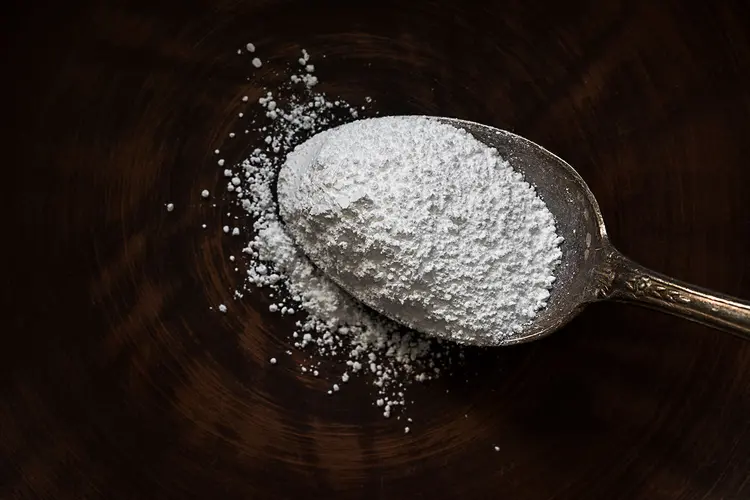
Powder sticks are a distribution format, not a final beverage. Therefore, dilution becomes the biggest uncertainty in the system. In practice, many consumers under-dilute for convenience, taste intensity, or a misbelief that stronger equals better. Consequently, a formula that sits near isotonic at 500 mL can flip to hypertonic at 300 mL. Moreover, consumers frequently stack servings—one packet now, another later—so total solute load can double within a short window. As a result, even “reasonable” per-stick dosing can create poor real-world hydration feel if the product lacks guardrails.
Reality-based dilution model
Instead of one dilution assumption, use three. First, the label dilution (your intended use). Next, an under-dilution case (what the market actually does). Then, a stacking case (two servings within the same bottle volume or within a short time). Consequently, you design for performance under plausible behavior, not wishful behavior.
Practical osmolality targets: position first, then optimize
You cannot hit every goal simultaneously, so you must choose an intent. Therefore, separate hydration-first products from fuel-first products. If your product is functional water or “daily hydration,” then you should bias hypotonic-to-low isotonic to protect gut comfort and rapid fluid delivery. Conversely, if you want meaningful energy delivery, then you may accept isotonic and manage GI risk through carbohydrate strategy and clearer usage instructions.
| Positioning | Design intent | Primary solute driver | Main risk | Guardrail |
|---|---|---|---|---|
| Hydration-first (functional water) | Low osmolality, fast uptake, low gut drag | Electrolytes + acids (low carbs) | Flat taste, salty rejection | Aroma-led flavor + acid architecture |
| Hydration + performance support | Moderate osmolality, better retention feel | Electrolytes + modest carbs | Under-dilution spikes osmolality | Misuse-case osmolality cap |
| Fuel-first | Energy delivery with hydration secondary | Carbs dominate | Hypertonic feel, GI load | Clear use-case constraints |
The solute budget: control particles before you chase “actives”
Once you commit to a target class, you need a solute budget. Therefore, allocate osmolality headroom across salts, acids, and optional additions. However, because carbohydrate rapidly increases particle load, it usually becomes the first lever to tighten. Consequently, hydration-first products often work best when sweetness comes from high-intensity sweeteners, while carbohydrates stay minimal unless you intentionally pursue ORS-like behavior.
Additionally, watch the stealth contributors. For example, amino acids, betaine, taurine, and many “pump” ingredients add particles even at moderate doses. Likewise, polyols can create GI risk while also raising osmolality. Therefore, if you want a gut-friendly hydration claim, keep the additive stack lean and purposeful.
Electrolyte architecture that works under misuse
Sodium drives functional hydration because sweat loss often carries meaningful sodium, and sodium supports retention and thirst drive. Therefore, sodium becomes your anchor ion. However, sodium sources change sensory outcomes. For instance, sodium chloride increases salinity perception fast, while sodium citrate can soften sourness and support buffering. Consequently, you should pick the sodium source that fits your acid architecture and flavor direction.
Meanwhile, potassium supports electrolyte balance but introduces bitterness and metallic risk at higher levels. Therefore, keep potassium supportive rather than dominant. Similarly, magnesium has high marketing value but high GI and taste friction. Consequently, dose magnesium conservatively or omit it unless the brand requires it.
Carbohydrates: when they help, when they hurt
Glucose can support sodium and water uptake via sodium-glucose cotransport, which is why ORS exists. However, ORS design targets a clinical dehydration use case, whereas sports drinks and functional waters often target performance feel, palatability, and daily use. Therefore, if you include carbohydrate, do it with intent: either to support cotransport with controlled osmolality or to deliver energy with clear “fuel” positioning. Otherwise, carbohydrate becomes accidental osmolality inflation.
Sensory guardrails: design the product to prevent under-dilution
Education rarely wins at scale, so product design must do the policing. Therefore, make the beverage self-limiting when too concentrated. For example, sharpen the acid peak and use aroma-led flavor so under-dilution tastes aggressively intense rather than “better.” Consequently, consumers correct dilution without reading a paragraph on-pack.
Bench workflow: a repeatable spec that survives the real world
Spreadsheet osmolality estimates help, but measurement closes the loop. Therefore, build a bench workflow that tests the beverage at the three dilution scenarios. Next, set a maximum misuse-case osmolality cap aligned with your positioning. Then, enforce it via QC testing and supplier specs. Finally, validate sensory and tolerance using real bottles, not lab beakers.
Quick specification template (copy/paste into internal docs)
Label dilution: 1 stick in 500 mL
Misuse A: 1 stick in 350 mL
Misuse B: 2 sticks in 700 mL

Targets (hydration-first):
- Label dilution: hypotonic-to-low isotonic
- Misuse A max: cap osmolality to protect gut comfort
- Misuse B max: remain drinkable without harsh salt burn

Sensory:
- Misuse A must taste obviously too strong (self-limiting)
- Label dilution must taste clean and repeatable (daily use)