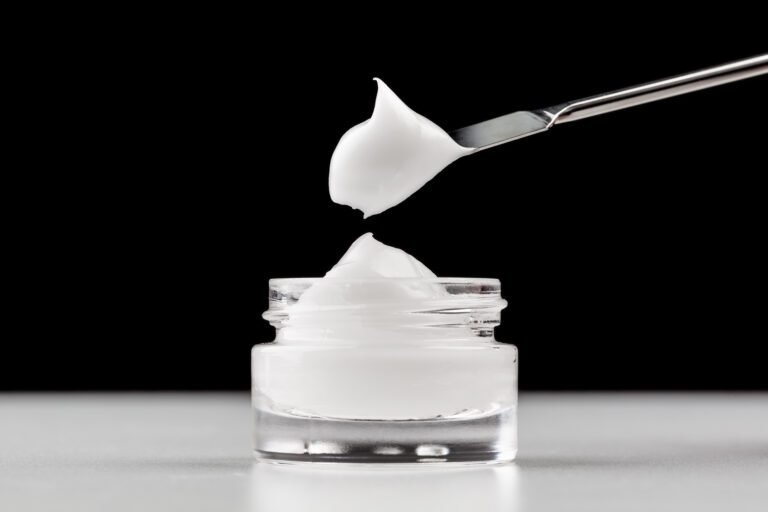

Currently, regulatory pressure is forcing formulators to move away from volatile cyclic silicones. As a result, cyclomethicone can no longer serve as a default sensory carrier in modern formulations. Instead, formulators must actively design new systems that replicate slip, volatility, and dry-down without relying on D5 or D6.
Therefore, the central challenge is no longer regulatory awareness but sensory execution. Consequently, this article explains how cyclomethicone delivers performance, why simple substitution fails, and how formulators can actively design volatile silicone alternatives that meet both sensory and regulatory expectations.
Why Cyclomethicone Sets the Sensory Benchmark
First, cyclomethicone delivers a unique sequence of sensory effects. During application, it spreads rapidly and reduces friction. Immediately afterward, it evaporates and leaves a dry, weightless finish. Because these effects occur in sequence, cyclomethicone creates a sensory profile that feels effortless to the user.
Moreover, cyclomethicone performs consistently across climates and formulation types. As a result, formulators have relied on it for decades as a universal sensory modifier.
- Rapid wetting and spreading
- Immediate slip and glide
- Fast evaporation
- Dry, non-greasy after-feel
However, cyclomethicone delivers this performance through volatile cyclic siloxanes. Therefore, regulatory pressure now requires formulators to replicate these effects through alternative chemistry.
Why One-to-One Replacement Does Not Work
In practice, one-to-one replacement fails because cyclomethicone does not perform a single function. Instead, it orchestrates several sensory effects at once. Consequently, any material that addresses only slip, only volatility, or only spreading will fall short.
For example, light esters provide lubrication but remain on the skin. Similarly, volatile hydrocarbons evaporate but lack sufficient slip. Therefore, formulators must replace cyclomethicone with systems rather than ingredients.
Regulatory Pressure Driving Volatile Silicone Reformulation
Currently, regulators prioritize environmental persistence and long-term fate. As a result, volatile cyclic siloxanes fall under increasing scrutiny. Even in regions without formal bans, brands now remove cyclomethicone to reduce future risk.
Consequently, reformulation decisions increasingly originate from sustainability teams rather than regulatory enforcement. Therefore, formulators must deliver alternatives that satisfy internal policy, retailer expectations, and consumer perception.
Breaking Cyclomethicone Performance Into Measurable Components
Before selecting alternatives, formulators must define what cyclomethicone actually does. Rather than using vague sensory language, successful reformulation starts with measurable attributes.
Spreading and Wetting
Initially, cyclomethicone lowers surface tension and accelerates wetting. As a result, products distribute evenly with minimal effort.
Slip and Lubrication
During application, cyclomethicone reduces friction between skin or hair fibers. Consequently, drag decreases and glide increases.
Evaporation and Dry-Down
After application, cyclomethicone evaporates rapidly. Therefore, it removes excess oil perception and creates a dry finish.
Importantly, these effects depend on timing. As a result, alternatives must reproduce the sequence, not just individual properties.
Major Categories of Cyclomethicone Alternatives
Currently, formulators use several chemical classes to replace volatile silicones. Each category contributes differently to sensory performance.
Light Hydrocarbon Emollients
Light hydrocarbons spread quickly and feel lightweight. However, they evaporate differently from cyclomethicone. As a result, they often leave more residue unless formulators control use levels carefully.
Bio-Based Alkanes
Bio-derived alkanes deliver excellent slip and compatibility. Nevertheless, they evaporate more slowly. Therefore, formulators typically pair them with volatile or semi-volatile components.
Low-Viscosity Esters
Low-viscosity esters improve lubrication and cushion. However, they do not evaporate. Consequently, formulators use them sparingly to avoid greasy after-feel.
Volatile Solvent Systems
Some systems rely on controlled volatility blends. While these systems perform well, they require careful safety, compatibility, and regulatory review.
Designing Multi-Material Volatile Systems
Instead of searching for a single replacement, successful formulators design layered systems that recreate cyclomethicone behavior.
Stage 1: Immediate Slip
First, low-viscosity materials provide instant lubrication and spreading. These components set the initial sensory impression.
Stage 2: Volatility Control
Next, volatile or semi-volatile materials reduce residue perception during rub-out. This stage mimics cyclomethicone evaporation.
Stage 3: Residual Sensory Smoothing
Finally, minimal non-volatile emollients smooth the after-feel without adding weight.
As a result, the system delivers cyclomethicone-like performance without relying on restricted siloxanes.
Effects on Stability and Compatibility
Replacing cyclomethicone affects more than sensory perception. For example, pigment dispersion, elastomer swelling, and viscosity often change.
Therefore, formulators should test compatibility early with thickeners, pigments, UV filters, and film formers. This approach prevents late-stage instability.
Expected Sensory Trade-Offs
Even with optimized systems, alternatives rarely match cyclomethicone perfectly. For instance, evaporation curves may shift slightly.
However, formulators can minimize perceptible differences through proper system design. In most cases, consumers do not detect minor deviations.
Testing Strategies for Sensory Validation
To validate replacements, formulators should rely on both instrumental and panel-based testing.
- Friction and glide measurement
- Evaporation profiling
- Sensory panel comparison
- Residue and wear assessment
Consequently, data-driven optimization replaces trial-and-error reformulation.
Regulatory and Sustainability Considerations
Beyond performance, alternatives must satisfy environmental and regulatory expectations. Therefore, formulators should review environmental fate, biodegradability, and lifecycle impact early.
Importantly, silicone-free labeling alone does not guarantee sustainability. As a result, documentation and testing remain essential.
Future Outlook
Ultimately, cyclomethicone replacement reflects a broader shift in formulation philosophy. Rather than relying on single multifunctional materials, formulators now design sensory systems deliberately.
Accordingly, teams that master system-based design will adapt more easily as regulatory expectations continue to evolve.
Key Takeaways
- Cyclomethicone delivers sequential sensory effects
- Single-ingredient replacement consistently fails
- Multi-material systems provide the best solution
- Testing must validate both sensory and volatility
- Regulatory review should occur early