Copper Tripeptide-1 (GHK-Cu) is one of the most extensively researched bioactive peptides used in advanced cosmetic formulations. While many skincare ingredients provide surface-level benefits, GHK-Cu operates at a deeper biochemical level by influencing cellular signaling, extracellular matrix synthesis, and skin repair mechanisms. As a result, cosmetic brands increasingly position this peptide as a core component in high-performance dermocosmetic systems.
At the same time, the demand for multifunctional actives continues to grow. Therefore, formulators seek ingredients that support regeneration, improve skin structure, and integrate efficiently into modern delivery systems. Because of its copper-binding structure and multi-pathway biological activity, GHK-Cu meets these requirements and remains highly relevant in next-generation formulations.
What is Copper Tripeptide-1 (GHK-Cu)?
Copper Tripeptide-1 is a naturally occurring peptide composed of glycine, histidine, and lysine bound to a copper ion. In biological systems, it plays a role in wound healing, tissue remodeling, and cellular repair. Consequently, its use in cosmetic formulations focuses on improving skin regeneration and visible skin quality.
Moreover, the copper ion enhances biological activity by supporting enzymatic reactions and maintaining redox balance. As a result, GHK-Cu influences collagen synthesis, inflammation control, and antioxidant defense simultaneously. Therefore, it functions as a multifunctional active rather than a single-purpose cosmetic ingredient.
Mechanism of Action in Skin Biology
GHK-Cu acts as a signaling molecule that regulates cellular activity in the skin. First, it stimulates fibroblast proliferation, which increases collagen and elastin production. As a result, skin structure becomes stronger and more resilient.
In addition, the peptide supports glycosaminoglycan synthesis, including hyaluronic acid, which improves hydration and barrier function. At the same time, it reduces oxidative stress by supporting antioxidant pathways. Consequently, the skin becomes more resistant to environmental damage.
Furthermore, GHK-Cu modulates inflammatory responses. Therefore, it supports recovery after stress, irritation, or cosmetic procedures while improving overall skin quality.
Formulation Considerations for Cosmetic Chemists
Copper Tripeptide-1 requires controlled formulation conditions to maintain stability and performance. Generally, it performs best in aqueous systems within a pH range of 5.0 to 7.0. Under these conditions, the copper-peptide complex remains stable and active.
However, formulators should avoid high concentrations of chelating agents such as EDTA, as they may interfere with copper binding. In addition, highly acidic environments and strong oxidizing systems can destabilize the peptide. Therefore, careful system design is essential.
Because GHK-Cu is sensitive to oxidation, formulators often include antioxidant systems and use air-restrictive packaging. As a result, these strategies help preserve long-term stability and efficacy.
Typical Use Levels and Concentration
Copper Tripeptide-1 is typically used at concentrations ranging from 0.01% to 0.1%, depending on formulation goals. Lower levels are suitable for daily skincare, while higher concentrations are used in targeted treatment systems.
Because the peptide is highly active, increasing concentration does not always result in improved performance. Therefore, delivery efficiency and formulation design play a critical role in optimizing results.
Stability and Compatibility
Stability remains a key consideration when formulating with copper peptides. Because the copper ion participates in redox reactions, the complex may degrade under unfavorable conditions. Consequently, formulators must control exposure to oxygen, light, and reactive ingredients.
In terms of compatibility, GHK-Cu works well with hydrating agents such as hyaluronic acid and barrier-support ingredients. It also integrates effectively with peptide systems and soothing actives. However, strong acids, high levels of vitamin C, and chelators may affect stability. Therefore, compatibility testing is essential.
Delivery System Challenges
One of the main limitations of Copper Tripeptide-1 is its hydrophilic nature. Because the stratum corneum is lipid-rich, peptides do not penetrate easily. As a result, delivery systems play a critical role in formulation performance.
Without optimized delivery, the peptide remains on the surface and cannot fully activate its biological pathways. Therefore, improving penetration efficiency is essential for achieving maximum efficacy.
Advanced Delivery System Strategies
To improve delivery, formulators integrate advanced technologies. For example:
- Liposomes enhance encapsulation and penetration
- Nano-emulsions improve dispersion and skin interaction
- Exosome-inspired systems support targeted delivery
- Micro-stimulation technologies increase permeability
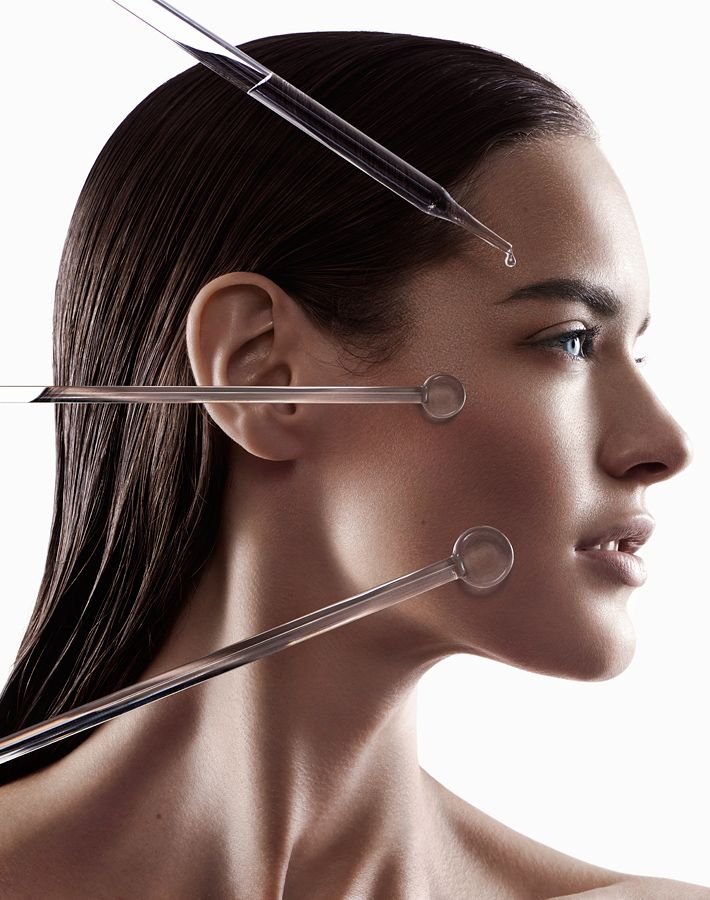
In particular, combining GHK-Cu with physical delivery systems can significantly enhance performance. These systems create temporary micro-pathways, allowing the peptide to reach deeper epidermal layers more efficiently.
Ingredient Delivery Enhancement
The stratum corneum acts as a strong barrier to hydrophilic molecules. Therefore, mechanical and structural delivery systems provide a complementary approach to chemical penetration enhancers.
By increasing permeability in a controlled manner, these systems improve the delivery of GHK-Cu alongside peptides, antioxidants, and botanical actives. Consequently, formulators can design multi-functional, high-performance skincare systems.
GHK-Cu vs Other Cosmetic Peptides
| Peptide | Type | Mechanism | Primary Function | Positioning |
|---|---|---|---|---|
| GHK-Cu | Carrier peptide | Copper binding and gene signaling | Regeneration and repair | Advanced dermocosmetics |
| Matrixyl | Signal peptide | Fibroblast stimulation | Collagen production | Anti-aging |
| Argireline | Neurotransmitter peptide | Muscle contraction inhibition | Wrinkle reduction | Expression lines |
These peptides operate through different biological pathways. While GHK-Cu supports regeneration and repair, Matrixyl focuses on collagen stimulation, and Argireline targets neuromuscular activity.
Applications in Advanced Skincare
In advanced formulations, Copper Tripeptide-1 is often positioned as a regenerative core ingredient within multi-active systems. For example, it is used alongside peptides, antioxidants, and delivery technologies to create high-performance formulations.
- Anti-aging serums
- Skin regeneration treatments
- Barrier repair systems
- Eye care formulations
- Post-procedure skincare
Additionally, its regenerative properties extend beyond facial skincare into broader dermocosmetic applications.
Role in Hair and Scalp Formulations
GHK-Cu also supports scalp health and follicle activity. Therefore, it is used in formulations targeting hair strengthening and scalp repair. Because it improves the biological environment around follicles, it contributes to healthier hair growth conditions.
Conclusion
Copper Tripeptide-1 (GHK-Cu) represents one of the most advanced peptide technologies in modern cosmetic science. Unlike single-function ingredients, it delivers multi-pathway benefits through regeneration, repair, and biochemical signaling.
Moreover, when combined with advanced delivery systems, its performance improves significantly. Therefore, cosmetic chemists continue to integrate GHK-Cu into next-generation formulations focused on efficacy, stability, and innovation.
Research References
- https://pubmed.ncbi.nlm.nih.gov/12544093/
- https://pubmed.ncbi.nlm.nih.gov/16483215/
- https://pubmed.ncbi.nlm.nih.gov/20471762/
- https://www.sciencedirect.com/topics/pharmacology-toxicology-and-pharmaceutical-science/copper-peptide
- https://www.sciencedirect.com/topics/medicine-and-dentistry/stratum-corneum
- https://cosmeticsandtoiletries.com/