From microscopic microalgae to large seaweeds, algae represent a diverse group of photosynthetic organisms with unique compositions that make them highly valuable in cosmetics. Their cell structures contain proteins, carbohydrates, lipids, and bioactive compounds that support both skin and hair health. Today, algae are recognized as innovative cosmetic ingredients, prized for their ability to hydrate, protect, and rejuvenate. Therefore, understanding their complexity helps unlock their full potential for effective formulations.
What Are the Different Types of Algae Used in Cosmetics?
Algae are highly diverse, mostly aquatic organisms that obtain energy through photosynthesis. Consequently, they span multiple kingdoms, each with unique structural and biochemical features. Modern classification relies on pigmentation, cell organization, and storage compounds. For example:
- Kingdom Plantae → green algae
- Kingdom Chromista → brown algae and diatoms
- Kingdom Protista → microscopic algae such as dinoflagellates
Green algae are closely related to land plants, while brown and red algae represent separate lineages. In fact, their distinctive pigments — chlorophylls, carotenoids, and phycobilins — are key markers for classification (Britannica).
Unicellular or Multicellular: Microscopic or Macroscopic?
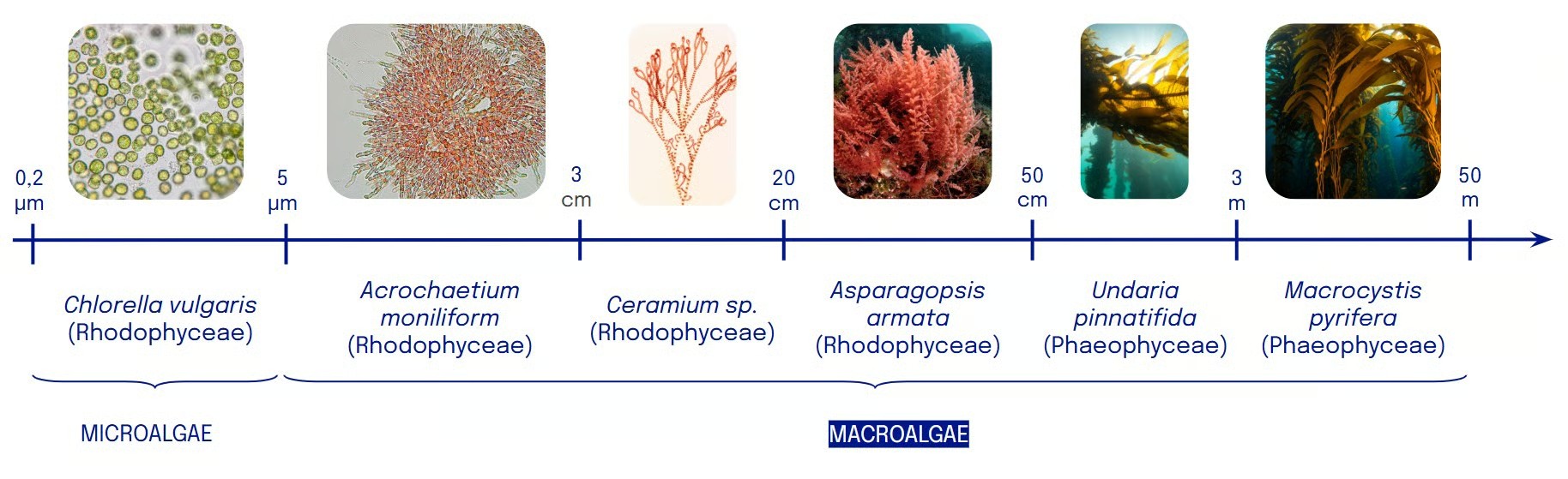
Algae span a wide biological spectrum. On the one hand, they exist as unicellular organisms such as Chlorella vulgaris. On the other hand, they appear as multicellular seaweeds, including red, green, and brown algae. As a result, algae can be microscopic, requiring magnification, or macroscopic, visible to the naked eye.
This distinction is crucial because it guides the choice of extraction methods for cosmetic applications. For instance, microalgae often yield concentrated bioactive molecules, whereas macroalgae provide texturizing polysaccharides.
How Do Algae Differ From Plants?
Unlike plants, which belong exclusively to Kingdom Plantae, algae are distributed across multiple kingdoms. Moreover, while land plants evolved from a group of green algae (charophytes), they diverged over 1.5 billion years ago. Since then, they have developed roots, stems, leaves, and protective cuticles. By contrast, brown algae contain pigments and storage molecules absent from terrestrial plants (PNAS).
Adaptations That Make Algae Valuable in Cosmetics
Algae are sessile organisms, unable to move away from environmental stress. Therefore, they adapt by producing bioactive compounds through chemical ecology. These adaptations generate antioxidants, photoprotective molecules, and anti-aging metabolites ideal for cosmetics. In addition, four environmental factors strongly influence algae:
- Salinity and pH
- Oxygen circulation
- Temperature
- Light
Global Distribution of Macroalgae
There are approximately 9,000 species of macroalgae worldwide. Interestingly, red algae represent over 66% of this diversity, followed by brown algae, while green algae are the least diverse (PubMed). Consequently, biodiversity ensures each group provides unique bioactive compounds for cosmetics.
Chemical Composition of Algae
On a dry-weight basis, algae contain a wide range of compounds. Specifically, they provide:
- Carbohydrates: polysaccharides, laminarins, alginates
- Lipids: fatty acids, glycolipids, polar lipids
- Pigments: chlorophylls, carotenoids, phycobiliproteins
- Minerals & Vitamins: calcium, iron, magnesium, antioxidants
- Specialized Metabolites: polyphenols, MAAs, phlorotannins
Among these compounds, algae pigments play a dual role in applied science. Beyond their biological activity, pigments such as chlorophylls, carotenoids, and phycobiliproteins also contribute natural coloration to formulations. This multifunctionality allows algae-derived ingredients to combine antioxidant and protective properties with visual appeal, supporting clean-label and sustainable applications in both cosmetics and food.
How Algae Benefit Cosmetic Formulations
Using chromatography and molecular analysis, researchers have identified key bioactives that translate into cosmetic benefits. For example:
- Polar lipids: promote collagen synthesis for anti-aging.
- Polyphenols: antioxidant protection against UV damage.
- MAAs: protect cells from oxidative stress and aging.
- Polysaccharides: moisturizers, film-formers, soothing agents.
- Pigments: antioxidant and UV-protective activity.
- Minerals & Vitamins: skin regeneration and complexion health.
Algae Pigments as Functional Natural Colorants in Cosmetics and Food
In addition to their bioactive performance, algae-derived pigments are increasingly used as functional natural colorants in both cosmetic and food formulations.
Microalgae pigments offer a wide chromatic range suitable for skincare and decorative cosmetics:
- Phycocyanin provides vibrant blue hues while supporting antioxidant and anti-inflammatory activity.
- Phycoerythrin contributes red to pink tones and is associated with skin barrier support and radiance.
- Carotenoids, such as β-carotene and astaxanthin, deliver orange to red hues alongside strong antioxidant and anti-aging properties.
By combining visual appeal with biological efficacy, algae pigments enable formulators to design products that align with clean beauty, multifunctionality, and sustainability trends.
Examples of Cosmetic Applications
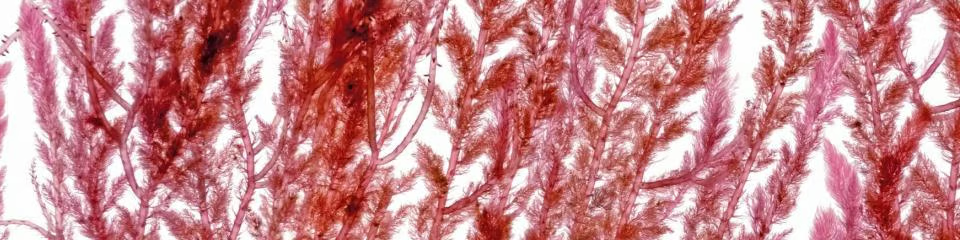
Asparagopsis armata (Red Algae)
This species is rich in mycosporine-like amino acids (MAAs) that prevent cellular senescence. Consequently, it protects skin against premature aging, making it a sought-after anti-aging ingredient.
Alaria esculenta (Brown Algae)
Because it survives in extreme marine conditions, Alaria esculenta demonstrates strong resilience. Therefore, its extracts are widely used for anti-aging and firming properties in skin care (Journal of Cosmetic Dermatology).

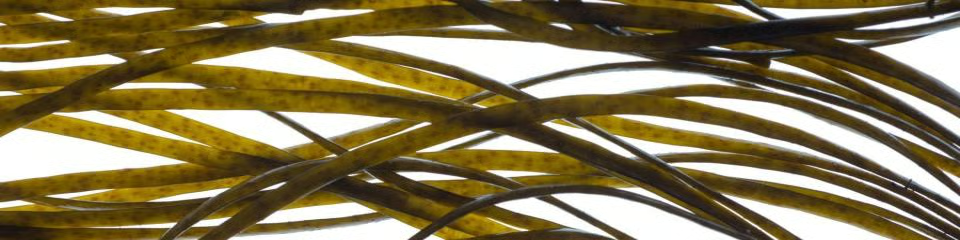
Himanthalia elongata (Brown Algae)
This species contains SQDG glycolipids, proven in clinical studies to improve fibroblast traction forces. As a result, it reduces sagging and enhances skin structure, strengthening dermal cohesion.
Conclusion
Algae, spanning multiple kingdoms and environments, are a rich source of bioactive compounds for cosmetics. Their compositions — shaped by evolution and environment — deliver antioxidant, moisturizing, firming, and anti-aging benefits. Ultimately, continued research into their adaptive chemistry ensures algae will remain central to innovative formulations. Explore our full algae ingredient portfolio or request a sample to test their performance in your next formulation.
Explore Natural Alternatives in Your Formulations
Algae offer a remarkable source of innovation for cosmetic applications, from microalgae bioactives to diverse seaweed extracts. Their unique compositions deliver benefits in hydration, anti-aging, antioxidant protection, and skin barrier support.
If you’re interested in integrating algae-derived actives into your formulations, you can explore our Product