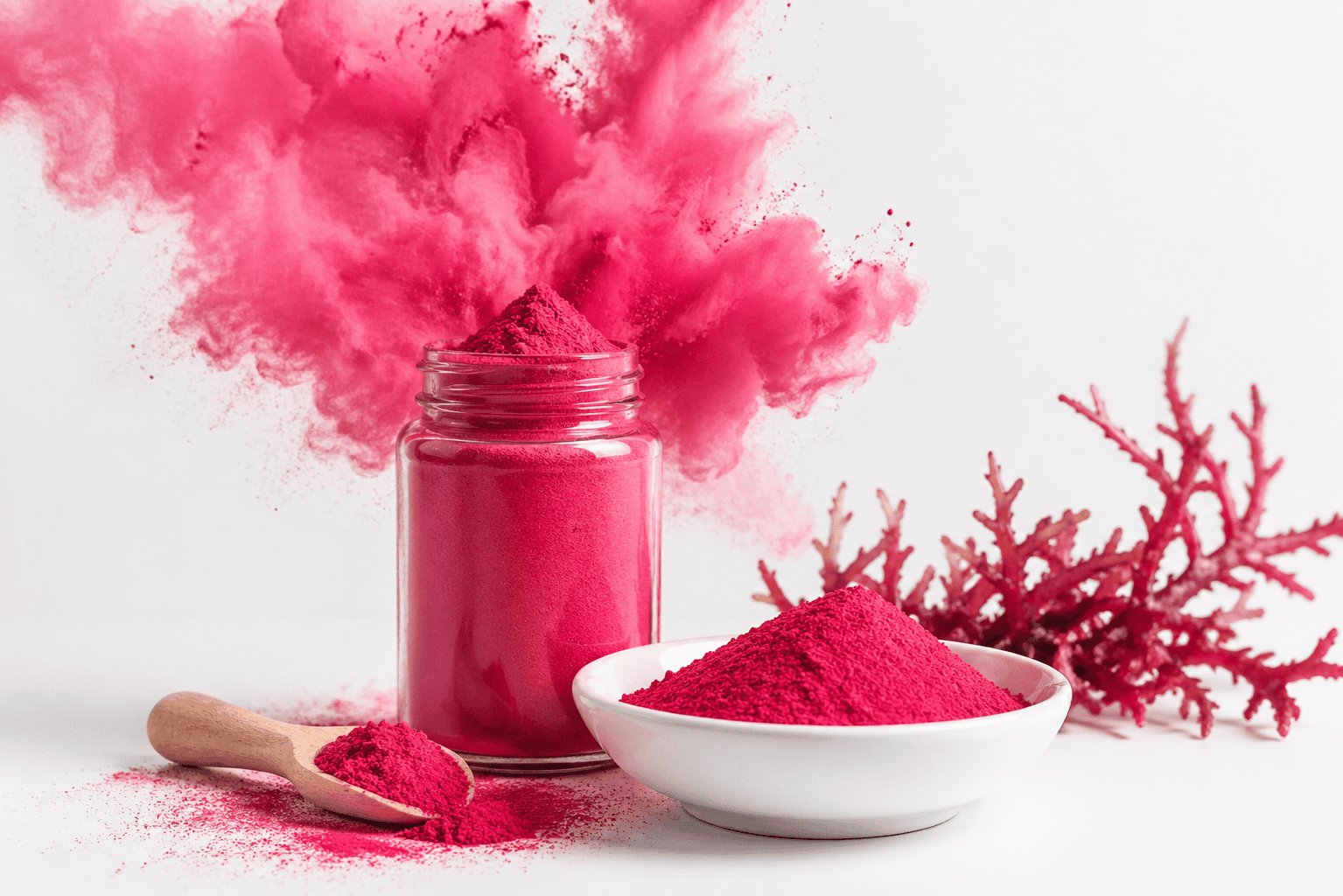
Phycoerythrin is a red pigment derived from microalgae, mainly from species such as Porphyridium. At first glance, it appears to be just a natural colorant. However, it offers much more than visual appeal. In fact, it combines color with biological activity, making it a multifunctional ingredient in modern formulations.
Today, the demand for clean-label and functional ingredients continues to grow. As a result, formulators look for solutions that provide both performance and differentiation. Phycoerythrin fits this need because it delivers antioxidant and anti-inflammatory support while also creating a unique visual identity.
What is Phycoerythrin?
Phycoerythrin belongs to a group of proteins called phycobiliproteins. These proteins help microalgae capture light during photosynthesis. Because of this function, phycoerythrin absorbs green wavelengths and reflects red light, which explains its vibrant color.
More importantly, this light-absorbing ability also supports its antioxidant function. Therefore, its structure allows it to interact with reactive oxygen species and reduce oxidative stress. This dual role makes it different from traditional pigments.
Mechanism of Action
Phycoerythrin works through several complementary pathways. Instead of acting in one single way, it supports cellular protection through multiple mechanisms.
Antioxidant Activity
First, phycoerythrin helps neutralize reactive oxygen species. This reduces oxidative stress and protects key cellular components such as lipids, proteins, and DNA.
Inflammation Regulation
In addition, it supports a balanced inflammatory response. It helps reduce the production of pro-inflammatory signals, which improves overall cellular stability.
Light Interaction and Photoprotection
At the same time, phycoerythrin absorbs specific wavelengths of light. Because of this, it helps reduce light-induced stress, especially in environments with high exposure to visible light and UV radiation.
Protein-Based Functionality
Unlike small molecules, phycoerythrin is a protein complex. Therefore, it behaves differently in formulations and biological systems. This can influence how it interacts with other ingredients and improves its overall functional profile.
Key Benefits in Real Applications
Phycoerythrin delivers different benefits depending on how it is used. Each application highlights a specific part of its functionality.
In cosmetic formulations, it helps protect the skin from environmental stress. At the same time, it creates visually attractive products with natural red or pink tones. Because of this, brands can replace synthetic dyes while improving product performance.
For skincare, it supports antioxidant protection and helps maintain skin balance. In addition, it contributes to reducing visible stress on the skin caused by pollution and light exposure.
In nutraceutical systems, phycoerythrin supports overall antioxidant defense. As a result, it complements other active ingredients by creating a more stable internal environment.
In food and beverage applications, it acts as a natural colorant. However, unlike artificial dyes, it also adds functional value. Therefore, it helps simplify formulations while supporting clean-label positioning.
Advanced Cosmetic Positioning
Phycoerythrin offers strong advantages in modern skincare by combining visual differentiation with functional performance. First, it allows brands to create formulations that stand out through natural red or pink hues. Since color plays a key role in consumer perception, the use of naturally derived pigments provides a clear advantage in clean-label positioning.
At the same time, phycoerythrin supports skin protection by reducing oxidative stress associated with environmental exposure. This helps maintain skin integrity and contributes to a more balanced and resilient skin appearance. In addition, its anti-inflammatory properties support skin comfort, making it particularly suitable for sensitive or stressed skin conditions.
Furthermore, it performs well in lightweight formulations such as serums, gels, and aqueous-based systems. Because of its water solubility, it integrates easily into modern formulation frameworks without significantly altering texture or sensorial properties. This flexibility allows formulators to incorporate phycoerythrin into a wide range of product formats while maintaining both performance and aesthetic appeal.
Comparison with Other Microalgae Pigments
| Pigment | Color | Main Function | Application |
|---|---|---|---|
| Phycoerythrin | Red/Pink | Antioxidant + pigment | Cosmetic, food, nutraceutical |
| Phycocyanin | Blue | Antioxidant + anti-inflammatory | Functional colorant |
| Beta-carotene | Orange | Photoprotection | Skin, nutrition |
This comparison shows how phycoerythrin combines visual and functional properties. As a result, it fills a unique position in the microalgae category.
Formulation Considerations
Phycoerythrin performs best in water-based systems due to its protein-based and water-soluble nature. However, it remains sensitive to external factors such as heat, light, and pH variations. Therefore, formulators must carefully control processing conditions to preserve both its color intensity and biological activity.
To enhance stability, formulators often incorporate protective strategies such as encapsulation or the use of stabilizing systems. In addition, selecting appropriate packaging that limits light and oxygen exposure plays a critical role in maintaining product integrity over time.
Furthermore, compatibility with other ingredients should be evaluated during formulation, as interactions within complex systems can influence performance. When properly formulated, phycoerythrin maintains its functional properties while delivering consistent visual and biological results.
Market Positioning
Phycoerythrin aligns strongly with the growing demand for natural and multifunctional ingredients. As consumers become more aware of ingredient sourcing and formulation transparency, the preference for clean-label alternatives continues to increase.
Because of this shift, phycoerythrin offers a clear competitive advantage. It replaces synthetic dyes while simultaneously contributing antioxidant and anti-inflammatory benefits. This dual functionality allows brands to simplify formulations while enhancing product value.
In addition, phycoerythrin supports product differentiation by combining performance with visual appeal. Its natural origin, combined with its functional profile, makes it particularly attractive for innovative formulations in cosmetic, nutraceutical, and food applications.
Conclusion
Phycoerythrin is more than a natural pigment, as it combines antioxidant protection, anti-inflammatory support, and formulation versatility within a single ingredient. As a result, it functions both as a bioactive component and a visual enhancer, allowing formulators to deliver performance while improving product differentiation. In addition, its compatibility with modern systems and clean-label positioning makes it particularly valuable for next-generation cosmetic, nutraceutical, and food formulations.
Scientific References