
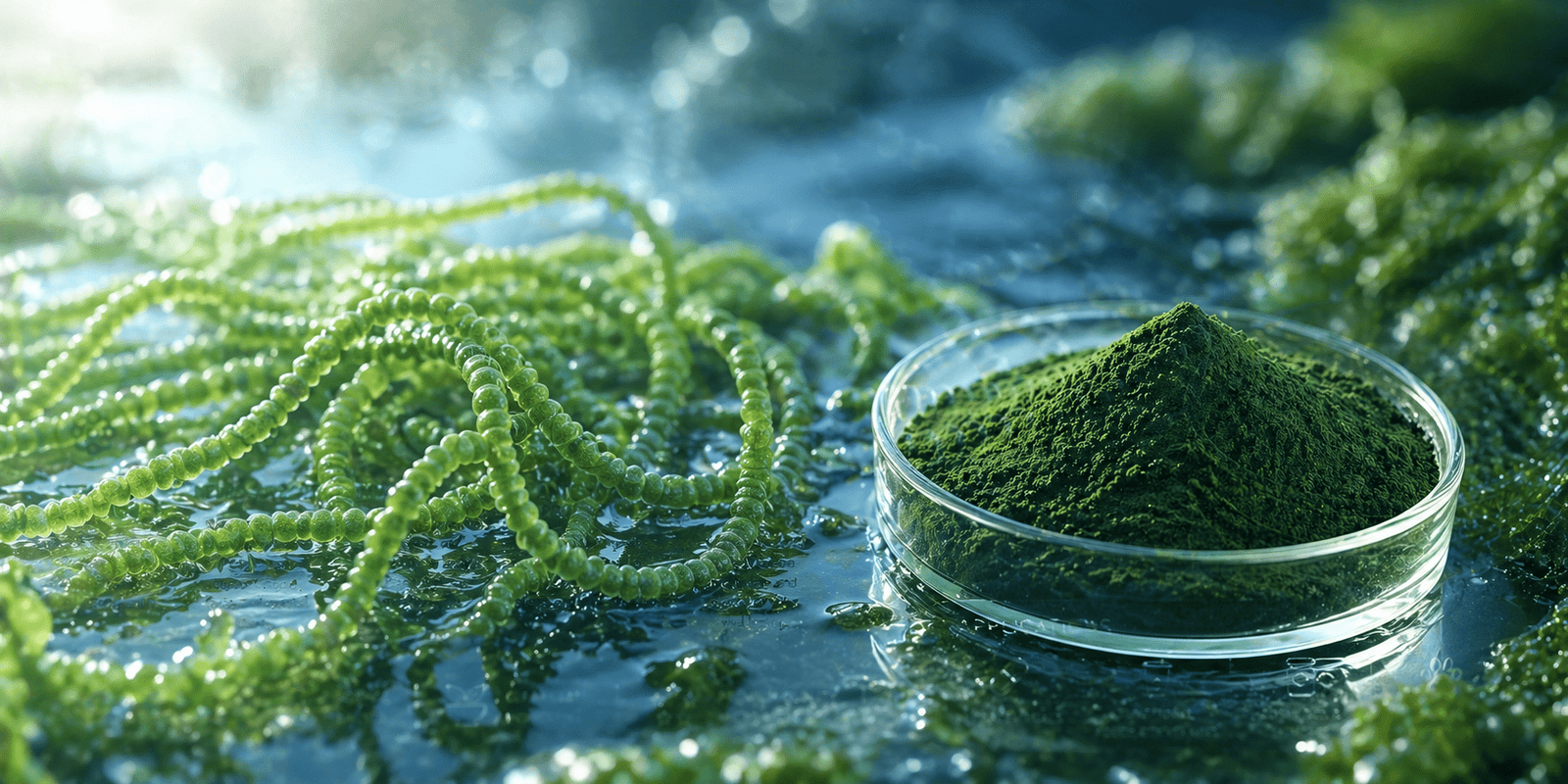
Aphanizomenon flos-aquae (AFA) is a freshwater microalga that has emerged as a highly differentiated bioactive ingredient in modern nutraceutical and wellness formulations. While many microalgae focus on general nutrition or antioxidant content, AFA introduces a more advanced functional profile. It supports regenerative processes, neurological pathways, and systemic balance through a combination of unique compounds and biological mechanisms.
Because of this, AFA is increasingly positioned as a next-generation ingredient rather than a traditional “superfood.” It moves beyond basic supplementation and enters the category of targeted bioactive systems.
Understanding the Unique Biological Profile of AFA
To fully appreciate the value of AFA, it is important to understand how it differs structurally and functionally from other microalgae. Unlike spirulina or chlorella, which are primarily used for protein content or detoxification, AFA contains compounds that directly influence signaling pathways within the body.
Most notably, AFA naturally contains phenylethylamine (PEA), a compound associated with neurotransmitter activity. In addition, it includes phycocyanins, chlorophyll, amino acids, and trace minerals. Together, these components create a multifunctional profile that supports both physiological and neurological functions.
As a result, AFA is not limited to a single benefit. Instead, it operates across multiple systems simultaneously, which increases its value in high-performance formulations.
Mechanism of Action: How AFA Supports Regeneration
AFA does not rely on a single mechanism. Instead, it works through a network of biological pathways that reinforce each other. This multi-pathway activity explains why its effects are often described as systemic rather than isolated.
Stem Cell Mobilization and Circulation
One of the most discussed aspects of AFA is its association with circulating stem cells. Research suggests that certain compounds in AFA may support the release of stem cells from bone marrow into the bloodstream. These cells play a critical role in tissue repair and regeneration.
Although this process is complex and still under investigation, it positions AFA within a unique category of regenerative ingredients. Rather than acting only as a protective agent, it may contribute to active repair processes.
Neuroactive Support and Cognitive Function
AFA also influences neurological pathways through its content of phenylethylamine. This compound interacts with neurotransmitters involved in mood, focus, and motivation. As a result, AFA is often associated with improved mental clarity and emotional balance.
In contrast to synthetic stimulants, this effect is typically described as smoother and more balanced, making it suitable for long-term use in wellness products.
Antioxidant and Anti-Inflammatory Effects
In addition to its regenerative and neuroactive roles, AFA provides strong antioxidant protection. Phycocyanins and other pigments help neutralize oxidative stress while modulating inflammatory responses.
Because oxidative stress and inflammation are closely linked to aging and chronic conditions, this dual action reinforces the overall protective effect of AFA.
Immune System Modulation
Another important function of AFA is its ability to support immune balance. Rather than overstimulating immune activity, it helps regulate natural defense mechanisms. This makes it particularly relevant for long-term health strategies.
Functional Benefits in Real Applications
The multi-layered mechanism of AFA translates into several practical benefits. However, these benefits should not be viewed in isolation. Instead, they work together to create a broader functional impact.
First, AFA supports recovery and regeneration by promoting cellular repair processes. This is especially relevant in aging populations and in products designed for physical recovery.
At the same time, it contributes to cognitive performance by supporting neurotransmitter activity. This can result in improved focus, motivation, and mental clarity, which are increasingly important in modern lifestyles.
In addition, AFA supports detoxification through its chlorophyll content. This helps maintain internal balance and supports overall physiological function.
Finally, its antioxidant and anti-inflammatory properties provide foundational protection, making it suitable for both preventive and performance-based formulations.
Comparison with Other Microalgae
To better understand its positioning, it is useful to compare AFA with other commonly used microalgae.
| Feature | AFA (Aphanizomenon flos-aquae) | Spirulina | Chlorella |
|---|---|---|---|
| Primary Function | Regeneration & neuro support | Protein & antioxidant | Detoxification |
| Unique Compounds | PEA, phycocyanins | Phycocyanin | Chlorophyll |
| Stem Cell Association | Yes | Limited | Limited |
| Market Position | Premium bioactive | Commodity ingredient | Functional detox agent |
This comparison highlights how AFA occupies a more advanced and specialized position within the microalgae category.
Formulation Strategy and Technical Considerations
Despite its benefits, AFA requires careful formulation to maintain its activity. It is sensitive to environmental factors such as heat, light, and oxidation. Therefore, processing conditions must be controlled to preserve its bioactive compounds.
In solid dosage forms, AFA can be easily incorporated into capsules, tablets, or powder blends. However, in liquid systems, stabilization becomes more complex. In such cases, protective technologies may be necessary to maintain efficacy.
Additionally, sourcing and quality control are critical. Because AFA is harvested from natural environments, purity and contamination must be carefully monitored to ensure safety and consistency.
Market Positioning and Strategic Value
AFA represents a shift toward more targeted and science-driven ingredients. Instead of offering general health benefits, it delivers specific functional outcomes related to regeneration, cognition, and systemic balance.
This makes it particularly attractive for premium brands that aim to differentiate through innovation. As consumer awareness increases, ingredients with clear mechanisms and measurable benefits are becoming more valuable.
Furthermore, AFA aligns with key market trends such as natural sourcing, clean-label formulations, and holistic wellness. This combination of scientific credibility and consumer appeal strengthens its long-term potential.
Conclusion
Aphanizomenon flos-aquae is not simply another microalga. It is a multifunctional bioactive ingredient that operates across regenerative, neurological, and protective pathways. Its ability to support stem cell activity, enhance cognitive performance, and maintain systemic balance makes it a powerful tool in modern formulation.
For product developers, the opportunity lies in understanding both its capabilities and its limitations. When properly formulated and positioned, AFA can deliver significant value and help create differentiated, high-performance products in competitive markets.
Scientific References
- https://pubmed.ncbi.nlm.nih.gov/16562856/
- https://www.ncbi.nlm.nih.gov/pmc/articles/PMC5946307/
- https://pubmed.ncbi.nlm.nih.gov/20006936/
- https://www.ncbi.nlm.nih.gov/pmc/articles/PMC2838386/
- https://pubmed.ncbi.nlm.nih.gov/24401248/
- https://www.ncbi.nlm.nih.gov/pmc/articles/PMC6073124/
- https://pubmed.ncbi.nlm.nih.gov/23396534/
- https://www.ncbi.nlm.nih.gov/pmc/articles/PMC5372987/


