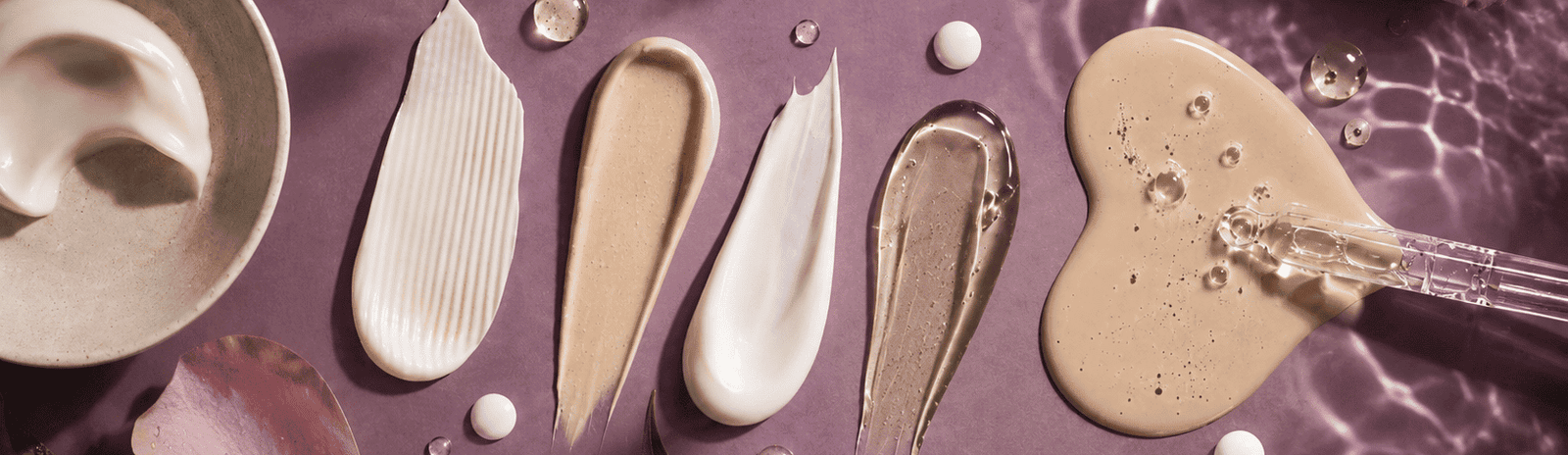


Developing silicone-free emulsions requires careful control of formulation structure, ingredient compatibility, and sensory performance. Conventional silicone fluids can contribute lubrication, spreading, viscosity modification, and a smooth afterfeel. Replacing these materials with natural-origin hydrocarbons, esters, or structured lipid systems can change how an emulsion behaves during manufacturing, storage, and application.
The challenge extends beyond selecting an alternative emollient. A replacement can influence the oil phase, emulsifier requirements, droplet distribution, and rheological behavior of the finished formulation. Even when a silicone-free emulsion appears stable after preparation, changes in viscosity, texture, or droplet organization may emerge during accelerated aging or commercial scale-up.
Successful silicone-free emulsion development depends on balancing interfacial stability, rheological structure, and sensory performance. Understanding these relationships allows cosmetic chemists to select appropriate emulsifier systems, optimize the oil phase, and develop formulations that maintain their intended characteristics throughout product development.
Understanding the Role of Silicones in Cosmetic Emulsions
Silicones contribute several important properties to cosmetic formulations, although their effects depend on the specific silicone chemistry and the surrounding ingredients. Dimethicone, for example, can provide lubrication, softness, and film-forming characteristics. Volatile silicone fluids such as Cyclopentasiloxane support rapid spreading and a lightweight sensory finish.
In emulsions, silicone selection can also influence viscosity, droplet interactions, and the organization of the dispersed phase. Research comparing silicone-based and silicone-free cosmetic emulsions has demonstrated that specific silicones can improve rheological properties, droplet-size consistency, and physical stability under defined experimental conditions.
However, silicones do not act as universal emulsion stabilizers. The emulsifier system, oil-phase composition, processing conditions, and continuous-phase structure largely determine emulsion stability. Silicone-containing formulations can also experience creaming, coalescence, phase separation, or changes in viscosity when the stabilizing system is inadequate.
This distinction matters during reformulation. Removing a silicone does not automatically create an unstable emulsion, but it changes the physicochemical environment. Formulators must evaluate whether the replacement affects interfacial behavior, rheology, or the organization of the finished system.
What Changes When Silicones Are Replaced?
Replacing a silicone with an alternative ingredient can influence several formulation parameters simultaneously. Natural-origin hydrocarbons, esters, and modified triglycerides possess different molecular structures, polarities, viscosities, and solvent characteristics. These differences can affect the behavior of the oil phase and its interactions with emulsifiers and other formulation components.
A lightweight hydrocarbon alternative may provide favorable spreading while maintaining a relatively nonpolar oil phase. An ester-based replacement may introduce different solvent properties and influence the distribution of oil-soluble ingredients. Structured lipid systems can provide greater cushion or viscosity but may require adjustments to emulsification conditions.
The resulting changes depend on the replacement chemistry rather than whether the ingredient comes from renewable or synthetic sources. Some silicone-free emulsions maintain excellent stability with relatively simple emulsifier systems. Others require additional optimization to achieve the intended viscosity, droplet distribution, and sensory profile.
Identifying the Main Instability Mechanisms
Emulsions can lose stability through several mechanisms, including creaming, flocculation, coalescence, Ostwald ripening, and phase separation. These processes differ in their underlying causes, making accurate diagnosis important during formulation development.
Creaming occurs when dispersed droplets migrate under the influence of density differences. Flocculation describes the formation of droplet clusters without necessarily merging the droplets. Coalescence occurs when droplets merge, potentially producing larger droplets and eventual phase separation.
Ostwald ripening involves the transfer of dispersed-phase material between droplets through the continuous phase. Its relevance depends on the composition and solubility characteristics of the dispersed material.
Silicone replacement may change the susceptibility of an emulsion to one or more of these mechanisms. However, formulators should identify the actual instability process before adjusting emulsifiers, polymers, or emollient concentrations.
Selecting Emulsifiers for Silicone-Free Formulations
Emulsifiers play a central role in maintaining emulsion stability because they influence the oil–water interface. Their molecular structures allow them to interact with both phases, helping reduce interfacial tension and stabilize dispersed droplets.
The appropriate emulsifier system depends on the oil-phase composition, desired emulsion type, processing conditions, and compatibility requirements. A change from Dimethicone to an ester or hydrocarbon alternative may affect emulsifier performance even when the oil-phase concentration remains unchanged.
Nonionic and Polymeric Emulsifiers
Nonionic emulsifiers provide useful formulation flexibility and often demonstrate favorable tolerance to changes in ionic strength. Their performance still depends on factors such as temperature, oil-phase composition, concentration, and the presence of other ingredients.
Selected nonionic systems can stabilize silicone-free oil-in-water emulsions when formulators establish the appropriate emulsifier balance. Fatty alcohols and other co-structuring ingredients may further support texture and physical stability in certain formulations.
Polymeric emulsifiers provide another approach by contributing interfacial stabilization, continuous-phase thickening, or both. Depending on their chemistry, these materials can create suitable structures for lightweight lotions, creams, and gel emulsions.
However, increasing polymer concentration does not necessarily improve the finished product. Excessive structuring may introduce undesirable texture, drag, or stringiness. Formulators must therefore balance physical stability with dispensing and application characteristics.
Naturally Derived Emulsifier Systems
Naturally derived emulsifiers include selected fatty acid derivatives, glyceride-based systems, phospholipids, and other amphiphilic materials. Their suitability depends on their chemical structure and compatibility with the intended oil phase.
Some systems benefit from co-emulsifiers, fatty alcohols, or additional stabilizers. Others can provide suitable performance through carefully selected combinations of emulsifying ingredients.
Natural origin alone does not determine stability. A successful emulsifier system must demonstrate appropriate interfacial behavior, processing compatibility, and long-term performance within the finished formulation.
Rheology Engineering: Building Structure Without Silicones
Rheology influences how an emulsion behaves during storage, dispensing, spreading, and application. Viscosity and viscoelastic properties also affect the movement and interactions of dispersed droplets, making rheological characterization important during silicone-free formulation development.
A formulation may achieve suitable initial viscosity while exhibiting inadequate structural recovery or significant viscosity drift during aging. For this reason, formulators should evaluate more than a single viscosity measurement.
Primary Rheology Modifiers and Structural Support
Carbomers, acrylate polymers, cellulose derivatives, and selected natural gums can provide continuous-phase structure in oil-in-water emulsions. Their performance depends on concentration, pH, electrolyte content, and interactions with the complete formulation.
Carbomer-based systems develop viscosity through polymer swelling under suitable neutralization conditions. Changes in ionic strength or pH can alter this response. Natural gums and cellulose derivatives provide alternative thickening mechanisms, but their hydration and flow characteristics differ considerably.
Combining complementary rheology modifiers may help achieve the desired balance between viscosity, structural recovery, and sensory performance. However, the selection should reflect the specific formulation rather than an assumption that silicone-free systems always require multiple thickeners.
Yield Stress and Structural Recovery
Yield stress can be relevant to emulsions that possess a measurable internal structure. It influences resistance to flow and may help reduce droplet migration or suspended-particle movement under certain conditions.
Structural recovery provides additional information about how the system responds after mechanical stress. During pumping, dispensing, or spreading, shear can temporarily disrupt the formulation structure. The rate and extent of recovery influence the product’s subsequent behavior.
Flow curves, oscillatory rheology, and recovery testing can help characterize these properties. Comparing laboratory and aged samples also provides information about whether the formulation maintains its intended rheological profile over time.
Managing Electrolytes and Functional Actives
Electrolytes can influence the behavior of certain emulsifiers and rheology modifiers, particularly systems that depend on electrostatic interactions or polymer swelling. Ingredients such as mineral salts, buffered active solutions, and some botanical extracts may introduce ionic components that affect viscosity or stability.
However, electrolytes are not universally the primary cause of silicone-free emulsion instability. Their effects depend on the emulsifier system, polymer chemistry, concentration, and continuous-phase composition.
For example, an electrolyte-sensitive carbomer system may show viscosity loss as ionic strength increases. In contrast, an appropriately selected electrolyte-tolerant rheology modifier may maintain suitable performance under the same conditions.
Formulators should consider the total electrolyte contribution of the formulation rather than evaluate each ingredient independently. Monitoring pH, conductivity where relevant, and rheological behavior can help identify potential interactions.
Processing sequence also matters. Certain polymers require adequate hydration or neutralization before formulators introduce ingredients that influence swelling. However, adding electrolytes late in the process is not a universal solution. The appropriate sequence depends on the specific ingredient system and manufacturing instructions.
Designing the Sensory Profile of Silicone-Free Emulsions
Physical stability alone does not determine formulation quality. A silicone-free cream or lotion must also deliver the desired application characteristics, including spreading, lubrication, cushion, absorption perception, and residual afterfeel.
Silicone alternatives can contribute different sensory properties according to their chemistry. Lightweight esters may provide smooth initial spreading, while selected bio-based hydrocarbons support a relatively light sensory profile. More structured emollient systems can contribute greater cushion or persistent lubrication.
The challenge lies in balancing these characteristics without compromising the stability or consistency of the finished emulsion.
Balancing Spreadability, Slip and Afterfeel
An emulsion’s sensory performance depends on the interaction between its oil phase, continuous-phase structure, emulsifiers, and other formulation ingredients. The same emollient may produce different sensory results when incorporated into two emulsions with different rheological properties.
For example, a lightweight ester may spread rapidly in a low-viscosity lotion but provide a different application profile in a highly structured cream. Changes in emulsifier concentration or polymer selection may also influence drag, tackiness, or perceived greasiness.
Combining emollients with complementary characteristics can help develop a more controlled sensory transition. Formulators may use lightweight ingredients to support initial spreading and more persistent emollients to maintain lubrication during rub-out.
Powders and other sensory modifiers can further adjust dry-touch characteristics, depending on their composition, particle properties, and concentration.
The objective is not to reproduce a universal silicone sensation. Instead, formulators should define the target sensory profile and select ingredients that achieve the desired performance in the finished emulsion.
Processing Conditions and Manufacturing Scale-Up
Manufacturing conditions influence emulsion structure and can affect the performance of silicone-free systems. Mixing intensity, homogenization time, temperature, addition sequence, and cooling rate all contribute to droplet formation and formulation organization.
Changes in shear conditions may alter droplet size and distribution. Temperature can influence emulsifier behavior, oil-phase viscosity, and the development of structured networks. Cooling conditions may also affect the organization of fatty alcohols, waxes, or other structuring components.
These effects become particularly relevant during commercial scale-up because larger equipment introduces different flow patterns, heat-transfer conditions, and mixing characteristics.
Formulators should establish suitable process parameters during laboratory development and evaluate their reproducibility at pilot scale. Comparing droplet distribution, viscosity, appearance, and sensory properties across batch sizes helps identify process-related changes.
The manufacturing sequence should follow the requirements of the selected emulsifier and rheology system rather than a universal rule. Some polymers require early hydration, while certain temperature-sensitive ingredients require addition during cooling.
Maintaining process consistency helps distinguish ingredient compatibility problems from differences caused by manufacturing conditions.
Evaluating Silicone-Free Emulsion Stability
A reliable stability program should examine the physical and rheological characteristics of the finished formulation under conditions relevant to its intended use and storage.
Visual inspection remains useful, but it cannot identify every early-stage instability mechanism. Changes in droplet size, rheological behavior, or microstructure may occur before visible separation develops.
Combining complementary evaluation methods provides a more complete understanding of emulsion performance.
Key Stability and Performance Measurements
| Parameter | Recommended evaluation | Formulation relevance |
|---|---|---|
| Droplet size and distribution | Microscopy or particle-size analysis | Emulsion structure and changes during aging |
| Viscosity and flow behavior | Controlled rheological testing | Texture, dispensing, physical stability |
| Structural recovery | Thixotropy or recovery testing | Behavior after shear and application |
| pH | Measurement during preparation and storage | Polymer behavior and ingredient compatibility |
| Physical separation | Visual monitoring, centrifugation where appropriate | Creaming, sedimentation and phase separation |
| Temperature stability | Accelerated and real-time storage | Resistance to relevant storage conditions |
| Sensory performance | Structured panel evaluation | Spreading, softness, drag and afterfeel |
Accelerated testing can help identify certain instability mechanisms, but it does not automatically predict shelf life. Elevated-temperature exposure, freeze–thaw cycling, and centrifugation apply different types of stress and may produce different responses.
Formulators should interpret these tests according to the formulation’s composition and intended conditions. Real-time stability monitoring remains important when establishing long-term product performance.
A useful approach is to compare the silicone-free formulation with a reference containing the original silicone. This allows R&D teams to identify meaningful differences in structure, stability, and sensory behavior while determining whether those differences affect the intended application.
From Silicone Replacement to Formulation Architecture
Successful silicone-free emulsions require a coordinated approach to ingredient selection and formulation structure. The emulsifier system must stabilize the intended oil phase, while rheology modifiers provide suitable flow characteristics. Emollients contribute the desired sensory profile, and processing conditions determine how these components organize into the finished system.
This approach differs from direct ingredient substitution. A silicone alternative may provide excellent spreading characteristics but interact differently with emulsifiers or thickeners. An ester-based system may support elegant sensory performance while requiring adjustments to the formulation’s rheology. A hydrocarbon alternative may provide suitable slip but produce different residual film characteristics.
For cosmetic chemists, these differences represent formulation design considerations rather than inherent limitations of silicone-free technology.
The performance of a silicone-free emulsion depends on the complete formulation architecture, not simply the absence of silicone. By understanding interfacial stabilization, rheology, processing, and sensory interactions, R&D teams can develop stable products with controlled texture and application performance.
Explore Natural Silicone Replacement Technologies
Grand Ingredients offers a specialized portfolio of natural-origin silicone alternatives for skin care, hair care, and personal care formulations. The SILIKE range includes technologies developed to support selected silicone-like characteristics, including spreadability, lubrication, softness, conditioning, and sensory modification.
For cosmetic R&D teams evaluating alternatives to Dimethicone, Cyclopentasiloxane, and specialty silicone systems, ingredient compatibility and formulation architecture provide important considerations during product development.
Explore our Natural Silicone Alternatives portfolio to identify technologies relevant to your formulation requirements and request technical specifications, supporting documentation, or samples for laboratory evaluation.
Research References
- Mancuso, A., et al. (2022). A comparison between silicone-free and silicone-based emulsions: Technological features and in vivo evaluation. International Journal of Cosmetic Science, 44(5), 514–529. https://doi.org/10.1111/ics.12800
- Nazir, H., et al. (2014). Silicone oil emulsions: Strategies to improve their stability and applications in hair care products. International Journal of Cosmetic Science, 36(2), 124–133. https://doi.org/10.1111/ics.12104
- Kawaguchi, M. (2016). Silicone oil emulsions stabilized by polymers and solid particles. Advances in Colloid and Interface Science, 233, 186–199. https://doi.org/10.1016/j.cis.2015.06.005
- Stability and Application Properties of Surfactant-Free Cosmetic Emulsions: An Instrumental Approach to Evaluate Their Potential. Cosmetics (2022), 9(6), 123. https://www.mdpi.com/2079-9284/9/6/123