Why Active Delivery in Cleansing Systems Requires System-Level Thinking
Cleansing formulations were historically designed to remove soils, sebum, and environmental contaminants. For decades, performance was measured primarily through foam volume, detergency, and rinse feel. However, modern cleansing systems increasingly serve dual roles as both cleansing and treatment platforms.
Today’s cleansers often incorporate functional actives such as niacinamide, zinc salts, caffeine, salicylic acid, exfoliating acids, botanical extracts, and microbiome-supporting ingredients. In these systems, surfactants no longer function solely as detergents. Instead, they act as delivery modifiers that strongly influence active stability, availability, deposition, and post-rinse behavior.
Unlike leave-on products, rinse-off systems operate within short contact times and dynamic dilution conditions. As a result, the effectiveness of functional actives depends less on concentration and more on how surfactants manage active behavior during application and rinsing.
The Dual Role of Surfactants in Modern Cleansing Formulations
Surfactants perform two interrelated functions in functional cleansing systems. First, they reduce surface tension and solubilize hydrophobic soils. Second, they organize formulation microstructures that determine how actives behave in the system.
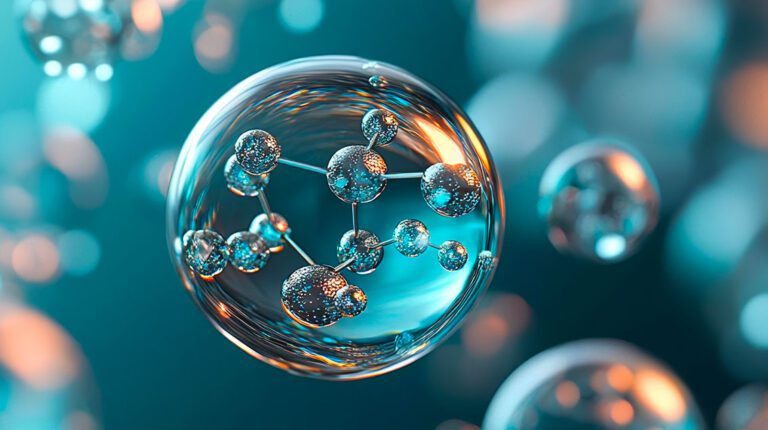
Above the critical micelle concentration (CMC), surfactants self-assemble into micelles. These structures solubilize lipophilic and amphiphilic compounds, including many cosmetic actives. While micellar solubilization improves formulation stability and uniformity, it also alters the fraction of free active available for immediate interaction with skin or scalp.
This duality creates a central formulation challenge: balancing active stability with delivery efficiency.
Micellar Entrapment and Active Availability
Micellar entrapment occurs when active molecules partition into the hydrophobic core or palisade layer of surfactant micelles. This process stabilizes actives against precipitation and degradation but reduces their free concentration in solution.
In cleansing systems, micellar entrapment is neither inherently beneficial nor detrimental. Instead, it represents a controllable variable. Well-designed formulations allow actives to remain stabilized in the bottle while enabling partial release during consumer use.
The extent of micellar entrapment depends on surfactant structure, micelle size, aggregation number, and system polarity. Nonionic surfactants often form larger micelles with higher solubilization capacity, while amphoteric systems may promote more dynamic release behavior.
Dilution and Mechanical Forces During Use
During application, cleansing products undergo rapid dilution with water and mechanical shear from rubbing or massaging. These conditions disrupt micelle equilibrium and shift partitioning behavior.
As dilution progresses, micelle concentration decreases, promoting partial release of entrapped actives. Mechanical action further destabilizes micellar structures, increasing transient availability of functional ingredients at the skin or scalp interface.
Formulators who understand these dynamic conditions can design systems that exploit dilution-triggered release rather than fighting it.
Charge Interactions Between Surfactants and Actives
Electrostatic interactions significantly influence active delivery. Anionic surfactants may bind cationic actives, while cationic surfactants interact differently with acidic or anionic ingredients.
These interactions affect deposition, irritation potential, and sensory properties. For example, cationic actives may show enhanced deposition on negatively charged skin or hair surfaces when delivered through appropriately balanced systems.
Charge balance also influences preservative efficacy, making surfactant–active interactions a system-wide consideration rather than an isolated variable.
Effect of Surfactant Class on Delivery Behavior
Different surfactant classes influence active delivery in distinct ways.
- Anionic surfactants offer strong cleansing but may increase barrier disruption and reduce retention of charged actives.
- Amphoteric surfactants improve mildness, reduce irritation, and support more favorable deposition behavior.
- Nonionic surfactants enhance solubilization and stability but may reduce immediate bioavailability if used excessively.
Mixed surfactant systems allow formulators to fine-tune these behaviors by balancing cleansing efficiency with delivery performance.
Rinse-Off Kinetics and Barrier Interaction
In rinse-off products, delivery efficiency is limited by contact time. However, barrier interaction plays an equally important role. Aggressive surfactant systems disrupt the stratum corneum lipid matrix, increasing transepidermal water loss and irritation.
Milder systems preserve barrier integrity, allowing actives to interact with a healthier surface environment. This indirect effect often enhances perceived efficacy even when absolute active deposition is modest.
Scalp-Specific Considerations
The scalp presents additional complexity due to hair follicles, sebum production, and a distinct microbiome. Surfactant systems influence follicular penetration, sebum removal, and microbial balance.
Mild surfactant systems reduce inflammation and maintain microbial equilibrium, creating conditions that support functional actives such as anti-dandruff agents, soothing compounds, and growth-supporting ingredients.
Hair Fiber Deposition and Sensory Outcomes
On hair fibers, surfactant–active interactions influence deposition, cuticle behavior, and tactile perception. Excessively aggressive systems lift cuticles and reduce shine, while balanced systems improve smoothness and manageability.
Delivery strategies for conditioning agents must account for surfactant charge, rinse behavior, and fiber surface chemistry.
Formulation Strategies to Enhance Active Delivery
Effective surfactant–active delivery requires intentional design rather than additive thinking. Key strategies include:
- Using mixed surfactant systems to balance solubilization and release
- Optimizing micelle size and aggregation behavior
- Aligning pH with active stability and skin compatibility
- Reducing unnecessary surfactant load
- Designing for dilution-triggered release
Interaction with Preservation Systems
Surfactants influence preservative efficacy by sequestering antimicrobial agents within micelles. High surfactant loads may reduce free preservative concentration, compromising microbial control.
Formulators must therefore consider surfactant–active–preservative interactions as an integrated system. Optimized formulations maintain both functional performance and microbial safety.
Regulatory and Claim Implications
Claims related to active efficacy in rinse-off products face increasing regulatory scrutiny. Authorities evaluate whether formulation design plausibly supports the intended benefit.
Clear documentation of surfactant selection, delivery rationale, and supporting testing strengthens claim defensibility in both cosmetic and quasi-functional positioning.
Trends Driving Future Development
Toward 2026, cleansing formulations are expected to further integrate treatment functionality. This shift will increase demand for surfactant systems that support controlled delivery without compromising mildness or safety.
Advances in predictive formulation, AI-driven modeling, and in-vitro testing will accelerate development of optimized surfactant–active systems.
Key Takeaways
- Surfactants strongly influence active delivery in cleansing systems
- Micellar behavior controls stability and release
- Charge interactions affect deposition and irritation
- Barrier preservation enhances functional outcomes
- Effective delivery requires system-level formulation design