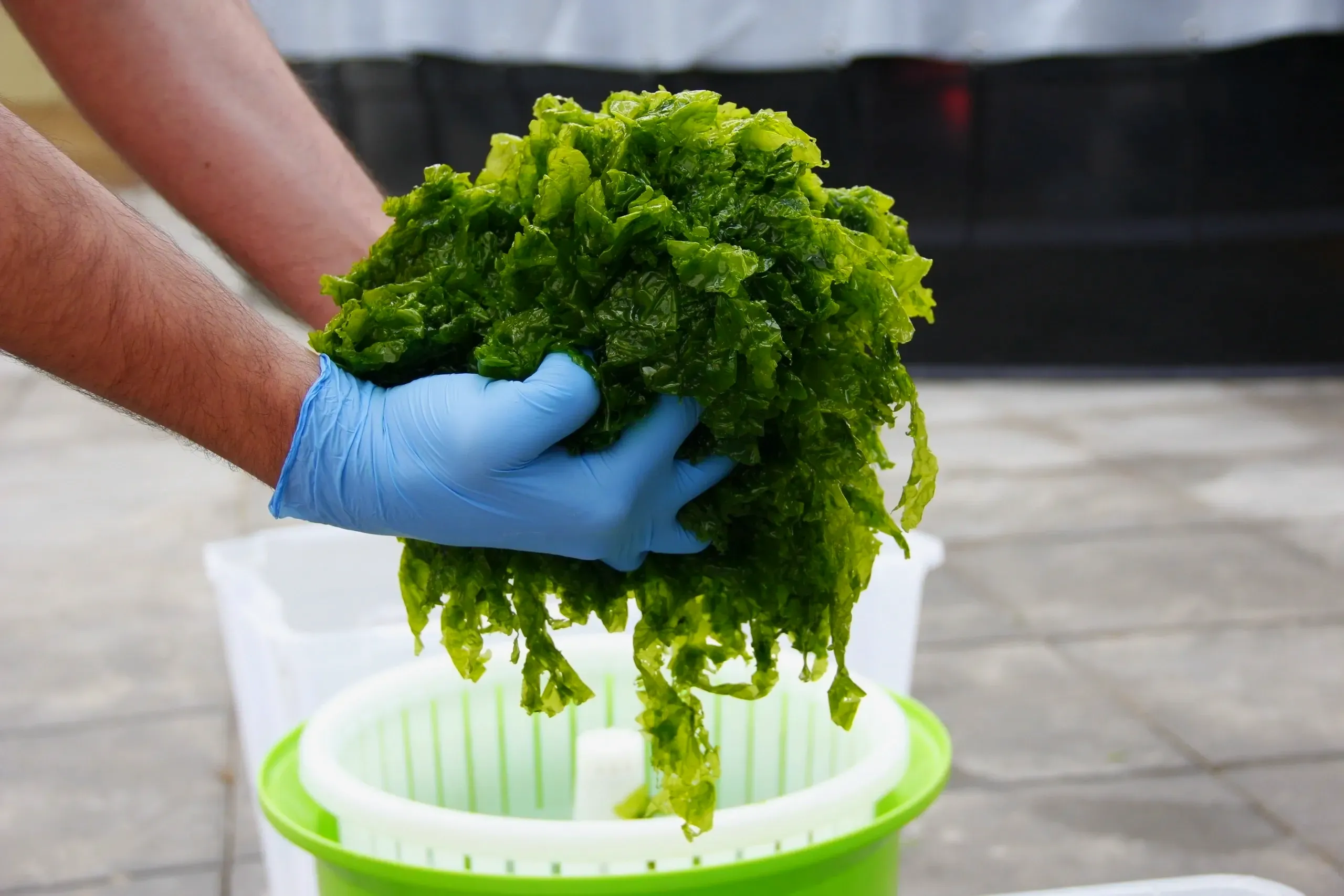
Ulvan is a unique sulfated polysaccharide extracted from green algae, especially Ulva lactuca (sea lettuce). Unlike the better-known polysaccharides from brown or red algae, ulvan has a distinct chemical structure rich in rhamnose, xylose, glucuronic acid, iduronic acid, and sulfate groups. Because of this unusual composition, it behaves differently from fucoidan, carrageenan, or red-algae galactans. As a result, interest in ulvan continues to grow among cosmetic chemists who want soothing, protective, and hydration-enhancing actives that also support barrier resilience.
Green algae remain underrepresented in cosmetic R&D compared with brown and red species. However, ulvan is now gaining attention due to its environmental defense properties, hydration behavior, and ability to support soothing pathways. Moreover, its marine origin fits seamlessly into blue biotechnology storytelling while offering measurable barrier benefits. This article explores the science of ulvan, its mechanisms, and its applications in modern formulations that target comfort, resilience, and relief.
What Is Ulvan?
Ulvan is a high-molecular-weight polysaccharide located in the cell walls of green macroalgae. It typically represents 10–20% of the algal biomass. Its backbone differs significantly from other marine polysaccharides, which gives ulvan its characteristic hydration and soothing properties.
The structure combines sulfated rhamnose residues with uronic acids such as glucuronic and iduronic acid. This composition allows ulvan to hold water, bind electrolytes, and form flexible films on the skin. In contrast, carrageenan relies on sulfated galactose, and fucoidan relies on sulfated fucose. Consequently, ulvan behaves as a hybrid between a hydration polymer and a soothing, protective film-former.
Because ulvan contains anionic and acidic groups, it can interact with water and ions more dynamically than many terrestrial polysaccharides. This behavior supports skin comfort under environmental stress, including dryness, pollution, and temperature fluctuations.
How Ulvan Supports Barrier Defense
Barrier defense requires steady hydration, reduced friction, and protection from environmental triggers. Ulvan supports these goals through several pathways that complement modern formulation strategies.
Hydrated Film Formation
Ulvan creates a soft, flexible film on the skin that retains water and reduces evaporation. This hydrated layer protects the surface while allowing the skin to breathe. Because the film remains smooth and elastic, it helps reduce discomfort during dryness episodes. At the same time, it prevents direct contact with irritants and reduces friction from cleansing, rubbing, or environmental particles.
Electrolyte and Water Management
Ulvan contains acidic sugar residues that interact with water and ions. As a result, it helps structure the water phase within formulas and on the skin. This structured hydration improves the skin’s ability to maintain moisture in challenging conditions such as cold weather, low humidity, or repeated cleansing. When paired with humectants, ulvan behaves like a hydration stabilizer that slows down water mobility and prolongs comfort.
Environmental Protection
Pollution, blue light, and UV exposure stress the skin barrier through oxidative reactions and surface dehydration. Ulvan’s film helps physically reduce the impact of particulate matter by limiting direct adhesion to the skin. Additionally, its sulfate groups show antioxidant and chelating behavior in several studies, which further supports surface defense. Therefore, ulvan fits naturally into urban skincare concepts that prioritize resilience and comfort.
Soothing Benefits of Ulvan
Comfort and soothing depend on the reduction of mechanical stress, hydration fluctuations, and minor irritant exposure. Ulvan contributes to soothing pathways in multiple ways that work together throughout the day.
Reduced Surface Friction
Dry, compromised skin often feels tight due to micro-roughness and friction. Ulvan reduces this friction by forming a smooth, gliding film. This improved glide decreases mechanical stress during cleansing, application, or environmental exposure. Users typically notice immediate relief, especially when skin feels dry or flaky.
Hydration Stability and Relief
Sensitive skin reacts strongly to rapid hydration changes. Because ulvan structures water, it prevents sudden moisture loss and keeps hydration levels more stable. This stability helps reduce visible redness and tension. Instead of allowing water to evaporate quickly, ulvan maintains a balanced reservoir on the skin surface.
Compatibility With Sensitive Skin Systems
Ulvan works well with common soothing actives such as betaine, allantoin, madecassoside, and panthenol. It does not compete with these actives for film formation or hydration space. Instead, it supports them by maintaining a hydrated microenvironment. This synergy makes ulvan useful in anti-redness serums, calming moisturizers, and seasonally supportive products.
Formulation Design With Ulvan
Ulvan integrates smoothly into water-based formats when chemists understand its hydration behavior, ionic sensitivity, and compatibility ranges.
Hydration and Dispersion
Ulvan hydrates best under moderate stirring at room temperature, followed by gentle warming to ensure full dissolution. Because of its ionic groups, it responds strongly to pH and electrolytes. Too much salt can thicken or destabilize the solution, while too little may reduce film formation. Therefore, balanced ionic conditions create the most comfortable textures.
Texture and Rheology
Ulvan typically produces a soft, serum-like viscosity or a light gel depending on concentration. It does not form rigid gels like carrageenan. Instead, it creates a dynamic, elastic flow ideal for soothing serums, gel creams, and toners. Moreover, ulvan blends well with other rheology modifiers to increase structure or cushion.
Compatibility
Because ulvan is anionic, it pairs well with nonionic and anionic emulsifiers. However, cationic surfactants can cause precipitation or haze. As a result, testing is essential when building emulsions that contain quaternary conditioning agents. Most barrier-support skincare avoids heavy cationics, so ulvan usually integrates cleanly.
Applications in Modern Skincare
Ulvan fits multiple product types that focus on hydration resilience, soothing, and environmental defense. Its versatile sensory behavior and compatibility make it a valuable marine polymer.
- Soothing serums: Soft, elastic films calm delicate skin and support water retention.
- Hydrating gel creams: Ulvan enhances smoothness and comfort while preventing tightness.
- Urban defense moisturizers: Films reduce particulate adhesion and surface stress.
- Barrier-support toners: Structured water prevents rapid hydration loss.
- Post-stress recovery masks: High ulvan levels create cocooning hydration for immediate comfort.
Template Comparison
Ulvan vs Fucoidan
- Origin: Ulvan comes from green algae; fucoidan comes from brown algae.
- Main Focus: Ulvan emphasizes soothing and environmental defense. Fucoidan targets repair, recovery, and matrix support.
- Texture Behavior: Ulvan creates flexible hydration films. Fucoidan behaves more like a bioactive polymer with subtle textural impact.
- Best Use: Ulvan fits soothing and anti-stress serums. Fucoidan fits repair, post-stress recovery, and resilience-building products.
Ulvan vs Carrageenan
- Film Properties: Carrageenan forms stronger, more structured gels. Ulvan forms soft, breathable films.
- Viscosity: Carrageenan creates body and structure. Ulvan remains fluid and elastic.
- Barrier Performance: Carrageenan provides occlusion-like hydration. Ulvan offers lightweight, continuous moisture retention.
- Use Case: Carrageenan suits gel creams and hydrogels. Ulvan suits serums, essences, and soothing moisturizers.
Sourcing and Sustainability
Green algae thrive in coastal ecosystems and grow rapidly with minimal environmental impact. Because they do not require arable land or freshwater, ulvan aligns well with sustainability expectations. Responsible suppliers monitor biomass origin, seasonal variation, and extraction purity to ensure consistent polysaccharide quality.
For formulators, consistent sulfate content, molecular weight distribution, and ionic residues matter. These factors influence viscosity, film behavior, and sensory performance. Transparent sourcing helps chemists design predictable, high-performance textures.
Regulatory and Safety Considerations
Ulvan has a favorable safety profile based on its long-term use in food, feed, and topical systems. Cosmetic use still requires stability testing, irritation screening, and compatibility evaluation in the final formulation. INCI labeling typically lists extracts by species, such as Ulva Lactuca Extract.
Because ulvan comes from natural sources, quality documentation should confirm absence of heavy metals, microbiological contamination, and degraded fractions. These checks help maintain consumer confidence and regulatory compliance.
Strategic Takeaways for Chemists
Ulvan provides a marine-derived solution for soothing, protection, and continuous hydration. When formulators apply its unique structure correctly, ulvan enhances barrier comfort without overwhelming the system.
- Use ulvan for flexible film formation and hydration stability.
- Combine it with humectants and soothing actives for enhanced comfort.
- Validate ionic conditions to maintain flow and transparency.
- Integrate ulvan into urban defense and anti-stress skincare concepts.
- Leverage traceable green algae sourcing for strong sustainability storytelling.